












A biomimetic phototherapeutic nanoagent based on bacterial double-layered membrane vesicles for comprehensive treatment of oral squamous cell carcinoma
Literature Information
Publication Date
2023-11-10
DOI
10.1039/D3TB02046K
Impact Factor
6.331
Authors
Qian Chen, Tianhe Shan, Yanjie Liang, Yujing Xu, Enyu Shi, Yue Wang, Changyi Li, Mingxin Cao
View Original
Abstract
As one of the most common malignancies, oral squamous cell carcinoma (OSCC) with high rates of invasiveness and metastasis threatens people's health worldwide, while traditional therapeutic approaches have not met the requirement of its cure. Phototherapies including photothermal therapy (PTT) and photodynamic therapy (PDT) have shown great potential for OSCC treatment due to their noninvasiveness or minimal invasiveness, high selectivity and little tolerance. However, PTT or PDT alone makes it difficult to eradicate OSCC and prevent its metastasis and recurrence. Here, double-layered membrane vesicles (DMVs) were extracted from attenuated Porphyromonas gingivalis, one of the most common pathogens inside the oral region, and served as an immune adjuvant to develop a biomimetic phototherapeutic nanoagent named PBAE/IR780@DMV for OSCC treatment via combining dual PTT/PDT and robust antitumor immunity. To obtain PBAE/IR780@DMV, poly(β-amino) ester (PBAE) was used as a carrier material to prepare the nanoparticles for loading IR780, a widely known photosensitizer possessing both PTT and PDT capabilities, followed by surface wrapping with DMVs. Upon 808 nm laser irradiation, PBAE/IR780@DMV exerted strong antitumor effects against OSCC both in vitro and in vivo, via combining PTT/PDT and specific immune responses triggered by tumor-associated antigens and DMVs. Altogether, this study provides a promising biomimetic phototherapeutic nanoagent for comprehensive treatment of OSCC.
Related Literature
Thiol substrate-promoted dehydrogenative cyclization of arylmethyl thiols with ortho-substituted amines: a universal approach to heteroaromatic compounds
Mengjun Qiao, Ling Chen, Yibo Dong, Chengkang Jiao, Shengqi Liao
2019-06-15
Research Article
DOI: 10.1039/C9QO00554D
Regio- and stereo-selective decarbonylative alkylative arylation of terminal alkynes with aliphatic aldehydes and arenes via dual C–H bond functionalization
Yong Peng, Ting-Ting Qin, Cong-Ling Xu, Luo Yang
2019-09-10
Research Article
DOI: 10.1039/C9QO01009B
Diastereoselective formal [3 + 3] cycloaddition of isatin-based α-(trifluoromethyl)imines with N,N′-dialkyloxyureas
Hong-Wu Zhao, Jia-Ming Guo, Li-Ru Wang, Wan-Qiu Ding, Zhe Tang, Xiu-Qing Song, Hui-Hui Wu, Xiao-Zu Fan, Xiao-Fan Bi
2019-10-21
Research Article
DOI: 10.1039/C9QO01181A
Polyoxygenated meroterpenoids and a bioactive illudalane derivative from a co-culture of Armillaria sp. and Epicoccum sp.
Hong-Tao Li, Linhuan Tang, Tao Liu, Ruining Yang, Yabin Yang, Hao Zhou, Zhong-Tao Ding
2019-10-14
Research Article
DOI: 10.1039/C9QO01087D
Clavipines A–C, antiproliferative meroterpenoids with a fused azepine skeleton from the basidiomycete Clitocybe clavipes
Zhaocui Sun, Nailiang Zhu, Man Zhou, Xiaowei Huo, Haifeng Wu, Yu Tian, Junshan Yang, Guoxu Ma, Yan-Long Yang, Xudong Xu
2019-09-30
Research Article
DOI: 10.1039/C9QO01005J
A [4 + 1] annulation of ortho-electrophile-substituted para-quinone methides for the synthesis of indanes and isoindolines
Ziwen Feng, Zhenbo Yuan, Xiaobin Zhao, Yue Huang, Hequan Yao
2019-09-02
Research Article
DOI: 10.1039/C9QO00977A
Ring-opening/annulation reaction of cyclopropyl ethanols: concise access to thiophene aldehydes via C–S bond formation
Ting Wang, Zhenyu An, Zhenjie Qi, Daijiao Zhuang, Aosheng Chang, Yunxia Yang, Rulong Yan
2019-10-01
Research Article
DOI: 10.1039/C9QO01014A
You might also like
Compound Q&A
Is 6-(3-Fluorophenyl)picolinic acid (CAS: 887982-40-3) safe?
6-(3-Fluorophenyl)picolinic acid is generally considered safe for laboratory use...
887982-40-36-(3-Fluorophenyl)pi...
Compound Q&A
What industries use (3R)-3-Pyrrolidinol (CAS: 2799-21-5)?
(3R)-3-Pyrrolidinol is used in the pharmaceutical industry as a precursor for dr...
2799-21-5(3R)-3-Pyrrolidinol
Compound Q&A
What precautions should be taken when handling (4R,5R)-4,5-Diethoxycarbonyl-2,2-dimethyldioxolane (CAS: 59779-75-8)?
When handling (4R,5R)-4,5-Diethoxycarbonyl-2,2-dimethyldioxolane (CAS: 59779-75-...
59779-75-8(4R,5R)-4,5-Diethoxy...
Compound Q&A
How is 1-(6-Chloroimidazo[1,2-b]pyridazin-3-yl)ethanone (CAS: 90734-71-7) typically synthesized?
1-(6-Chloroimidazo[1,2-b]pyridazin-3-yl)ethanone is often synthesized via a mult...
90734-71-71-(6-Chloroimidazo[1...
Compound Q&A
What is the market or research trend for N-Ethyl-3,4-dimethylbenzylamine (CAS: 39180-83-1)?
The market for N-Ethyl-3,4-dimethylbenzylamine (CAS: 39180-83-1) remains steady,...
39180-83-1N-Ethyl-3,4-dimethyl...
Compound Q&A
What is Tert-butyl 3-(pyrrolidin-1-yl)azetidine-1-carboxylate (CAS: 1019008-21-9)?
Tert-butyl 3-(pyrrolidin-1-yl)azetidine-1-carboxylate is a chemical compound wit...
1019008-21-9Tert-butyl 3-(pyrrol...
Compound Q&A
What regulatory guidelines apply to 1-Bromo-3-chloro-2,4-dimethoxybenzene (CAS: 1228956-93-1)?
1-Bromo-3-chloro-2,4-dimethoxybenzene (CAS: 1228956-93-1) falls under the classi...
1228956-93-11-Bromo-3-chloro-2,4...
Compound Q&A
Is 8-Bromo-2-methyl-3,4-dihydroisoquinolin-1(2H)-one (CAS: 1368622-07-4) safe?
The safety of 8-Bromo-2-methyl-3,4-dihydroisoquinolin-1(2H)-one (CAS: 1368622-07...
1368622-07-48-Bromo-2-methyl-3,4...
Compound Q&A
Is Benzyl [(3S)-2,6-dioxo-3-piperidinyl]carbamate (CAS: 22785-43-9) safe?
Benzyl [(3S)-2,6-dioxo-3-piperidinyl]carbamate is generally safe when handled wi...
22785-43-9Benzyl [(3S)-2,6-dio...
Compound Q&A
How should 1-{[4-(4,4,5,5-Tetramethyl-1,3,2-dioxaborolan-2-yl)phenyl]sulfonyl}pyrrolidine (CAS: 928657-21-0) be stored?
1-{[4-(4,4,5,5-Tetramethyl-1,3,2-dioxaborolan-2-yl)phenyl]sulfonyl}pyrrolidine s...
928657-21-01-{[4-(4,4,5,5-Tetra...
Source Journal
Journal of Materials Chemistry B
CiteScore:
12
Self-citation Rate:
4.9%
Articles per Year:
831
Journal of Materials Chemistry A, B & C cover high quality studies across all fields of materials chemistry. The journals focus on those theoretical or experimental studies that report new understanding, applications, properties and synthesis of materials. The journals have a strong history of publishing quality reports of interest to interdisciplinary communities and providing an efficient and rigorous service through peer review and publication. The journals are led by an international team of Editors-in-Chief and Associate Editors who are all active researchers in their fields. Journal of Materials Chemistry A, B & C are separated by the intended application of the material studied. Broadly, applications in energy and sustainability are of interest to Journal of Materials Chemistry A, applications in biology and medicine are of interest to Journal of Materials Chemistry B, and applications in optical, magnetic and electronic devices are of interest to Journal of Materials Chemistry C. More than one Journal of Materials Chemistry journal may be suitable for certain fields and researchers are encouraged to submit their paper to the journal that they feel best fits for their particular article. Example topic areas within the scope of Journal of Materials Chemistry B are listed below. This list is neither exhaustive nor exclusive. Antifouling coatings Biocompatible materials Bioelectronics Bioimaging Biomimetics Biomineralisation Bionics Biosensors Diagnostics Drug delivery Gene delivery Immunobiology Nanomedicine Regenerative medicine & Tissue engineering Scaffolds Soft robotics Stem cells Therapeutic devices image block All articles published in Journal of Materials Chemistry B from 2019 onwards will be indexed in MEDLINE®. Articles that primarily focus on providing insight into the underlying science and performance of biomaterials within a biological environment are more suited to our companion journal, Biomaterials Science.
Recommended Compounds
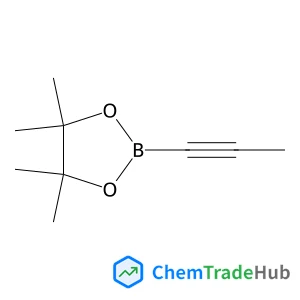
4,4,5,5-Tetramethyl-2-(1-propyn-1-YL)-1,3,2-dioxaborolane
CAS Number:
347389-75-7
Molecular Formula:
C9H15BO2
![(3R,4aR,7aS,9aR,10S,11R,13aR,13bS,15aS,15bR)-3,11-Dihydroxy-10-(hydroxymethyl)-4,4,7a,10,13a,15b-hexamethyl-1,2,3,4,4a,7,7a,8,9,9a,10,11,12,13,13a,13b,14,15,15a,15b-icosahydro-5H-naphtho[2',1':4,5]cyc
lohepta[1,2-a]naphthalen-5-one structure](https://static.chemtradehub.com/structs/538/53800-21-8-9f18.webp "(3R,4aR,7aS,9aR,10S,11R,13aR,13bS,15aS,15bR)-3,11-Dihydroxy-10-(hydroxymethyl)-4,4,7a,10,13a,15b-hexamethyl-1,2,3,4,4a,7,7a,8,9,9a,10,11,12,13,13a,13b,14,15,15a,15b-icosahydro-5H-naphtho[2',1':4,5]cyc
lohepta[1,2-a]naphthalen-5-one structure")
Recommended Suppliers






Disclaimer
This page provides academic journal information for reference and research purposes only. We are not affiliated with any journal publishers and do not handle publication submissions. For publication-related inquiries, please contact the respective journal publishers directly.
If you notice any inaccuracies in the information displayed, please contact us at support@chemtradehub.com. We will promptly review and address your concerns.