












A MXene@AgAu@PDA nanoplatform loaded with AgAu nanocages for enhancing catalytic activity and antibacterial performance
Literature Information
Publication Date
2023-11-01
DOI
10.1039/D3TB01755A
Impact Factor
6.331
Authors
Guanghui Liu, Hongfa Wang, Chunyan Xu, Qunling Fang, Hailong Wang, Yunqi Xu, Min Sang, Shouhu Xuan, Lingyun Hao
View Original
Abstract
With the rapid development of social industrialization, environmental problems seriously threaten people's health, especially water pollution. Therefore, there is an urgent need to construct a multifunctional nanoplatform for different scenarios. Two-dimensional MXene@AgAu@PDA nanosheets loaded with AgAu bimetallic nanocages have been prepared by a one-step method. First, the in situ generated MXene@Ag is used as an auxiliary template, and then HAuCl4 and dopamine are added for in situ redox-oxidizing polymerization reactions to obtain AgAu catalytic nanocages and the protective polydopamine (PDA) layer which can improve the stability and biocompatibility. MXene and PDA have excellent photothermal conversion ability while hollow AgAu nanocages have strong absorption in the near-infrared region and a local surface plasmonic resonance effect. In comparison to the catalytic reaction rates under dark and room temperature conditions, the catalytic kinetic rate of MXene@AgAu@PDA nanosheets under near-infrared irradiation increases from 0.13 to 0.69 min−1 mg−1. Density functional theory (DFT) is used to study the electron transfer behavior between AgAu nanocages and MXene nanosheets, and the mechanism of the enhanced catalytic reaction rate is analyzed. Besides, due to its Ag ions and photothermal coupling antibacterial properties, 40 μg mL−1 MXene@AgAu@PDA nanosheets inactivates nearly all E. coli and S. aureus after irradiation with near-infrared light for 6 min.
Related Literature
A general method for making bicyclic compounds with nitrogen at a bridgehead—application to the halichlorine spiro subunit
Derrick L. J. Clive, Maolin Yu, Zhiyong Li
2004-12-23
Communication
DOI: 10.1039/B413481H
Flip-flop of glycosylphosphatidylinositols (GPI's) across the ER
Ram A. Vishwakarma, Anant K. Menon
2004-12-02
Communication
DOI: 10.1039/B413196G
Microreactor-based reaction optimization in organic chemistry—glycosylation as a challenge
Daniel M. Ratner, Edward R. Murphy, Manish Jhunjhunwala, Daniel A. Snyder, Klavs F. Jensen
2004-12-17
Communication
DOI: 10.1039/B414503H
1,4-Cyclohexadienes as mechanistic probes for the Jacobsen epoxidation: evidence for radical pathways
Ulrike Engelhardt, Torsten Linker
2005-01-17
Communication
DOI: 10.1039/B415723K
Reversible and irreversible conformational changes in poly(isocyanide)s: a remote stereoelectronic effect
David B. Amabilino, José-Luis Serrano, Jaume Veciana
2004-12-08
Communication
DOI: 10.1039/B411449C
In situ evaluation of interfacial affinity in CeO2 based hybrid nanoparticles by pulsed field gradient NMR
François Ribot, Virginie Escax, Claire Roiland, Clément Sanchez, José C. Martins, Monique Biesemans, Ingrid Verbruggen, Rudolph Willem
2005-01-04
Communication
DOI: 10.1039/B411629A
Highly selective epoxidation of styrene using a transition metal–aluminium(iii) complex containing the [MeAl(2-py)3]− anion (2-py = 2-pyridyl)
Carmen Soria Alvarez, Felipe García, Simon M. Humphrey, Alexander D. Hopkins, Richard A. Kowenicki, Mary McPartlin, Richard A. Layfield, Robert Raja, Michael C. Rogers, Anthony D. Woods, Dominic S. Wright
2004-11-25
Communication
DOI: 10.1039/B413488E
The first 4,1,10-MC2B10 supraicosahedral metallacarboranes and a route to previously inaccessible 4,1,12-ruthenium arene species
David Ellis, Maria Elena Lopez, Ruaraidh McIntosh, Georgina M. Rosair, Alan J. Welch, Romain Quenardelle
2005-01-19
Communication
DOI: 10.1039/B416646A
You might also like
Compound Q&A
What precautions should be taken when handling 4-(2-Furylmethyl)thiomorpholine 1,1-dioxide (CAS: 79206-94-3)?
When handling 4-(2-Furylmethyl)thiomorpholine 1,1-dioxide (CAS: 79206-94-3), it ...
79206-94-34-(2-Furylmethyl)thi...
Compound Q&A
What precautions should be taken when handling 4-Chloro-N-[2-(4-morpholinyl)ethyl]benzamide (CAS: 71320-77-9)?
When handling 4-Chloro-N-[2-(4-morpholinyl)ethyl]benzamide (CAS: 71320-77-9), it...
71320-77-94-Chloro-N-[2-(4-mor...
Compound Q&A
How should waste containing 2-[2-(2-Methoxyethoxy)ethoxy]ethyl 4-methylbenzenesulfonate (CAS: 62921-74-8) be handled?
Waste containing this compound (CAS: 62921-74-8) should be handled according to ...
62921-74-82-[2-(2-Methoxyethox...
Compound Q&A
How should waste containing (S)-Methyl 2-amino-3-cyclohexylpropanoate be handled?
Waste containing (S)-Methyl 2-amino-3-cyclohexylpropanoate should be collected i...
40056-18-6(S)-Methyl 2-amino-3...
Compound Q&A
How is 5-({4-[(2S,4R)-4-Hydroxy-2-methyltetrahydro-2H-pyran-4-yl]-2-thienyl}sulfanyl)-1-methyl-1,3-dihydro-2H-indol-2-one (CAS: 166882-70-8) typically synthesized?
This compound can be synthesized using a multi-step process involving the conjug...
166882-70-85-({4-[(2S,4R)-4-Hyd...
Compound Q&A
Are there alternatives to (2E)-3-(3,4-Dichlorophenyl)acrylic acid (CAS: 7312-27-8) in synthesis?
There are several alternatives to (2E)-3-(3,4-Dichlorophenyl)acrylic acid in syn...
7312-27-8(2E)-3-(3,4-Dichloro...
Compound Q&A
How should Ethyl 6-(2-nitrophenyl)imidazo[2,1-b][1,3]thiazole-3-carboxylate (CAS: 925437-84-9) be stored?
Ethyl 6-(2-nitrophenyl)imidazo[2,1-b][1,3]thiazole-3-carboxylate (CAS: 925437-84...
925437-84-9Ethyl 6-(2-nitrophen...
Compound Q&A
How should waste containing 2-(1,3-Thiazol-2-yl)ethanamine (CAS: 18453-07-1) be handled?
Waste containing 2-(1,3-Thiazol-2-yl)ethanamine (CAS: 18453-07-1) should be coll...
18453-07-12-(1,3-Thiazol-2-yl)...
Compound Q&A
How is Methyl 5-iodo-2-methylbenzoate (CAS: 103440-54-6) typically synthesized?
Methyl 5-iodo-2-methylbenzoate can be synthesized through the iodination of meth...
103440-54-6Methyl 5-iodo-2-meth...
Compound Q&A
How is 5-Chloro[1,2,4]triazolo[1,5-a]pyridine (CAS: 1427399-34-5) typically synthesized?
5-Chloro[1,2,4]triazolo[1,5-a]pyridine is commonly synthesized via the condensat...
1427399-34-55-Chloro[1,2,4]triaz...
Source Journal
Journal of Materials Chemistry B

CiteScore:
12
Self-citation Rate:
4.9%
Articles per Year:
831
Journal of Materials Chemistry A, B & C cover high quality studies across all fields of materials chemistry. The journals focus on those theoretical or experimental studies that report new understanding, applications, properties and synthesis of materials. The journals have a strong history of publishing quality reports of interest to interdisciplinary communities and providing an efficient and rigorous service through peer review and publication. The journals are led by an international team of Editors-in-Chief and Associate Editors who are all active researchers in their fields. Journal of Materials Chemistry A, B & C are separated by the intended application of the material studied. Broadly, applications in energy and sustainability are of interest to Journal of Materials Chemistry A, applications in biology and medicine are of interest to Journal of Materials Chemistry B, and applications in optical, magnetic and electronic devices are of interest to Journal of Materials Chemistry C. More than one Journal of Materials Chemistry journal may be suitable for certain fields and researchers are encouraged to submit their paper to the journal that they feel best fits for their particular article. Example topic areas within the scope of Journal of Materials Chemistry B are listed below. This list is neither exhaustive nor exclusive. Antifouling coatings Biocompatible materials Bioelectronics Bioimaging Biomimetics Biomineralisation Bionics Biosensors Diagnostics Drug delivery Gene delivery Immunobiology Nanomedicine Regenerative medicine & Tissue engineering Scaffolds Soft robotics Stem cells Therapeutic devices image block All articles published in Journal of Materials Chemistry B from 2019 onwards will be indexed in MEDLINE®. Articles that primarily focus on providing insight into the underlying science and performance of biomaterials within a biological environment are more suited to our companion journal, Biomaterials Science.
Recommended Compounds
![4-{2-[4-(2-Methyl-2-propanyl)phenyl]ethoxy}quinazoline structure](https://static.chemtradehub.com/structs/120/120928-09-8-d3db.webp "4-{2-[4-(2-Methyl-2-propanyl)phenyl]ethoxy}quinazoline structure")
4-{2-[4-(2-Methyl-2-propanyl)phenyl]ethoxy}quinazoline
CAS Number:
120928-09-8
Molecular Formula:
C20H22N2O
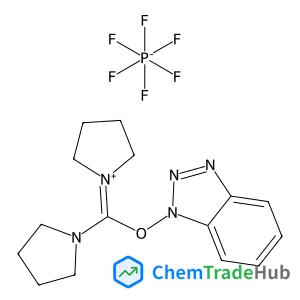
(1H-Benzotriazol-1-yloxy)(di-1-pyrrolidinyl)methylium hexafluorophosphate
CAS Number:
105379-24-6
Molecular Formula:
C15H21F6N5OP
Recommended Suppliers





Disclaimer
This page provides academic journal information for reference and research purposes only. We are not affiliated with any journal publishers and do not handle publication submissions. For publication-related inquiries, please contact the respective journal publishers directly.
If you notice any inaccuracies in the information displayed, please contact us at support@chemtradehub.com. We will promptly review and address your concerns.