












Microreactor-based reaction optimization in organic chemistry—glycosylation as a challenge
Literature Information
Publication Date
2004-12-17
DOI
10.1039/B414503H
Impact Factor
6.222
Authors
Daniel M. Ratner, Edward R. Murphy, Manish Jhunjhunwala, Daniel A. Snyder, Klavs F. Jensen
View Original
Abstract
Glycosylation reactions are performed rapidly over a wide range of conditions as an example of microreactor-based method optimization and process development in organic chemistry.
Related Literature
Stabilization of cobalt oxyhydrate superconductor
Zhi Ren, Cao Wang, Xiang-fan Xu, Guang-han Cao, Zhu-an Xu, Yu-heng Zhang
2008-03-03
Communication
DOI: 10.1039/B800378E
Isolation and X-ray structural characterization of tetraisopropylpyrene cation radical
Moloy Banerjee, Vijay S. Vyas, Sergey V. Lindeman, Rajendra Rathore
2008-02-28
Communication
DOI: 10.1039/B800168E
Photoinduced CO release, cellular uptake and cytotoxicity of a tris(pyrazolyl)methane (tpm) manganese tricarbonyl complex
Johanna Niesel, Antonio Pinto, Harmel W. Peindy N'Dongo, Klaus Merz, Ingo Ott, Ronald Gust, Ulrich Schatzschneider
2008-02-08
Communication
DOI: 10.1039/B719075A
A design concept of long-wavelength fluorescent analogs of rhodamine dyes: replacement of oxygen with silicon atom
Meiyan Fu, Yi Xiao, Xuhong Qian, Defeng Zhao, Yufang Xu
2008-02-14
Communication
DOI: 10.1039/B718544H
Improved 3D DOSY-TOCSY experiment for mixture analysis
Stéphane Viel, Stefano Caldarelli
2008-03-31
Communication
DOI: 10.1039/B802789G
Size matters—strong binding of the terephthalate dianion by thiourea functionalised fused [n]polynorbornane hosts
Adam J. Lowe, Frederick M. Pfeffer
2008-03-18
Communication
DOI: 10.1039/B801798K
One-step solid-state thermolysis of a metal–organic framework: a simple and facile route to large-scale of multiwalled carbon nanotubes
Linyun Chen, Junfeng Bai, Chunzhao Wang, Yi Pan, Manfred Scheer, Xiaozeng You
2008-01-31
Communication
DOI: 10.1039/B718476J
Recent progress in the immobilization of catalysts for selective oxidation in the liquid phase
Luc Alaerts, Joos Wahlen, Pierre A. Jacobs, Dirk E. De Vos
2008-01-08
Feature Article
DOI: 10.1039/B715691J
You might also like
Compound Q&A
What precautions should be taken when handling 4-(2-Furylmethyl)thiomorpholine 1,1-dioxide (CAS: 79206-94-3)?
When handling 4-(2-Furylmethyl)thiomorpholine 1,1-dioxide (CAS: 79206-94-3), it ...
79206-94-34-(2-Furylmethyl)thi...
Compound Q&A
What precautions should be taken when handling 4-Chloro-N-[2-(4-morpholinyl)ethyl]benzamide (CAS: 71320-77-9)?
When handling 4-Chloro-N-[2-(4-morpholinyl)ethyl]benzamide (CAS: 71320-77-9), it...
71320-77-94-Chloro-N-[2-(4-mor...
Compound Q&A
How should waste containing 2-[2-(2-Methoxyethoxy)ethoxy]ethyl 4-methylbenzenesulfonate (CAS: 62921-74-8) be handled?
Waste containing this compound (CAS: 62921-74-8) should be handled according to ...
62921-74-82-[2-(2-Methoxyethox...
Compound Q&A
How should waste containing (S)-Methyl 2-amino-3-cyclohexylpropanoate be handled?
Waste containing (S)-Methyl 2-amino-3-cyclohexylpropanoate should be collected i...
40056-18-6(S)-Methyl 2-amino-3...
Compound Q&A
How is 5-({4-[(2S,4R)-4-Hydroxy-2-methyltetrahydro-2H-pyran-4-yl]-2-thienyl}sulfanyl)-1-methyl-1,3-dihydro-2H-indol-2-one (CAS: 166882-70-8) typically synthesized?
This compound can be synthesized using a multi-step process involving the conjug...
166882-70-85-({4-[(2S,4R)-4-Hyd...
Compound Q&A
Are there alternatives to (2E)-3-(3,4-Dichlorophenyl)acrylic acid (CAS: 7312-27-8) in synthesis?
There are several alternatives to (2E)-3-(3,4-Dichlorophenyl)acrylic acid in syn...
7312-27-8(2E)-3-(3,4-Dichloro...
Compound Q&A
How should Ethyl 6-(2-nitrophenyl)imidazo[2,1-b][1,3]thiazole-3-carboxylate (CAS: 925437-84-9) be stored?
Ethyl 6-(2-nitrophenyl)imidazo[2,1-b][1,3]thiazole-3-carboxylate (CAS: 925437-84...
925437-84-9Ethyl 6-(2-nitrophen...
Compound Q&A
How should waste containing 2-(1,3-Thiazol-2-yl)ethanamine (CAS: 18453-07-1) be handled?
Waste containing 2-(1,3-Thiazol-2-yl)ethanamine (CAS: 18453-07-1) should be coll...
18453-07-12-(1,3-Thiazol-2-yl)...
Compound Q&A
How is Methyl 5-iodo-2-methylbenzoate (CAS: 103440-54-6) typically synthesized?
Methyl 5-iodo-2-methylbenzoate can be synthesized through the iodination of meth...
103440-54-6Methyl 5-iodo-2-meth...
Compound Q&A
How is 5-Chloro[1,2,4]triazolo[1,5-a]pyridine (CAS: 1427399-34-5) typically synthesized?
5-Chloro[1,2,4]triazolo[1,5-a]pyridine is commonly synthesized via the condensat...
1427399-34-55-Chloro[1,2,4]triaz...
Source Journal
Chemical Communications

CiteScore:
8.6
Self-citation Rate:
4.7%
Articles per Year:
2458
ChemComm publishes urgent research which is of outstanding significance and interest to experts in the field, while also appealing to the journal’s broad chemistry readership. Our communication format is ideally suited to short, urgent studies that are of such importance that they require accelerated publication. Our scope covers all topics in chemistry, and research at the interface of chemistry and other disciplines (such as materials science, nanoscience, physics, engineering and biology) where there is a significant novelty in the chemistry aspects. Major topic areas covered include: Analytical Chemistry Catalysis Chemical Biology and medicinal chemistry Computational Chemistry and Machine Learning Energy and sustainable chemistry Environmental Chemistry Green Chemistry Inorganic Chemistry Materials Chemistry Nanoscience Organic Chemistry Physical Chemistry Polymer Chemistry Supramolecular Chemistry
Recommended Compounds
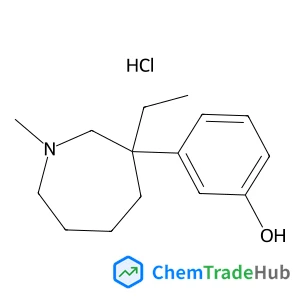
3-(3-Ethyl-1-methyl-3-azepanyl)phenol hydrochloride (1:1)
CAS Number:
59263-76-2
Molecular Formula:
C15H24ClNO
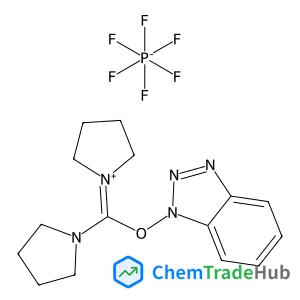
(1H-Benzotriazol-1-yloxy)(di-1-pyrrolidinyl)methylium hexafluorophosphate
CAS Number:
105379-24-6
Molecular Formula:
C15H21F6N5OP

Methyl 2-cyano-3,12-dioxooleana-1,9(11)-dien-28-oate
CAS Number:
218600-53-4
Molecular Formula:
C32H43NO4
![[4-(Heptyloxy)phenyl]boronic acid structure](https://static.chemtradehub.com/structs/136/136370-19-9-ad33.webp "[4-(Heptyloxy)phenyl]boronic acid structure")
Recommended Suppliers




Disclaimer
This page provides academic journal information for reference and research purposes only. We are not affiliated with any journal publishers and do not handle publication submissions. For publication-related inquiries, please contact the respective journal publishers directly.
If you notice any inaccuracies in the information displayed, please contact us at support@chemtradehub.com. We will promptly review and address your concerns.