












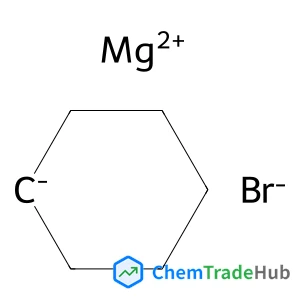
1,4-Cyclohexadienes as mechanistic probes for the Jacobsen epoxidation: evidence for radical pathways
Literature Information
Publication Date
2005-01-17
DOI
10.1039/B415723K
Impact Factor
6.222
Authors
Ulrike Engelhardt, Torsten Linker
View Original
Abstract
1,4-Cyclohexadienes allow a direct comparison of epoxidation and C–H oxidation within the same molecule and give evidence for radical pathways during the Jacobsen epoxidation.
Related Literature
A homospin iron(ii) single chain magnet‡
Szymon W. Przybylak, Floriana Tuna, Simon J. Teat, Richard E. P. Winpenny
2008-02-22
Communication
DOI: 10.1039/B717277J
Unconventional thermodynamically stable cis isomer and trans to cis thermal isomerization in reversibly photoresponsive [0.0](3,3′)-azobenzenophane
Yasuo Norikane, Ryuzi Katoh, Nobuyuki Tamaoki
2008-03-03
Communication
DOI: 10.1039/B718813G
A new enantiopure unsaturated dicarboxylate as a 4-connected unit in a flexible homochiral PtS-type framework
Jian Zhang, Xianhui Bu
2008-02-11
Communication
DOI: 10.1039/B719368H
Exploring the relationship between cocrystal stability and symmetry: is Wallach's rule applicable to multi-component solids?
Tomislav Friščić, László Fábián, Jonathan C. Burley, David G. Reid, Melinda J. Duer, William Jones
2008-01-30
Communication
DOI: 10.1039/B717532A
Construction of aryl-substituted triquinanes through the interrupted Nazarov reaction
Curtis J. Rieder, Ryan J. Fradette, F. G. West
2008-02-25
Communication
DOI: 10.1039/B800800K
Asymmetric oxidation of sulfides under solvent-free or highly concentrated conditions
Kazuhiro Matsumoto, Tetsufumi Yamaguchi, Tsutomu Katsuki
2008-02-05
Communication
DOI: 10.1039/B719265G
Photo-responsive gel droplet as a nano- or pico-litre container comprising a supramolecular hydrogel
Shinji Matsumoto, Satoshi Yamaguchi, Atsuhiko Wada, Toshihiro Matsui, Masato Ikeda
2008-02-25
Communication
DOI: 10.1039/B719004B
Synthesis of metallic magnesium nanoparticles by sonoelectrochemistry
Iris Haas, Aharon Gedanken
2008-02-08
Communication
DOI: 10.1039/B717670H
Benzo[1,2-b:4,5-b′]bis[b]benzothiophene as solution processible organic semiconductor for field-effect transistors
Peng Gao, Dirk Beckmann, Hoi Nok Tsao, Xinliang Feng, Volker Enkelmann, Wojciech Pisula, Klaus Müllen
2008-01-25
Communication
DOI: 10.1039/B717608B
You might also like
Compound Q&A
What precautions should be taken when handling 4-(2-Furylmethyl)thiomorpholine 1,1-dioxide (CAS: 79206-94-3)?
When handling 4-(2-Furylmethyl)thiomorpholine 1,1-dioxide (CAS: 79206-94-3), it ...
79206-94-34-(2-Furylmethyl)thi...
Compound Q&A
What precautions should be taken when handling 4-Chloro-N-[2-(4-morpholinyl)ethyl]benzamide (CAS: 71320-77-9)?
When handling 4-Chloro-N-[2-(4-morpholinyl)ethyl]benzamide (CAS: 71320-77-9), it...
71320-77-94-Chloro-N-[2-(4-mor...
Compound Q&A
How should waste containing 2-[2-(2-Methoxyethoxy)ethoxy]ethyl 4-methylbenzenesulfonate (CAS: 62921-74-8) be handled?
Waste containing this compound (CAS: 62921-74-8) should be handled according to ...
62921-74-82-[2-(2-Methoxyethox...
Compound Q&A
How should waste containing (S)-Methyl 2-amino-3-cyclohexylpropanoate be handled?
Waste containing (S)-Methyl 2-amino-3-cyclohexylpropanoate should be collected i...
40056-18-6(S)-Methyl 2-amino-3...
Compound Q&A
How is 5-({4-[(2S,4R)-4-Hydroxy-2-methyltetrahydro-2H-pyran-4-yl]-2-thienyl}sulfanyl)-1-methyl-1,3-dihydro-2H-indol-2-one (CAS: 166882-70-8) typically synthesized?
This compound can be synthesized using a multi-step process involving the conjug...
166882-70-85-({4-[(2S,4R)-4-Hyd...
Compound Q&A
Are there alternatives to (2E)-3-(3,4-Dichlorophenyl)acrylic acid (CAS: 7312-27-8) in synthesis?
There are several alternatives to (2E)-3-(3,4-Dichlorophenyl)acrylic acid in syn...
7312-27-8(2E)-3-(3,4-Dichloro...
Compound Q&A
How should Ethyl 6-(2-nitrophenyl)imidazo[2,1-b][1,3]thiazole-3-carboxylate (CAS: 925437-84-9) be stored?
Ethyl 6-(2-nitrophenyl)imidazo[2,1-b][1,3]thiazole-3-carboxylate (CAS: 925437-84...
925437-84-9Ethyl 6-(2-nitrophen...
Compound Q&A
How should waste containing 2-(1,3-Thiazol-2-yl)ethanamine (CAS: 18453-07-1) be handled?
Waste containing 2-(1,3-Thiazol-2-yl)ethanamine (CAS: 18453-07-1) should be coll...
18453-07-12-(1,3-Thiazol-2-yl)...
Compound Q&A
How is Methyl 5-iodo-2-methylbenzoate (CAS: 103440-54-6) typically synthesized?
Methyl 5-iodo-2-methylbenzoate can be synthesized through the iodination of meth...
103440-54-6Methyl 5-iodo-2-meth...
Compound Q&A
How is 5-Chloro[1,2,4]triazolo[1,5-a]pyridine (CAS: 1427399-34-5) typically synthesized?
5-Chloro[1,2,4]triazolo[1,5-a]pyridine is commonly synthesized via the condensat...
1427399-34-55-Chloro[1,2,4]triaz...
Source Journal
Chemical Communications

CiteScore:
8.6
Self-citation Rate:
4.7%
Articles per Year:
2458
ChemComm publishes urgent research which is of outstanding significance and interest to experts in the field, while also appealing to the journal’s broad chemistry readership. Our communication format is ideally suited to short, urgent studies that are of such importance that they require accelerated publication. Our scope covers all topics in chemistry, and research at the interface of chemistry and other disciplines (such as materials science, nanoscience, physics, engineering and biology) where there is a significant novelty in the chemistry aspects. Major topic areas covered include: Analytical Chemistry Catalysis Chemical Biology and medicinal chemistry Computational Chemistry and Machine Learning Energy and sustainable chemistry Environmental Chemistry Green Chemistry Inorganic Chemistry Materials Chemistry Nanoscience Organic Chemistry Physical Chemistry Polymer Chemistry Supramolecular Chemistry
Recommended Compounds
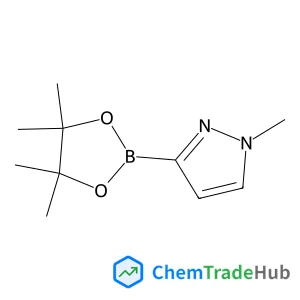
1-Methyl-3-(4,4,5,5-tetramethyl-1,3,2-dioxaborolan-2-yl)-1H-pyrazole
CAS Number:
1020174-04-2
Molecular Formula:
C10H17BN2O2

Recommended Suppliers




Disclaimer
This page provides academic journal information for reference and research purposes only. We are not affiliated with any journal publishers and do not handle publication submissions. For publication-related inquiries, please contact the respective journal publishers directly.
If you notice any inaccuracies in the information displayed, please contact us at support@chemtradehub.com. We will promptly review and address your concerns.