












Self-powered triboelectric wearable biosensor using Scotch tape
Literature Information
Publication Date
2023-10-18
DOI
10.1039/D3TB01481A
Impact Factor
6.331
Authors
Yu Lei, Ryan T. Conners, Gang Wang
View Original
Abstract
A novel self-powered wearable triboelectric biosensor concept is proposed in this paper, which consists of Scotch tape and a metalized polyester sheet (Al/PET). The Scotch tape is the sensing element by exploring the interaction between the tape polypropylene backing material and the acrylic adhesive layer when pressing and releasing. The polypropylene surface only has partial positive charges because of a nonpolar surface, while the acrylic adhesive has a polar surface with positively and negatively charged and neutral regions. Atomic size gaps are formed because of the attractive and repulsive areas at the interface due to van der Waals forces. These density depleted regions act as ‘geometric’ gaps to produce triboelectric charges via contact and separation on a microscopic scale. This leads to our wearable biosensor design for measuring human body motion. Associated skin contraction and relaxation during body motion will activate the contact and separation between the polypropylene and acrylic adhesive layer when the sensor assembly is adhered to the skin. Various demonstrations were conducted to detect different body motions, including elbow flexion at a low angle, forearm protonation, forearm supination, knee flexion/extension, proximal interphalangeal flexion/extension, temple motion due to eye blinking, and temporomandibular opening. Unique features can be identified which are associated with different body motions. Moreover, the measurements from our triboelectric sensor correlate well with the results from a commercial electromyography (EMG) sensor in an isokinetic leg extension test, which leads to a new method of measuring human muscle activation.
Recommended Journals
Related Literature
Enhanced temperature stability in the R–T phase boundary with dominating intrinsic contribution
Xiang Lv, Jiagang Wu, Jianguo Zhu, Dingquan Xiao
2018-07-05
Paper
DOI: 10.1039/C8CP02891E
First-principles study of anion diffusion in lead-free halide double perovskites
Shuai Zhao, Jingting Luo, Ping Fan
2018-09-13
Paper
DOI: 10.1039/C8CP04150D
Comparison of quenching mechanisms in Gd3Al5−xGaxO12:Ce3+ (x = 3 and 5) garnet phosphors by photocurrent excitation spectroscopy
Tadeusz Lesniewski, Sebastian Mahlik, Kazuki Asami, Jumpei Ueda, Marek Grinberg, Setsuhisa Tanabe
2018-06-11
Paper
DOI: 10.1039/C8CP03176B
Electronic structure of twisted and planar rubrene molecules: a density functional study
T. Mukherjee, Sumona Sinha
2018-06-07
Paper
DOI: 10.1039/C8CP02318B
Photophysics of indole upon X-ray absorption
Cédric Bomme, Denis Anielski, Benjamin Erk, Jens Viefhaus
2018-07-18
Paper
DOI: 10.1039/C8CP00936H
MXene nanoribbons as electrocatalysts for the hydrogen evolution reaction with fast kinetics
Xiaowei Yang, Nan Gao, Si Zhou, Jijun Zhao
2018-07-06
Paper
DOI: 10.1039/C8CP02635A
Self-healing and dewetting dynamics of a polymer nanofilm on a smooth substrate: strategies for dewetting suppression
Yu-Hsuan Weng, Yu-Jane Sheng
2018-07-16
Paper
DOI: 10.1039/C8CP03215G
What's in a name? ‘Coinage-metal’ non-covalent bonds and their definition
Anthony C. Legon, Nicholas R. Walker
2018-07-02
Perspective
DOI: 10.1039/C8CP03432J
Aggregation and fragmentation in liquids with dispersed nanoparticles
2018-06-26
Paper
DOI: 10.1039/C8CP01594E
You might also like
Compound Q&A
What precautions should be taken when handling 4-(2-Furylmethyl)thiomorpholine 1,1-dioxide (CAS: 79206-94-3)?
When handling 4-(2-Furylmethyl)thiomorpholine 1,1-dioxide (CAS: 79206-94-3), it ...
79206-94-34-(2-Furylmethyl)thi...
Compound Q&A
What precautions should be taken when handling 4-Chloro-N-[2-(4-morpholinyl)ethyl]benzamide (CAS: 71320-77-9)?
When handling 4-Chloro-N-[2-(4-morpholinyl)ethyl]benzamide (CAS: 71320-77-9), it...
71320-77-94-Chloro-N-[2-(4-mor...
Compound Q&A
How should waste containing 2-[2-(2-Methoxyethoxy)ethoxy]ethyl 4-methylbenzenesulfonate (CAS: 62921-74-8) be handled?
Waste containing this compound (CAS: 62921-74-8) should be handled according to ...
62921-74-82-[2-(2-Methoxyethox...
Compound Q&A
How should waste containing (S)-Methyl 2-amino-3-cyclohexylpropanoate be handled?
Waste containing (S)-Methyl 2-amino-3-cyclohexylpropanoate should be collected i...
40056-18-6(S)-Methyl 2-amino-3...
Compound Q&A
How is 5-({4-[(2S,4R)-4-Hydroxy-2-methyltetrahydro-2H-pyran-4-yl]-2-thienyl}sulfanyl)-1-methyl-1,3-dihydro-2H-indol-2-one (CAS: 166882-70-8) typically synthesized?
This compound can be synthesized using a multi-step process involving the conjug...
166882-70-85-({4-[(2S,4R)-4-Hyd...
Compound Q&A
Are there alternatives to (2E)-3-(3,4-Dichlorophenyl)acrylic acid (CAS: 7312-27-8) in synthesis?
There are several alternatives to (2E)-3-(3,4-Dichlorophenyl)acrylic acid in syn...
7312-27-8(2E)-3-(3,4-Dichloro...
Compound Q&A
How should Ethyl 6-(2-nitrophenyl)imidazo[2,1-b][1,3]thiazole-3-carboxylate (CAS: 925437-84-9) be stored?
Ethyl 6-(2-nitrophenyl)imidazo[2,1-b][1,3]thiazole-3-carboxylate (CAS: 925437-84...
925437-84-9Ethyl 6-(2-nitrophen...
Compound Q&A
How should waste containing 2-(1,3-Thiazol-2-yl)ethanamine (CAS: 18453-07-1) be handled?
Waste containing 2-(1,3-Thiazol-2-yl)ethanamine (CAS: 18453-07-1) should be coll...
18453-07-12-(1,3-Thiazol-2-yl)...
Compound Q&A
How is Methyl 5-iodo-2-methylbenzoate (CAS: 103440-54-6) typically synthesized?
Methyl 5-iodo-2-methylbenzoate can be synthesized through the iodination of meth...
103440-54-6Methyl 5-iodo-2-meth...
Compound Q&A
How is 5-Chloro[1,2,4]triazolo[1,5-a]pyridine (CAS: 1427399-34-5) typically synthesized?
5-Chloro[1,2,4]triazolo[1,5-a]pyridine is commonly synthesized via the condensat...
1427399-34-55-Chloro[1,2,4]triaz...
Source Journal
Journal of Materials Chemistry B

CiteScore:
12
Self-citation Rate:
4.9%
Articles per Year:
831
Journal of Materials Chemistry A, B & C cover high quality studies across all fields of materials chemistry. The journals focus on those theoretical or experimental studies that report new understanding, applications, properties and synthesis of materials. The journals have a strong history of publishing quality reports of interest to interdisciplinary communities and providing an efficient and rigorous service through peer review and publication. The journals are led by an international team of Editors-in-Chief and Associate Editors who are all active researchers in their fields. Journal of Materials Chemistry A, B & C are separated by the intended application of the material studied. Broadly, applications in energy and sustainability are of interest to Journal of Materials Chemistry A, applications in biology and medicine are of interest to Journal of Materials Chemistry B, and applications in optical, magnetic and electronic devices are of interest to Journal of Materials Chemistry C. More than one Journal of Materials Chemistry journal may be suitable for certain fields and researchers are encouraged to submit their paper to the journal that they feel best fits for their particular article. Example topic areas within the scope of Journal of Materials Chemistry B are listed below. This list is neither exhaustive nor exclusive. Antifouling coatings Biocompatible materials Bioelectronics Bioimaging Biomimetics Biomineralisation Bionics Biosensors Diagnostics Drug delivery Gene delivery Immunobiology Nanomedicine Regenerative medicine & Tissue engineering Scaffolds Soft robotics Stem cells Therapeutic devices image block All articles published in Journal of Materials Chemistry B from 2019 onwards will be indexed in MEDLINE®. Articles that primarily focus on providing insight into the underlying science and performance of biomaterials within a biological environment are more suited to our companion journal, Biomaterials Science.
Recommended Compounds
![N-[(Benzyloxy)carbonyl]serine structure](https://static.chemtradehub.com/structs/276/2768-56-1-77f7.webp "N-[(Benzyloxy)carbonyl]serine structure")
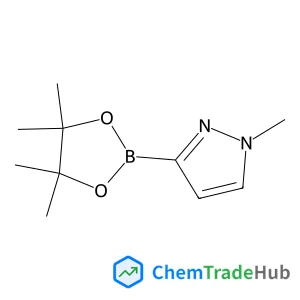
1-Methyl-3-(4,4,5,5-tetramethyl-1,3,2-dioxaborolan-2-yl)-1H-pyrazole
CAS Number:
1020174-04-2
Molecular Formula:
C10H17BN2O2
![1-Naphthalenesulfonic acid, 2-[(2-hydroxy-1-naphthalenyl)azo]-, bariumsalt (2:1) structure](https://static.chemtradehub.com/structs/110/1103-38-4-0b33.webp "1-Naphthalenesulfonic acid, 2-[(2-hydroxy-1-naphthalenyl)azo]-, bariumsalt (2:1) structure")
1-Naphthalenesulfonic acid, 2-[(2-hydroxy-1-naphthalenyl)azo]-, bariumsalt (2:1)
CAS Number:
1103-38-4
Molecular Formula:
C20H14BaN2O4S
Recommended Suppliers





Disclaimer
This page provides academic journal information for reference and research purposes only. We are not affiliated with any journal publishers and do not handle publication submissions. For publication-related inquiries, please contact the respective journal publishers directly.
If you notice any inaccuracies in the information displayed, please contact us at support@chemtradehub.com. We will promptly review and address your concerns.