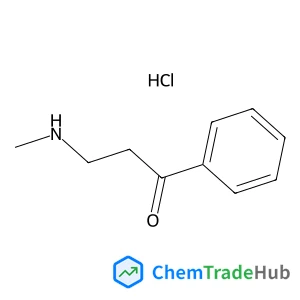
3-(Methylamino)-1-phenyl-1-propanone hydrochloride (1:1)
CAS Number:
2538-50-3
Molecular Formula:
C10H14ClNO
Shuai Zhao, Jingting Luo, Ping Fan
Halide ion diffusion in organolead halide perovskites has raised great concern in recent years and been considered as the reason for the hysteresis of current–voltage curves and degradation of perovskite solar cells. In this work, X-site halide ion diffusion in lead-free double perovskites Cs2AgBiX6 (X = Cl, Br), Cs2AgSbCl6 and Cs2AgInCl6 is investigated by first-principles calculations. The formation energies of X-site vacancies are calculated for these double perovskites, and predicted to be related to the electronic configurations of B-site cations. Cs2AgInCl6 is found to have the lowest vacancy formation energy among these double perovskites due to the unfilled s-orbitals of In3+. Using the climbing-image nudged elastic band method, these double perovskites are found with different barriers for halide ion migrations around Ag- and BIII-octahedrons due to different migration bottleneck radii and B–X bond characters. In our calculations Cs2AgBiBr6 shows the lowest energy barrier for X-site ion migration, which can explain the phenomenon of the huge hysteresis in Cs2AgBiBr6 solar cells reported. These results reveal X-site vacancy formation and diffusion properties in these lead-free halide double perovskites, which could be useful theoretical support for their optoelectronic application.
Olja Simoska, Keith J. Stevenson
DOI: 10.1039/C9AN01747J
Xiaoyong Liao, You Li, Hongying Cao, Yishu Zhao, Daniel P. Cassidy
DOI: 10.1039/C9AN01540J
Yao Qin, Daxiu Li, Ruo Yuan, Yun Xiang
DOI: 10.1039/C9AN01674K
Xifeng Chen, Bidou Wang, Guangxing Liu, Yuguo Tang, Peng Miao
DOI: 10.1039/C6AN00762G
Yusuke Niwa, Tatsumi Mizuta, Kenji Sueyoshi, Tatsuro Endo, Hideaki Hisamoto
DOI: 10.1039/C9AN01769K
Maowei Dou, Juan Lopez, Misael Rios, Oscar Garcia, Chuan Xiao, Michael Eastman, XiuJun Li
DOI: 10.1039/C6AN00370B
Xiao-xiao Niu, Qin-chao Xu, An-zhen Li, Yang-jie Li, Xiao-tai Zhang, Guo-wen Xing
DOI: 10.1039/C9AN01940E
Sebastian Tassoti, Martin Walenta, Alexander Pöcheim, Kathrin Buchberger, Olaf Kunert, Klaus Zangger
DOI: 10.1039/C9AN01364D
Xia Cheng, Caili Xu, Qian Chen, Yi Wang, Yun Zhang, Guangyin Fan
DOI: 10.1039/C9AN01480B
When handling 4-(2-Furylmethyl)thiomorpholine 1,1-dioxide (CAS: 79206-94-3), it ...
When handling 4-Chloro-N-[2-(4-morpholinyl)ethyl]benzamide (CAS: 71320-77-9), it...
Waste containing this compound (CAS: 62921-74-8) should be handled according to ...
Waste containing (S)-Methyl 2-amino-3-cyclohexylpropanoate should be collected i...
This compound can be synthesized using a multi-step process involving the conjug...
There are several alternatives to (2E)-3-(3,4-Dichlorophenyl)acrylic acid in syn...
Ethyl 6-(2-nitrophenyl)imidazo[2,1-b][1,3]thiazole-3-carboxylate (CAS: 925437-84...
Waste containing 2-(1,3-Thiazol-2-yl)ethanamine (CAS: 18453-07-1) should be coll...
Methyl 5-iodo-2-methylbenzoate can be synthesized through the iodination of meth...
5-Chloro[1,2,4]triazolo[1,5-a]pyridine is commonly synthesized via the condensat...

Physical Chemistry Chemical Physics (PCCP) is an international journal co-owned by 19 physical chemistry and physics societies from around the world. This journal publishes original, cutting-edge research in physical chemistry, chemical physics and biophysical chemistry. To be suitable for publication in PCCP, articles must include significant innovation and/or insight into physical chemistry; this is the most important criterion that reviewers and Editors will judge against when evaluating submissions. The journal has a broad scope and welcomes contributions spanning experiment, theory, computation and data science. Topical coverage includes spectroscopy, dynamics, kinetics, statistical mechanics, thermodynamics, electrochemistry, catalysis, surface science, quantum mechanics, quantum computing and machine learning. Interdisciplinary research areas such as polymers and soft matter, materials, nanoscience, energy, surfaces/interfaces, and biophysical chemistry are welcomed if they demonstrate significant innovation and/or insight into physical chemistry. Joined experimental/theoretical studies are particularly appreciated when complementary and based on up-to-date approaches.
![5-Acetyl-2,3-dihydrobenzo[b]furan structure](https://static.chemtradehub.com/structs/908/90843-31-5-eea4.webp "5-Acetyl-2,3-dihydrobenzo[b]furan structure")
![4-{2-[4-(2-Methyl-2-propanyl)phenyl]ethoxy}quinazoline structure](https://static.chemtradehub.com/structs/120/120928-09-8-d3db.webp "4-{2-[4-(2-Methyl-2-propanyl)phenyl]ethoxy}quinazoline structure")