












Green synthesis of heterolayered 2D nanohybrid catalytic hydrogel cell for environmentally-friendly water splitting
Literature Information
Publication Date
2023-12-17
DOI
10.1039/D3TA06580D
Impact Factor
12.732
Authors
Seonmyeong Noh, Thanh-Hai Le, Changjun Kim, Minseong Ju, Haney Lee
View Original
Abstract
In this study, a straightforward, eco-friendly strategy for the phase modulation of MoS2 in 2D materials was developed for green-solvent-phase co-exfoliation and subsequent solvent-free drying/annealing processes, yielding binary-metal oxide nanoparticulate-decorated heterolayered 2D nanohybrids. As a green solvent, ethanol with poly(N-vinyl-2-pyrrolidone) provided an effective surface tension for liquid-phase exfoliation of the 2D materials (MoS2 and graphene). Electron injection of binary metal oxides (NiFe2O4) and graphene functional groups to the Mo 4d orbital played an important role in the modulating phase conversion of semiconductive MoS2 to metallic MoS2 in the nanohybrids. Moreover, the introduction of MoS2 and graphene tuned the diameter (∼6 nm) and effective crystalline domains of the NiFe2O4 nanoparticles in the resulting nanohybrid. The electrocatalytic activity of the nanohybrids exhibited outstanding performance in the hydrogen and oxygen evolution reactions due to the synergetic effects of the modified MoS2/graphene/NiFe2O4 components. Density functional theory calculations and the Tafel slope indicated that the combination of 1T-MoS2/graphene/NiFe2O4 nanohybrids achieved a lower activation barrier at the first hydrogen absorption step and the RDS for the interaction of adsorbed oxygen atoms with hydroxide in the hydrogen and oxygen evolution reactions. The nanohybrids were prepared as symmetric electrodes to assemble an environmentally-benign hydrogel cell for water-splitting systems, exhibiting excellent stability in deswelling–swelling cycles. We believe that the proposed process allows for phase-modulating 2D materials while alleviating the negative impact on the environment, creating desirable functionality for various catalytic applications.
Related Literature
Aromaticity of acenes: the model of migrating π-circuits
Dariusz W. Szczepanik, Miquel Solà, Tadeusz M. Krygowski, Halina Szatylowicz, Marcin Andrzejak, Barbara Pawełek, Justyna Dominikowska, Mercedes Kukułka, Karol Dyduch
2018-04-27
Paper
DOI: 10.1039/C8CP01108G
Structural, electronic and adhesion characteristics of zinc/silica interfaces: ab initio study on zinc/β-cristobalite
Alexey Koltsov, Jean-Michel Mataigne
2018-01-29
Paper
DOI: 10.1039/C7CP08636A
Structural and electronic properties of V2O5 and their tuning by doping with 3d elements – modelling using the DFT+U method and dispersion correction
A. S. Dobrota, L. D. Rafailović
2018-04-18
Paper
DOI: 10.1039/C8CP00992A
Poly(vinylidene fluoride)/poly(3-methylthiophene) core–shell nanocomposites with improved structural and electronic properties of the conducting polymer component
Nikolay A. Ogurtsov, Valery N. Bliznyuk, Andrii V. Mamykin, Oleksandr L. Kukla, Yuri P. Piryatinski, Alexander A. Pud
2018-02-05
Paper
DOI: 10.1039/C7CP07604E
UV absorption of Criegee intermediates: quantitative cross sections from high-level ab initio theory
Š. Sršeň, D. Hollas, P. Slavíček
2018-01-31
Paper
DOI: 10.1039/C8CP00199E
Theoretical investigation of the infrared spectrum of small polyynes
Kirstin D. Doney, Dongfeng Zhao, John F. Stanton, Harold Linnartz
2017-11-03
Paper
DOI: 10.1039/C7CP06131E
Basic photophysical analysis of a thermally activated delayed fluorescence copper(i) complex in the solid state: theoretical estimations from a polarizable continuum model (PCM)-tuned range-separated density functional approach
Lingling Lv, Kun Yuan, Yongcheng Wang
2018-02-02
Paper
DOI: 10.1039/C7CP08264A
A drastic influence of the anion nature and concentration on high pressure intrusion–extrusion of electrolyte solutions in Silicalite-1
A. Ryzhikov, H. Nouali, T. J. Daou, J. Patarin
2018-02-01
Paper
DOI: 10.1039/C7CP06520E
Pressure-induced emission band separation of the hybridized local and charge transfer excited state in a TPE-based crystal
Xuedan Liu, Aisen Li, Weiqing Xu, Zhiyong Ma, Xinru Jia
2018-04-28
Paper
DOI: 10.1039/C8CP02096E
You might also like
Compound Q&A
What precautions should be taken when handling 2-Chloro-1,2-bis(4-methylphenyl)ethanone (CAS: 71193-32-3)?
When handling 2-Chloro-1,2-bis(4-methylphenyl)ethanone (CAS: 71193-32-3), it is ...
71193-32-32-Chloro-1,2-bis(4-m...
Compound Q&A
What industries use 4-Ethoxy-3-(5-methyl-4-oxo-7-propyl-1,4-dihydroimidazo[5,1-f][1,2,4]triazin-2-yl)benzenesulfonyl chloride (CAS: 224789-26-8)?
4-Ethoxy-3-(5-methyl-4-oxo-7-propyl-1,4-dihydroimidazo[5,1-f][1,2,4]triazin-2-yl...
224789-26-84-Ethoxy-3-(5-methyl...
Compound Q&A
How should Methyl 3-Oxo-4-Androsten-17-Carboxylate (CAS: 2681-55-2) be stored?
Methyl 3-Oxo-4-Androsten-17-Carboxylate (CAS: 2681-55-2) should be stored in a c...
2681-55-2Methyl 3-Oxo-4-Andro...
Compound Q&A
What are the main uses of (R)-3-Amino-4-(3-hexylphenylamino)-4-oxobutylphosphonic acid (CAS: 909725-61-7)?
(R)-3-Amino-4-(3-hexylphenylamino)-4-oxobutylphosphonic acid is primarily used i...
909725-61-7(R)-3-Amino-4-(3-hex...
Compound Q&A
What regulatory guidelines apply to 2-Methyl-2-propanyl 3-amino-3-carbamoyl-1-azetidinecarboxylate (CAS: 1254120-14-3)?
2-Methyl-2-propanyl 3-amino-3-carbamoyl-1-azetidinecarboxylate (CAS: 1254120-14-...
1254120-14-32-Methyl-2-propanyl ...
Compound Q&A
Are there alternatives to (E)-4-(tert-Butoxy)-4-oxobut-2-enoic acid (CAS: 135355-96-3) in synthesis?
There are alternative reagents that can be used in synthesis instead of (E)-4-(t...
135355-96-3(E)-4-(tert-Butoxy)-...
Compound Q&A
What are the physical and chemical properties of [2-(3-Chlorophenyl)-1,3-thiazol-4-yl]methanol (CAS: 121202-20-8)?
[2-(3-Chlorophenyl)-1,3-thiazol-4-yl]methanol (CAS: 121202-20-8) is a crystallin...
121202-20-8[2-(3-Chlorophenyl)-...
Compound Q&A
What is the market or research trend for Methyl (2S)-[(4S)-2,2-dimethyl-1,3-dioxolan-4-yl]{[(4-methylphenyl)sulfonyl]oxy}acetate (CAS: 166249-17-8)?
The market and research trends for Methyl (2S)-[(4S)-2,2-dimethyl-1,3-dioxolan-4...
166249-17-8Methyl (2S)-[(4S)-2,...
Compound Q&A
What is the market or research trend for 1-Bromo-2-isocyanatoethane (CAS: 42865-19-0)?
The market for 1-Bromo-2-isocyanatoethane (CAS: 42865-19-0) is driven by its use...
42865-19-01-Bromo-2-isocyanato...
Compound Q&A
What are the main uses of 4-Nitro-D-phenylalanine hydrochloride (CAS: 147065-06-3)?
4-Nitro-D-phenylalanine hydrochloride (CAS: 147065-06-3) is primarily used in re...
147065-06-34-Nitro-D-phenylalan...
Source Journal
Journal of Materials Chemistry A

CiteScore:
19.5
Self-citation Rate:
4.7%
Articles per Year:
2211
Journal of Materials Chemistry A, B & C cover high quality studies across all fields of materials chemistry. The journals focus on those theoretical or experimental studies that report new understanding, applications, properties and synthesis of materials. The journals have a strong history of publishing quality reports of interest to interdisciplinary communities and providing an efficient and rigorous service through peer review and publication. The journals are led by an international team of Editors-in-Chief and Associate Editors who are all active researchers in their fields. Journal of Materials Chemistry A, B & C are separated by the intended application of the material studied. Broadly, applications in energy and sustainability are of interest to Journal of Materials Chemistry A, applications in biology and medicine are of interest to Journal of Materials Chemistry B, and applications in optical, magnetic and electronic devices are of interest to Journal of Materials Chemistry C. More than one Journal of Materials Chemistry journal may be suitable for certain fields and researchers are encouraged to submit their paper to the journal that they feel best fits for their particular article. Example topic areas within the scope of Journal of Materials Chemistry A are listed below. This list is neither exhaustive nor exclusive. Artificial photosynthesis Batteries Carbon dioxide conversion Catalysis Fuel cells Gas capture/separation/storage Green/sustainable materials Hydrogen generation Hydrogen storage Photocatalysis Photovoltaics Self-cleaning materials Self-healing materials Sensors Supercapacitors Thermoelectrics Water splitting Water treatment
Recommended Compounds
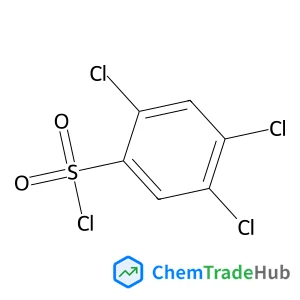
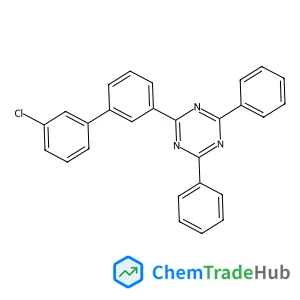
2-(3'-Chlorobiphenyl-3-yl)-4,6-diphenyl-1,3,5-triazine
CAS Number:
1443049-83-9
Molecular Formula:
C27H18ClN3

Recommended Suppliers





Disclaimer
This page provides academic journal information for reference and research purposes only. We are not affiliated with any journal publishers and do not handle publication submissions. For publication-related inquiries, please contact the respective journal publishers directly.
If you notice any inaccuracies in the information displayed, please contact us at support@chemtradehub.com. We will promptly review and address your concerns.