












![2,4-Dichloro-6-isopropyl-5H-pyrrolo[3,4-d]pyrimidin-7(6H)-one structure](https://static.chemtradehub.com/structs/107/1079649-94-7-ad4a.webp "2,4-Dichloro-6-isopropyl-5H-pyrrolo[3,4-d]pyrimidin-7(6H)-one structure")
2,4-Dichloro-6-isopropyl-5H-pyrrolo[3,4-d]pyrimidin-7(6H)-one
CAS Number:
1079649-94-7
Molecular Formula:
C9H9Cl2N3O
Lingling Lv, Kun Yuan, Yongcheng Wang
A quantitative understanding of photophysical processes is fundamental for designing novel thermally activated delayed fluorescence (TADF) materials. Taking a Cu(pop)(pz2Bph2) crystal as a typical TADF molecular model, we computed the conversion and decay rates of the first excited singlet state (S1) and triplet state (T1) at different temperatures by employing the thermal vibration correlation function (TVCF) approach. For the consideration of the solid-state environment, a methodology, which is based on the combination of a nonempirical, optimally tuned range-separated hybrid functional with the polarizable continuum model, was applied. Our calculated results are in excellent agreement with the experimentally available data. It is found that the reverse intersystem crossing (RISC) from T1 to S1 proceeds at a rate of kRISC = 6.34 × 10⁵ s−1 and can compete with the radiative decay rate (kTr = 3.29 × 10³ s−1) and nonradiative intersystem crossing rate (k0ISC = 1.48 × 10² s−1) of T1 at 300 K. This implies that the S1 state can be repopulated from the T1 state, TADF should be observed and the TADF decay time was found to be τ (300 K) = 9.68 μs by fitting calculations. In addition, the calculations indicate that the free rotation of the phenylene ring in the pop ligand can provide an important channel to energy conversion between T1 and S1. But, at a low temperature of T < 100 K, the situation will experience a larger change. The RISC rate becomes very small, kRISC ≪ kTr or kISC, and it cannot induce an occurrence of delayed fluorescence. As a consequence, Cu(pop)(pz2Bph2) is a highly attractive candidate for applications of TADF.
Vivek Shukla, Ashish Bhatnagar, Satish K. Verma, Anant P. Pandey, Alok K. Vishwakarma, Pankaj Srivastava, T. P. Yadav, O. N. Srivastava
DOI: 10.1039/D1MA00012H
Rachel E. Sully, Hemda Garelick, Eriketi Z. Loizidou, Adrian G. Podoleanu, Vladimir Gubala
DOI: 10.1039/D1MA00135C
Xiaosong Xiong, Ruoyu Zhi, Qi Zhou, Wenqi Yan, Yusong Zhu, Yuhui Chen, Lijun Fu, Nengfei Yu, Yuping Wu
DOI: 10.1039/D1MA00121C
Ângelo C. Salvador, Mickael da C. Santos, Jorge A. Saraiva
DOI: 10.1039/B918879G
Paul R. D. Mason, Jan Košler, Paul J. Sylvester, Simon Meffan-Main
DOI: 10.1039/B510883G
Stefan Stürup, Lars Bendahl, Bente Gammelgaard
DOI: 10.1039/B514633J
Bo Yang, Joshua I. Wheeler, Brett Sorensen, Robert Steagall, Taylor Nielson, Jianhua Yao, Jose Mendez-Arroyo, Daniel H. Ess
DOI: 10.1039/D1MA00330E
Jennifer Neumann, Olav Grundmann, Jorg Thöming, Michael Schulte, Stefan Stolte
DOI: 10.1039/B918453H
When handling 4-Methyl-6-(trifluoromethyl)quinoline (CAS: 40716-16-3), safety go...
4-(3,5-Difluorophenyl)aniline is an aromatic organic compound with the CAS numbe...
5-{[4-(Trifluoromethyl)phenyl]sulfanyl}-1,2,3-thiadiazole-4-carboxylic acid can ...
The market for 4-Benzylaniline hydrochloride (CAS: 6317-57-3) is steadily growin...
[3-(Diethylsulfamoyl)phenyl]boronic acid is generally considered safe when handl...
3-Bromo-2,5-dimethoxyaniline is mainly used in the pharmaceutical and chemical i...
N-Methyl-1-(5-methyl-1H-indol-3-yl)methanamine (CAS: 915922-67-7) is subject to ...
This compound is primarily used in the pharmaceutical industry for the synthesis...
2-Methyl-2-propanyl [(1S,3R)-3-aminocyclohexyl]carbamate (CAS: 1298101-47-9) sho...
Ethyl 2-bromo-4,4,4-trifluorobutanoate (CAS: 367-33-9) is utilized in the pharma...

Physical Chemistry Chemical Physics (PCCP) is an international journal co-owned by 19 physical chemistry and physics societies from around the world. This journal publishes original, cutting-edge research in physical chemistry, chemical physics and biophysical chemistry. To be suitable for publication in PCCP, articles must include significant innovation and/or insight into physical chemistry; this is the most important criterion that reviewers and Editors will judge against when evaluating submissions. The journal has a broad scope and welcomes contributions spanning experiment, theory, computation and data science. Topical coverage includes spectroscopy, dynamics, kinetics, statistical mechanics, thermodynamics, electrochemistry, catalysis, surface science, quantum mechanics, quantum computing and machine learning. Interdisciplinary research areas such as polymers and soft matter, materials, nanoscience, energy, surfaces/interfaces, and biophysical chemistry are welcomed if they demonstrate significant innovation and/or insight into physical chemistry. Joined experimental/theoretical studies are particularly appreciated when complementary and based on up-to-date approaches.
![Imidazo[1,2-c]pyrimidine structure](https://static.chemtradehub.com/structs/274/274-78-2-8b4c.webp "Imidazo[1,2-c]pyrimidine structure")
![(4aR,5S,6R,8aS)-5-[2-(3-Furyl)ethyl]-8a-(hydroxymethyl)-5,6-dimethyl-3,4,4a,5,6,7,8,8a-octahydro-1-naphthalenecarboxylic acid structure](https://static.chemtradehub.com/structs/184/18411-75-1-d4cd.webp "(4aR,5S,6R,8aS)-5-[2-(3-Furyl)ethyl]-8a-(hydroxymethyl)-5,6-dimethyl-3,4,4a,5,6,7,8,8a-octahydro-1-naphthalenecarboxylic acid structure")
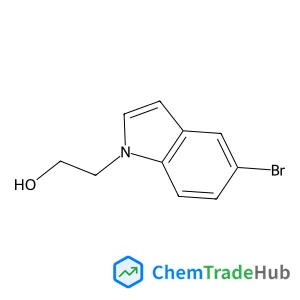
![6-Bromo-3-ethyl-3H-imidazo[4,5-b]pyridine structure](https://static.chemtradehub.com/structs/103/1033202-59-3-2a8f.webp "6-Bromo-3-ethyl-3H-imidazo[4,5-b]pyridine structure")




