












Aromaticity of acenes: the model of migrating π-circuits
Literature Information
Publication Date
2018-04-27
DOI
10.1039/C8CP01108G
Impact Factor
3.676
Authors
Dariusz W. Szczepanik, Miquel Solà, Tadeusz M. Krygowski, Halina Szatylowicz, Marcin Andrzejak, Barbara Pawełek, Justyna Dominikowska, Mercedes Kukułka, Karol Dyduch
View Original
Abstract
In this work we extend the concept of migrating Clar's sextets to explain local aromaticity trends in linear acenes predicted by theoretical calculations and experimental data. To assess the link between resonance and reactivity and to rationalize the constant-height AFM image of pentacene we used the electron density of delocalized bonds and other functions of the one-electron density from conceptual density functional theory. The presented results provide evidence for migration of Clar's π-sextets and larger circuits in these systems, and clearly show that the link between the theoretical concept of aromaticity and the real electronic structure entails the separation of intra- and inter-ring resonance effects, which in the case of [n]acenes (n = 3, 4, 5) comes down to solving a system of simple linear equations.
Related Literature
A binary PMMA/PVDF blend film modified substrate enables a superior lithium metal anode for lithium batteries
Xiaosong Xiong, Ruoyu Zhi, Qi Zhou, Wenqi Yan, Yusong Zhu, Yuhui Chen, Lijun Fu, Nengfei Yu, Yuping Wu
2021-05-11
Communication
DOI: 10.1039/D1MA00121C
Gallium nanoparticles as novel inhibitors of Aβ40 aggregation
Kyabeth M. Torres, Ambar S. Delgado, Erika R. Serrano, Nitza V. Falcón-Cruz, Anamaris Meléndez, Idalia Ramos, Deguo Du, Rolando Oyola
2021-07-09
Paper
DOI: 10.1039/D1MA00461A
Organolead halide perovskites beyond solar cells: self-powered devices and the associated progress and challenges
Avi Mathur, Hua Fan, Vivek Maheshwari
2021-06-30
Review Article
DOI: 10.1039/D1MA00377A
Controlled synthesis of Co3O4 nanopolyhedrons and nanosheets at low temperature
Hongying Liang, Joan M. Raitano, Lihua Zhang, Siu-Wai Chan
2009-11-06
Communication
DOI: 10.1039/B914447A
In situ determination of sulfur isotopes in sulfur-rich materials by laser ablation multiple-collector inductively coupled plasma mass spectrometry (LA-MC-ICP-MS)
Paul R. D. Mason, Jan Košler, Paul J. Sylvester, Simon Meffan-Main
2005-12-20
Paper
DOI: 10.1039/B510883G
Engineering poly(lactic-co-glycolic acid)/calcium carbonate microspheres with controllable topography and their cell response
2013-05-30
Paper
DOI: 10.1039/C3TB20284D
Noise characteristics and analytical precision of inductively coupled plasma mass spectrometry using a Vulkan direct injection nebuliser for sample introduction
Daniel Goitom, Erik Björn
2005-12-20
Paper
DOI: 10.1039/B514503A
Design of ternary Pt–CoZn alloy catalysts coated with N-doped carbon towards acidic oxygen reduction
Xieweiyi Ye, Yakun Xue, Kaijia Li, Wen Tang, Xiao Han, Xibo Zhang, Zhijia Song, Zhiping Zheng, Qin Kuang
2021-07-12
Paper
DOI: 10.1039/D1MA00475A
A new ion source design for inductively coupled plasma mass spectrometry (ICP-MS)
Andy Scheffer, Rolf Brandt, Carsten Engelhard, Stephan Evers, Norbert Jakubowski, Wolfgang Buscher
2005-12-01
Technical Note
DOI: 10.1039/B510779B
The flavoprotein-catalyzed reduction of aliphatic nitro-compounds represents a biocatalytic equivalent to the Nef-reaction
Katharina Durchschein, Bianca Ferreira-da Silva, Silvia Wallner, Peter Macheroux, Wolfgang Kroutil, Silvia Maria Glueck, Kurt Faber
2010-02-08
Paper
DOI: 10.1039/B922691E
You might also like
Compound Q&A
What precautions should be taken when handling 4-Methyl-6-(trifluoromethyl)quinoline (CAS: 40716-16-3)?
When handling 4-Methyl-6-(trifluoromethyl)quinoline (CAS: 40716-16-3), safety go...
40716-16-34-Methyl-6-(trifluor...
Compound Q&A
What is 4-(3,5-Difluorophenyl)aniline (CAS: 405058-00-6)?
4-(3,5-Difluorophenyl)aniline is an aromatic organic compound with the CAS numbe...
405058-00-64-(3,5-Difluoropheny...
Compound Q&A
How is 5-{[4-(Trifluoromethyl)phenyl]sulfanyl}-1,2,3-thiadiazole-4-carboxylic acid (CAS: 338982-07-3) typically synthesized?
5-{[4-(Trifluoromethyl)phenyl]sulfanyl}-1,2,3-thiadiazole-4-carboxylic acid can ...
338982-07-35-{[4-(Trifluorometh...
Compound Q&A
What is the market or research trend for 4-Benzylaniline hydrochloride (CAS: 6317-57-3)?
The market for 4-Benzylaniline hydrochloride (CAS: 6317-57-3) is steadily growin...
6317-57-34-Benzylaniline hydr...
Compound Q&A
Is [3-(Diethylsulfamoyl)phenyl]boronic acid (CAS: 871329-58-7) safe?
[3-(Diethylsulfamoyl)phenyl]boronic acid is generally considered safe when handl...
871329-58-7[3-(Diethylsulfamoyl...
Compound Q&A
What are the main uses of 3-Bromo-2,5-dimethoxyaniline (CAS: 115929-62-9)?
3-Bromo-2,5-dimethoxyaniline is mainly used in the pharmaceutical and chemical i...
115929-62-93-Bromo-2,5-dimethox...
Compound Q&A
What regulatory guidelines apply to N-Methyl-1-(5-methyl-1H-indol-3-yl)methanamine (CAS: 915922-67-7)?
N-Methyl-1-(5-methyl-1H-indol-3-yl)methanamine (CAS: 915922-67-7) is subject to ...
915922-67-7N-Methyl-1-(5-methyl...
Compound Q&A
What industries use Carbamic acid, N-[(5S)-5,6-diamino-6-oxohexyl]-, 1,1-dimethylethyl ester (CAS: 24828-96-4)?
This compound is primarily used in the pharmaceutical industry for the synthesis...
24828-96-4Carbamic acid, N-[(5...
Compound Q&A
How should 2-Methyl-2-propanyl [(1S,3R)-3-aminocyclohexyl]carbamate (CAS: 1298101-47-9) be stored?
2-Methyl-2-propanyl [(1S,3R)-3-aminocyclohexyl]carbamate (CAS: 1298101-47-9) sho...
1298101-47-92-Methyl-2-propanyl ...
Compound Q&A
What industries use Ethyl 2-bromo-4,4,4-trifluorobutanoate (CAS: 367-33-9)?
Ethyl 2-bromo-4,4,4-trifluorobutanoate (CAS: 367-33-9) is utilized in the pharma...
367-33-9Ethyl 2-bromo-4,4,4-...
Source Journal
Physical Chemistry Chemical Physics

CiteScore:
5.5
Self-citation Rate:
10.3%
Articles per Year:
3036
Physical Chemistry Chemical Physics (PCCP) is an international journal co-owned by 19 physical chemistry and physics societies from around the world. This journal publishes original, cutting-edge research in physical chemistry, chemical physics and biophysical chemistry. To be suitable for publication in PCCP, articles must include significant innovation and/or insight into physical chemistry; this is the most important criterion that reviewers and Editors will judge against when evaluating submissions. The journal has a broad scope and welcomes contributions spanning experiment, theory, computation and data science. Topical coverage includes spectroscopy, dynamics, kinetics, statistical mechanics, thermodynamics, electrochemistry, catalysis, surface science, quantum mechanics, quantum computing and machine learning. Interdisciplinary research areas such as polymers and soft matter, materials, nanoscience, energy, surfaces/interfaces, and biophysical chemistry are welcomed if they demonstrate significant innovation and/or insight into physical chemistry. Joined experimental/theoretical studies are particularly appreciated when complementary and based on up-to-date approaches.
Recommended Compounds
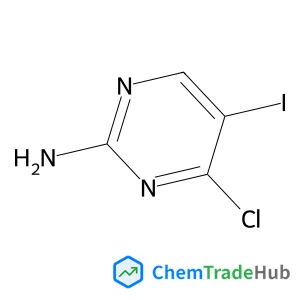
![2,4-Dichloro-6-isopropyl-5H-pyrrolo[3,4-d]pyrimidin-7(6H)-one structure](https://static.chemtradehub.com/structs/107/1079649-94-7-ad4a.webp "2,4-Dichloro-6-isopropyl-5H-pyrrolo[3,4-d]pyrimidin-7(6H)-one structure")
2,4-Dichloro-6-isopropyl-5H-pyrrolo[3,4-d]pyrimidin-7(6H)-one
CAS Number:
1079649-94-7
Molecular Formula:
C9H9Cl2N3O
Recommended Suppliers




Disclaimer
This page provides academic journal information for reference and research purposes only. We are not affiliated with any journal publishers and do not handle publication submissions. For publication-related inquiries, please contact the respective journal publishers directly.
If you notice any inaccuracies in the information displayed, please contact us at support@chemtradehub.com. We will promptly review and address your concerns.