













A donor–acceptor hydrogen-bonded organic framework with the turn-on fluorescence response of phenethylamine (drug analogue) via single-crystal to single-crystal transformation
Literature Information
Publication Date
2023-12-04
DOI
10.1039/D3TA05816F
Impact Factor
12.732
Authors
Yanhong Liu, Wenyan Dan, Bing Yan
View Original
Abstract
A water-stable hydrogen-bonded organic framework (TPPA-TMA) has been constructed from tris(4-(pyridin-4-yl)phenyl)amine (TPPA) and 1,3,5-benzenetricarboxylic acid (H3TMA), which exhibited highly efficient turn-on fluorescence sensing of phenylethylamine (PEA, drug analogue) in water with a detection limit of 2.56 μM and was selective toward PEA in the presence of aromatic interferents. The luminescence mechanism was demonstrated by the single crystal X-ray diffraction (SCXRD) test and the density functional theory (DFT) calculations. Two single crystals (HOF-TPPA and PEA-TMA) were obtained through the suspension of TPPA-TMA in PEA. SCXRD analysis showed that HOF-TPPA consists of TPPA and water molecules, indicating the structural transformation of TPPA-TMA after sensing PEA. The single crystal structure of PEA-TMA suggested that protonated PEA could combine with H3TMA in TPPA-TMA. In addition, DFT calculations further demonstrated that PEA induced the transformation of TPPA-TMA into HOF-TPPA through the synergistic effect of hydrogen bonding and electrostatic action.
Related Literature
In flagrante metallo-cyclophane self-assembly?
Peter J. Cragg, Fenton R. Heirtzler, Mark J. Howard, Ivan Prokes, Thomas Weyhermüller
2004-01-07
Communication
DOI: 10.1039/B310558J
Photochemical regulation of the activity of an endonuclease BamHI using an azobenzene moiety incorporated site-selectively into the dimer interface
Koji Nakayama, Masayuki Endo, Tetsuro Majima
2004-09-20
Communication
DOI: 10.1039/B409844G
The Sonogashira coupling reaction catalyzed by ultrafine nickel(0) powder
Pinhua Li, Yicheng Zhang
2004-01-27
Communication
DOI: 10.1039/B314246A
Bidentate amidineligands for nickel(0)-mediated coupling of carbon dioxide with unsaturated hydrocarbons
Masao Aoki, Motomu Kaneko, Sawa Izumi, Kazutoshi Ukai, Nobuharu Iwasawa
2004-09-29
Communication
DOI: 10.1039/B411802B
A (H2O)4/crown ether network spanned between organometallic complex metal fragments
Cristina Wippert Rodrigues, Christian Limberg, Hans Pritzkow
2004-10-15
Communication
DOI: 10.1039/B407475K
Stereoconservative Negishi arylation and alkynylation as an efficient approach to enantiopure 2,2′-diarylated 1,1′-binaphthyls
Katarína Krascsenicsová, Peter Walla, Peter Kasák, Georg Uray, C. Oliver Kappe, Martin Putala
2004-10-01
Communication
DOI: 10.1039/B410185E
A simulation of key aspects of a primary process in natural photosynthesis by a Langmuir–Blodgett film assembly
Masaru Sakomura, Kazuyoshi Ueda, Masamichi Fujihira
2004-09-29
Communication
DOI: 10.1039/B410262B
New supramolecular polymers containing both terpyridine metal complexes and quadruple hydrogen bonding units
Harald Hofmeier, Albertus P. H. J. Schenning, Ulrich S. Schubert
2004-01-07
Communication
DOI: 10.1039/B314459N
First example of chiral N-heterocyclic carbenes as catalysts for kinetic resolution
Yumiko Suzuki, Kaori Yamauchi, Kazuyuki Muramatsu, Masayuki Sato
2004-10-11
Communication
DOI: 10.1039/B411855C
You might also like
Compound Q&A
What precautions should be taken when handling 2-Chloro-1,2-bis(4-methylphenyl)ethanone (CAS: 71193-32-3)?
When handling 2-Chloro-1,2-bis(4-methylphenyl)ethanone (CAS: 71193-32-3), it is ...
71193-32-32-Chloro-1,2-bis(4-m...
Compound Q&A
What industries use 4-Ethoxy-3-(5-methyl-4-oxo-7-propyl-1,4-dihydroimidazo[5,1-f][1,2,4]triazin-2-yl)benzenesulfonyl chloride (CAS: 224789-26-8)?
4-Ethoxy-3-(5-methyl-4-oxo-7-propyl-1,4-dihydroimidazo[5,1-f][1,2,4]triazin-2-yl...
224789-26-84-Ethoxy-3-(5-methyl...
Compound Q&A
How should Methyl 3-Oxo-4-Androsten-17-Carboxylate (CAS: 2681-55-2) be stored?
Methyl 3-Oxo-4-Androsten-17-Carboxylate (CAS: 2681-55-2) should be stored in a c...
2681-55-2Methyl 3-Oxo-4-Andro...
Compound Q&A
What are the main uses of (R)-3-Amino-4-(3-hexylphenylamino)-4-oxobutylphosphonic acid (CAS: 909725-61-7)?
(R)-3-Amino-4-(3-hexylphenylamino)-4-oxobutylphosphonic acid is primarily used i...
909725-61-7(R)-3-Amino-4-(3-hex...
Compound Q&A
What regulatory guidelines apply to 2-Methyl-2-propanyl 3-amino-3-carbamoyl-1-azetidinecarboxylate (CAS: 1254120-14-3)?
2-Methyl-2-propanyl 3-amino-3-carbamoyl-1-azetidinecarboxylate (CAS: 1254120-14-...
1254120-14-32-Methyl-2-propanyl ...
Compound Q&A
Are there alternatives to (E)-4-(tert-Butoxy)-4-oxobut-2-enoic acid (CAS: 135355-96-3) in synthesis?
There are alternative reagents that can be used in synthesis instead of (E)-4-(t...
135355-96-3(E)-4-(tert-Butoxy)-...
Compound Q&A
What are the physical and chemical properties of [2-(3-Chlorophenyl)-1,3-thiazol-4-yl]methanol (CAS: 121202-20-8)?
[2-(3-Chlorophenyl)-1,3-thiazol-4-yl]methanol (CAS: 121202-20-8) is a crystallin...
121202-20-8[2-(3-Chlorophenyl)-...
Compound Q&A
What is the market or research trend for Methyl (2S)-[(4S)-2,2-dimethyl-1,3-dioxolan-4-yl]{[(4-methylphenyl)sulfonyl]oxy}acetate (CAS: 166249-17-8)?
The market and research trends for Methyl (2S)-[(4S)-2,2-dimethyl-1,3-dioxolan-4...
166249-17-8Methyl (2S)-[(4S)-2,...
Compound Q&A
What is the market or research trend for 1-Bromo-2-isocyanatoethane (CAS: 42865-19-0)?
The market for 1-Bromo-2-isocyanatoethane (CAS: 42865-19-0) is driven by its use...
42865-19-01-Bromo-2-isocyanato...
Compound Q&A
What are the main uses of 4-Nitro-D-phenylalanine hydrochloride (CAS: 147065-06-3)?
4-Nitro-D-phenylalanine hydrochloride (CAS: 147065-06-3) is primarily used in re...
147065-06-34-Nitro-D-phenylalan...
Source Journal
Journal of Materials Chemistry A

CiteScore:
19.5
Self-citation Rate:
4.7%
Articles per Year:
2211
Journal of Materials Chemistry A, B & C cover high quality studies across all fields of materials chemistry. The journals focus on those theoretical or experimental studies that report new understanding, applications, properties and synthesis of materials. The journals have a strong history of publishing quality reports of interest to interdisciplinary communities and providing an efficient and rigorous service through peer review and publication. The journals are led by an international team of Editors-in-Chief and Associate Editors who are all active researchers in their fields. Journal of Materials Chemistry A, B & C are separated by the intended application of the material studied. Broadly, applications in energy and sustainability are of interest to Journal of Materials Chemistry A, applications in biology and medicine are of interest to Journal of Materials Chemistry B, and applications in optical, magnetic and electronic devices are of interest to Journal of Materials Chemistry C. More than one Journal of Materials Chemistry journal may be suitable for certain fields and researchers are encouraged to submit their paper to the journal that they feel best fits for their particular article. Example topic areas within the scope of Journal of Materials Chemistry A are listed below. This list is neither exhaustive nor exclusive. Artificial photosynthesis Batteries Carbon dioxide conversion Catalysis Fuel cells Gas capture/separation/storage Green/sustainable materials Hydrogen generation Hydrogen storage Photocatalysis Photovoltaics Self-cleaning materials Self-healing materials Sensors Supercapacitors Thermoelectrics Water splitting Water treatment
Recommended Compounds
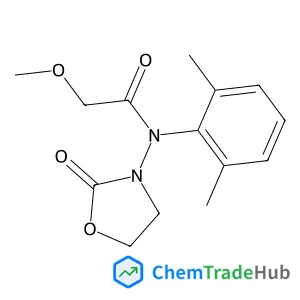
N-(2,6-Dimethylphenyl)-2-methoxy-N-(2-oxo-1,3-oxazolidin-3-yl)acetamide
CAS Number:
77732-09-3
Molecular Formula:
C14H18N2O4


Recommended Suppliers




Disclaimer
This page provides academic journal information for reference and research purposes only. We are not affiliated with any journal publishers and do not handle publication submissions. For publication-related inquiries, please contact the respective journal publishers directly.
If you notice any inaccuracies in the information displayed, please contact us at support@chemtradehub.com. We will promptly review and address your concerns.