












Solvation structure regulation of an organic small molecule additive for dendrite-free aqueous zinc-ion batteries
Literature Information
Publication Date
2023-11-27
DOI
10.1039/D3TA05814J
Impact Factor
12.732
Authors
Xiaomin Li, Jinwei Miao, Fulong Hu, Kang Yan, Lin Song, Huiqing Fan, Longtao Ma, Weijia Wang
View Original
Abstract
The aqueous zinc-ion battery is a potential energy storage device due to its environmental sustainability and cost-effectiveness. Nonetheless, the reduced reversibility of the Zn anode arising from continuous parasitic reactions (hydrogen evolution reaction (HER) and corrosion) and random dendrite growth has a significant impact on its life and performance. Herein, organic small-molecule formamide (FA) is proposed as an additive to the aqueous ZnSO4 electrolyte and realizes a dendrite-free and highly reversible Zn anode by regulating the solvation structure. Through theoretical calculation, as well as physicochemical and electrochemical characterization, it is evidenced that FA additive shows the following characteristics: (1) it replaces some of the H2O molecules in the solvation structure to participate in the solvation structure of Zn2+, and significantly inhibit the HER, (2) breaks the original hydrogen bonding network, resulting in the improvement of the low temperature performance of the battery, (3) preferentially adsorbs on the Zn surface to regulate the charge distribution at the Zn anode/electrolyte interface and inhibit Zn corrosion during the initial cycling process, and (3) contributes to the formation of an inorganic–organic double-layer solid electrolyte interface (SEI) for dendrite-free uniform zinc deposition. Benefiting from these advantages, Zn‖Cu asymmetric batteries assembled with this electrolyte show more than 1700 highly reversible zinc plating/stripping cycles, and the average coulombic efficiency reaches 99.24%. Zn‖Zn symmetric batteries survive more than 1600 h of stable cycling at 1 mA cm−2 and 0.5 mA h cm−2. As a proof of concept, the Zn‖MnO2 full cells provide excellent cycle performance over 2000 cycles at the current density of 4 A g−1, and maintain a high capacity retention of 85.1%.
Related Literature
Synthesis of well-defined diblock copolymer nano-objects by RAFT non-aqueous emulsion polymerization of N-(2-acryloyloxy)ethyl pyrrolidone in non-polar media
R. R. Gibson, A. Fernyhough, O. M. Musa, S. P. Armes
2021-06-23
Paper
DOI: 10.1039/D1PY00572C
Engineering of pH-triggered nanoplatforms based on novel poly(2-methyl-2-oxazoline)-b-poly[2-(diisopropylamino)ethyl methacrylate] diblock copolymers with tunable morphologies for biomedical applications
Peter Černoch, Alessandro Jager, Zulfiya Černochová, Vladimir Sincari, Lindomar J. C. Albuquerque, Rafal Konefal, Ewa Pavlova, Fernando C. Giacomelli, Eliezer Jager
2021-04-14
Paper
DOI: 10.1039/D1PY00141H
Well-defined hydrogen and organofunctional polysiloxanes with spiro-fused siloxane backbones
Takahiro Kawatsu, Keita Fuchise, Katsuhiko Takeuchi, Jun-Chul Choi, Kazuhiko Sato, Kazuhiro Matsumoto
2021-03-18
Paper
DOI: 10.1039/D0PY01503B
Synthesis of fully degradable cationic polymers with various topological structures via postpolymerization modification by using thio-bromo “click” reaction
Yunkai Dai, Zhitao Hu, Xiaoying Wang, Xingliang Liu, Yuanchao Li, Yi Shi, Yongming Chen
2021-04-05
Paper
DOI: 10.1039/D1PY00106J
Practical phosphorylation of polymers: an easy access to fully alcohol soluble synthetically and industrially important polymers
Gokhan Sagdic, Ozgun Daglar, Ufuk Saim Gunay, Emrah Cakmakci, Gurkan Hizal, Umit Tunca, Hakan Durmaz
2021-07-05
Paper
DOI: 10.1039/D1PY00726B
A quinine-based quaternized polymer: a potent scaffold with bactericidal properties without resistance
Huan-Huan Ding, Mu-Han Zhao, Le Zhai, Jian-Bin Zhen, Le-Yun Sun, Jia-Zhu Chigan, Cheng Chen, Jia-Qi Li, Han Gao, Ke-Wu Yang
2021-03-25
Paper
DOI: 10.1039/D0PY01751E
You might also like
Compound Q&A
How should waste containing 2-Ethyl-4-Methyl-1H-Imidazole-5-Carbaldehyde (CAS: 88634-80-4) be handled?
Waste containing 2-Ethyl-4-Methyl-1H-Imidazole-5-Carbaldehyde (CAS: 88634-80-4) ...
88634-80-42-Ethyl-4-Methyl-1H-...
Compound Q&A
What industries use Triethoxy(octyl)silane (CAS: 1385031-14-0)?
Triethoxy(octyl)silane (CAS: 1385031-14-0) is widely used in the pharmaceuticals...
1385031-14-0Triethoxy(octyl)sila...
Compound Q&A
Are there alternatives to 3-iodo-7-nitro-1H-indazole (CAS: 864724-64-1) in synthesis?
Several alternatives to 3-iodo-7-nitro-1H-indazole (CAS: 864724-64-1) exist in t...
864724-64-13-iodo-7-nitro-1H-in...
Compound Q&A
Are there alternatives to Benzene, bis[(trimethoxysilyl)ethyl] (CAS: 266317-71-9) in synthesis?
Yes, there are alternatives to Benzene, bis[(trimethoxysilyl)ethyl] (CAS: 266317...
266317-71-9Benzene, bis[(trimet...
Compound Q&A
Is Isothiazole-3-carbonitrile (CAS: 1452-17-1) safe?
Isothiazole-3-carbonitrile (CAS: 1452-17-1) is generally considered safe when us...
1452-17-1Isothiazole-3-carbon...
Compound Q&A
Is (3-Chlorophenyl)methanol (CAS: 873-63-2) safe?
(3-Chlorophenyl)methanol (CAS: 873-63-2) is considered low to moderately toxic. ...
873-63-2(3-Chlorophenyl)meth...
Compound Q&A
How is (2S,3S)-2-Hydroxy-3-({[(2-methyl-2-propanyl)oxy]carbonyl}amino)-3-(2-naphthyl)propanoic acid (CAS: 959583-98-3) typically synthesized?
(2S,3S)-2-Hydroxy-3-({[(2-methyl-2-propanyl)oxy]carbonyl}amino)-3-(2-naphthyl)pr...
959583-98-3(2S,3S)-2-Hydroxy-3-...
Compound Q&A
What precautions should be taken when handling Methyl 2-(bromomethyl)-5-methoxybenzoate (CAS: 788081-99-2)?
Proper handling of methyl 2-(bromomethyl)-5-methoxybenzoate requires the use of ...
788081-99-2Methyl 2-(bromomethy...
Compound Q&A
What is 6,8-Dibromoimidazo[1,2-a]pyridine-2-carboxylic acid (CAS: 904805-36-3)?
6,8-Dibromoimidazo[1,2-a]pyridine-2-carboxylic acid (CAS: 904805-36-3) is an aro...
904805-36-36,8-Dibromoimidazo[1...
Compound Q&A
Is 3-Amino-5-bromo-2-pyridinecarbonitrile (CAS: 573675-27-1) safe?
3-Amino-5-bromo-2-pyridinecarbonitrile is considered safe when handled under pro...
573675-27-13-Amino-5-bromo-2-py...
Source Journal
Journal of Materials Chemistry A

CiteScore:
19.5
Self-citation Rate:
4.7%
Articles per Year:
2211
Journal of Materials Chemistry A, B & C cover high quality studies across all fields of materials chemistry. The journals focus on those theoretical or experimental studies that report new understanding, applications, properties and synthesis of materials. The journals have a strong history of publishing quality reports of interest to interdisciplinary communities and providing an efficient and rigorous service through peer review and publication. The journals are led by an international team of Editors-in-Chief and Associate Editors who are all active researchers in their fields. Journal of Materials Chemistry A, B & C are separated by the intended application of the material studied. Broadly, applications in energy and sustainability are of interest to Journal of Materials Chemistry A, applications in biology and medicine are of interest to Journal of Materials Chemistry B, and applications in optical, magnetic and electronic devices are of interest to Journal of Materials Chemistry C. More than one Journal of Materials Chemistry journal may be suitable for certain fields and researchers are encouraged to submit their paper to the journal that they feel best fits for their particular article. Example topic areas within the scope of Journal of Materials Chemistry A are listed below. This list is neither exhaustive nor exclusive. Artificial photosynthesis Batteries Carbon dioxide conversion Catalysis Fuel cells Gas capture/separation/storage Green/sustainable materials Hydrogen generation Hydrogen storage Photocatalysis Photovoltaics Self-cleaning materials Self-healing materials Sensors Supercapacitors Thermoelectrics Water splitting Water treatment
Recommended Compounds
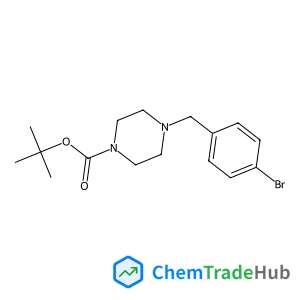
2-Methyl-2-propanyl 4-(4-bromobenzyl)-1-piperazinecarboxylate
CAS Number:
844891-10-7
Molecular Formula:
C16H23BrN2O2
methanone structure](https://static.chemtradehub.com/structs/814/81449-01-6-786d.webp "[4-(Hydroxymethyl)phenyl](phenyl)methanone structure")
Recommended Suppliers





Disclaimer
This page provides academic journal information for reference and research purposes only. We are not affiliated with any journal publishers and do not handle publication submissions. For publication-related inquiries, please contact the respective journal publishers directly.
If you notice any inaccuracies in the information displayed, please contact us at support@chemtradehub.com. We will promptly review and address your concerns.