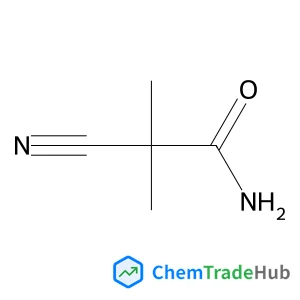
![Ethyl 4-[8-chloro(5,5,6,6,7-~2~H_5_)-5,6-dihydro-11H-benzo[5,6]cyclohepta[1,2-b]pyridin-11-ylidene]-1-piperidinecarboxylate structure](https://static.chemtradehub.com/structs/102/1020719-57-6-37e2.webp "Ethyl 4-[8-chloro(5,5,6,6,7-~2~H_5_)-5,6-dihydro-11H-benzo[5,6]cyclohepta[1,2-b]pyridin-11-ylidene]-1-piperidinecarboxylate structure")
Ethyl 4-[8-chloro(5,5,6,6,7-~2~H_5_)-5,6-dihydro-11H-benzo[5,6]cyclohepta[1,2-b]pyridin-11-ylidene]-1-piperidinecarboxylate
CAS Number:
1020719-57-6
Molecular Formula:
C22H18D5ClN2O2
Xin-Long Li, Dong-Liang Cheng, Kai-Kai Niu, Hui Liu, Sheng-Sheng Yu, Yue-Bo Wang, Ling-Bao Xing
Enhancing the capability for generating reactive oxygen species (ROS) and improving the photocatalytic efficiency of organic photocatalysts have been longstanding significant challenges. In the present study, we designed and synthesized two triphenylamine derivatives (MATM and MeOTPPy) with aggregation-induced emission (AIE) properties, which can interact with CB[8] through host–guest interactions in aqueous solution to construct supramolecular dimers (2MeOTPPy-CB[8] and 2MATM-CB[8]). In contrast to the D–A configuration observed in 2MATM-CB[8], the D–π–A configuration of 2MeOTPPy-CB[8] exhibits remarkable intersystem crossing (ISC) performance through the introduction of the thiophene group, which can significantly improve the ROS generation capacity, especially singlet oxygen (1O2), resulting in exceptional catalytic efficiency during the photocatalytic oxidation of thioanisole with a high yield of 94%. This work provides an efficient supramolecular dimer strategy for the preparation of novel photosensitizers.
James Mitchell, Hans Börner, Helmut Cölfen, Markus Antonietti
DOI: 10.1039/C0CP00819B
Ze Liu, Maofa Ge, Weigang Wang, Shi Yin, Shengrui Tong
DOI: 10.1039/C0CP00905A
Akihiro Kushima, David Parfitt, Alexander Chroneos, Bilge Yildiz, John A. Kilner, Robin W. Grimes
DOI: 10.1039/C0CP01603A
Jean-François Dechézelles, Tangi Aubert, Fabien Grasset, Stéphane Cordier, Carlos Barthou, Catherine Schwob, Agnès Maître, Renaud A. L. Vallée, Henri Cramail, Serge Ravaine
DOI: 10.1039/C0CP00129E
Nicholas A. Besley, Frans A. Asmuruf
DOI: 10.1039/C002207A
Viktoriya Poterya, Juraj Fedor, Andriy Pysanenko, Ondřej Tkáč, Jozef Lengyel, Michal Fárník
DOI: 10.1039/C0CP01518K
Hongmei Liu, Nan Wang, Peng Li, Xing Yin, Cui Yu, Nengyue Gao, Jianwei Zhao
DOI: 10.1039/C0CP00118J
Piotr Kowalczyk, Piotr A. Gauden, Artur P. Terzyk, Sylwester Furmaniak
DOI: 10.1039/B926206G
Hynek Němec, Irena Kratochvílová, Petr Kužel, Anna Kochalska, Juraj Nožár, Stanislav Nešpůrek
DOI: 10.1039/C0CP00774A
David Guérin, Dominique Vuillaume
DOI: 10.1039/C0CP01382J
When handling lithium chloride hydrate (1:1:1) (CAS: 16712-20-2), it is importan...
4-(4H-1,2,4-Triazol-4-yl)piperidine is generally considered safe for use in phar...
Waste containing 1,3-Thiazole-2-carboxamide (CAS: 16733-85-0) should be collecte...
5-(Difluoromethyl)-2-fluorobenzonitrile (CAS: 934175-58-3) is subject to regulat...
Methyl 3-acetamido-2-thiophenecarboxylate can be synthesized by the reaction of ...
4-Isoquinolinecarbonitrile is a chemical compound with the CAS number 34846-65-6...
Store Methyl 1H-1,2,3-triazole-4-carboxylate (CAS: 877309-59-6) in a cool, dry p...
6-Bromo[1,3]thiazolo[5,4-b]pyridin-2-amine (CAS: 1160791-13-8) is subject to the...
(2S,3S)-2-Ammonio-3-(3,4-dihydroxyphenyl)-3-hydroxypropanoate (CAS: 23651-95-8) ...
7-Bromo-3-methyl-3,4-dihydroquinazolin-4-one is a solid with a crystalline form....

Journal of Materials Chemistry A, B & C cover high quality studies across all fields of materials chemistry. The journals focus on those theoretical or experimental studies that report new understanding, applications, properties and synthesis of materials. The journals have a strong history of publishing quality reports of interest to interdisciplinary communities and providing an efficient and rigorous service through peer review and publication. The journals are led by an international team of Editors-in-Chief and Associate Editors who are all active researchers in their fields. Journal of Materials Chemistry A, B & C are separated by the intended application of the material studied. Broadly, applications in energy and sustainability are of interest to Journal of Materials Chemistry A, applications in biology and medicine are of interest to Journal of Materials Chemistry B, and applications in optical, magnetic and electronic devices are of interest to Journal of Materials Chemistry C. More than one Journal of Materials Chemistry journal may be suitable for certain fields and researchers are encouraged to submit their paper to the journal that they feel best fits for their particular article. Example topic areas within the scope of Journal of Materials Chemistry A are listed below. This list is neither exhaustive nor exclusive. Artificial photosynthesis Batteries Carbon dioxide conversion Catalysis Fuel cells Gas capture/separation/storage Green/sustainable materials Hydrogen generation Hydrogen storage Photocatalysis Photovoltaics Self-cleaning materials Self-healing materials Sensors Supercapacitors Thermoelectrics Water splitting Water treatment
![Benzeneacetic acid, 2-bromo-α-[[(1,1-dimethylethoxy)carbonyl]amino]-, (αS)- structure](https://static.chemtradehub.com/structs/122/1228547-87-2-f296.webp "Benzeneacetic acid, 2-bromo-α-[[(1,1-dimethylethoxy)carbonyl]amino]-, (αS)- structure")
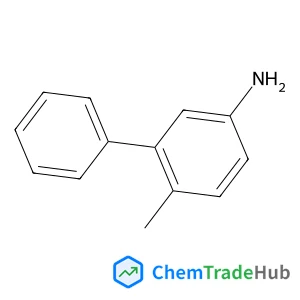
![(R)-N-[(S)-1-[2-(Diphenylphosphino)phenyl]ethyl]-2-methylpropane-2-sulfinamide structure](https://static.chemtradehub.com/structs/159/1595319-98-4-33e7.webp "(R)-N-[(S)-1-[2-(Diphenylphosphino)phenyl]ethyl]-2-methylpropane-2-sulfinamide structure")