












Interstitialcy diffusion of oxygen in tetragonal La2CoO4+δ
Literature Information
Publication Date
2010-12-06
DOI
10.1039/C0CP01603A
Impact Factor
3.676
Authors
Akihiro Kushima, David Parfitt, Alexander Chroneos, Bilge Yildiz, John A. Kilner, Robin W. Grimes
View Original
Abstract
We report on the mechanism and energy barrier for oxygen diffusion in tetragonal La2CoO4+δ. The first principles-based calculations in the Density Functional Theory (DFT) formalism were performed to precisely describe the dominant migration paths for the interstitial oxygen atom in La2CoO4+δ. Atomistic simulations using molecular dynamics (MD) were performed to quantify the temperature dependent collective diffusivity, and to enable a comparison of the diffusion barriers found from the force field-based simulations to those obtained from the first principles-based calculations. Both techniques consistently predict that oxygen migrates dominantly via an interstitialcy mechanism. The single interstitialcy migration path involves the removal of an apical lattice oxygen atom out from the LaO-plane and placing it into the nearest available interstitial site, whilst the original interstitial replaces the displaced apical oxygen on the LaO-plane. The facile migration of the interstitial oxygen in this path is enabled by the cooperative titling–untilting of the CoO6 octahedron. DFT calculations indicate that this process has an activation energy significantly lower than that of the direct interstitial site exchange mechanism. For 800–1000 K, the MD diffusivities are consistent with the available experimental data within one order of magnitude. The DFT- and the MD-predictions suggest that the diffusion barrier for the interstitialcy mechanism is within 0.31–0.80 eV. The identified migration path, activation energies and diffusivities, and the associated uncertainties are discussed in the context of the previous experimental and theoretical results from the related Ruddlesden–Popper structures.
Related Literature
A fluorescent cross-linked supramolecular network formed by orthogonal metal-coordination and host–guest interactions for multiple ratiometric sensing
Luonan Xu, Dong Chen, Qian Zhang, Tian He, Chenjie Lu, Xi Shen, Danting Tang, Huayu Qiu, Mingming Zhang, Shouchun Yin
2018-01-02
Communication
DOI: 10.1039/C7PY01788J
Self-stabilized, hydrophobic or PEGylated paclitaxel polymer prodrug nanoparticles for cancer therapy
Yinyin Bao, Elise Guégain, Julie Mougin, Julien Nicolas
2018-01-10
Paper
DOI: 10.1039/C7PY01918A
Nano-porous structures via self-assembly of amphiphilic triblock copolymers: influence of solvent and molecular weight
S. Nehache, M. Semsarilar, A. Deratani, M. In, P. Dieudonné-George, J. Lai Kee Him, P. Bron, D. Quémener
2017-12-01
Paper
DOI: 10.1039/C7PY01853C
A comparative study of redox-active, ambipolar electrochromic triphenylamine-based polyimides prepared by electrochemical polymerization and conventional polycondensation methods
Sheng-Huei Hsiao, Wei-Kai Liao, Guey-Sheng Liou
2017-12-05
Paper
DOI: 10.1039/C7PY01897E
Polyetheramine (PEA): a versatile platform to tailor the properties of hydrogels via H-bonding interactions
Changxu Zhang, Zhiyong Liu, Xinhui Zhang, Zixing Shi, Hongjie Xu, Xiaodong Ma, Jie Yin, Ming Tian
2017-07-25
Paper
DOI: 10.1039/C7PY01105A
Hollow amphiphilic crosslinked nanocapsules from sacrificial silica nanoparticle templates and their application as dispersants for oil spill remediation
Kyle C. Bentz, Muhammad Ejaz, Scarlett Arencibia, Naomi Sultan, Scott M. Grayson, Daniel A. Savin
2017-04-05
Paper
DOI: 10.1039/C7PY00342K
A self-healable fluorescence active hydrogel based on ionic block copolymers prepared via ring opening polymerization and xanthate mediated RAFT polymerization
Sovan Lal Banerjee, Richard Hoskins, Thomas Swift, Stephen Rimmer, Nikhil K. Singha
2018-02-12
Paper
DOI: 10.1039/C7PY01883E
Recyclable heat-resisting polymer poly(ether azaindole ketone)-H+via hydrogen bonding crosslinking
Q. Yin, Y. Peng, S. Zhang, F. Zhu, W. Li, K. Du
2018-02-07
Communication
DOI: 10.1039/C7PY02097J
Synthesis and chiroptical properties of helical polystyrenes stabilized by intramolecular hydrogen bonding
Na Liu, Rui-Wen Sun, Hao-Jun Lu, Xue-Liang Li, Chun-Hua Liu, Zong-Quan Wu
2017-10-30
Paper
DOI: 10.1039/C7PY01633F
You might also like
Compound Q&A
What precautions should be taken when handling lithium chloride hydrate (1:1:1) (CAS: 16712-20-2)?
When handling lithium chloride hydrate (1:1:1) (CAS: 16712-20-2), it is importan...
16712-20-2Lithium chloride hyd...
Compound Q&A
Is 4-(4H-1,2,4-Triazol-4-yl)piperidine (CAS: 690261-92-8) safe?
4-(4H-1,2,4-Triazol-4-yl)piperidine is generally considered safe for use in phar...
690261-92-84-(4H-1,2,4-Triazol-...
Compound Q&A
How should waste containing 1,3-Thiazole-2-carboxamide (CAS: 16733-85-0) be handled?
Waste containing 1,3-Thiazole-2-carboxamide (CAS: 16733-85-0) should be collecte...
16733-85-01,3-Thiazole-2-carbo...
Compound Q&A
What regulatory guidelines apply to 5-(Difluoromethyl)-2-fluorobenzonitrile (CAS: 934175-58-3)?
5-(Difluoromethyl)-2-fluorobenzonitrile (CAS: 934175-58-3) is subject to regulat...
934175-58-35-(Difluoromethyl)-2...
Compound Q&A
How is Methyl 3-acetamido-2-thiophenecarboxylate (CAS: 22288-79-5) typically synthesized?
Methyl 3-acetamido-2-thiophenecarboxylate can be synthesized by the reaction of ...
22288-79-5Methyl 3-acetamido-2...
Compound Q&A
What is 4-Isoquinolinecarbonitrile (CAS: 34846-65-6)?
4-Isoquinolinecarbonitrile is a chemical compound with the CAS number 34846-65-6...
34846-65-64-Isoquinolinecarbon...
Compound Q&A
How should Methyl 1H-1,2,3-triazole-4-carboxylate (CAS: 877309-59-6) be stored?
Store Methyl 1H-1,2,3-triazole-4-carboxylate (CAS: 877309-59-6) in a cool, dry p...
877309-59-6Methyl 1H-1,2,3-tria...
Compound Q&A
What regulatory guidelines apply to 6-Bromo[1,3]thiazolo[5,4-b]pyridin-2-amine (CAS: 1160791-13-8)?
6-Bromo[1,3]thiazolo[5,4-b]pyridin-2-amine (CAS: 1160791-13-8) is subject to the...
1160791-13-86-Bromo[1,3]thiazolo...
Compound Q&A
Is (2S,3S)-2-Ammonio-3-(3,4-dihydroxyphenyl)-3-hydroxypropanoate (CAS: 23651-95-8) safe?
(2S,3S)-2-Ammonio-3-(3,4-dihydroxyphenyl)-3-hydroxypropanoate (CAS: 23651-95-8) ...
23651-95-8(2S,3S)-2-Ammonio-3-...
Compound Q&A
What are the physical and chemical properties of 7-bromo-3-methyl-3,4-dihydroquinazolin-4-one (CAS: 1293987-84-4)?
7-Bromo-3-methyl-3,4-dihydroquinazolin-4-one is a solid with a crystalline form....
1293987-84-47-bromo-3-methyl-3,4...
Source Journal
Physical Chemistry Chemical Physics

CiteScore:
5.5
Self-citation Rate:
10.3%
Articles per Year:
3036
Physical Chemistry Chemical Physics (PCCP) is an international journal co-owned by 19 physical chemistry and physics societies from around the world. This journal publishes original, cutting-edge research in physical chemistry, chemical physics and biophysical chemistry. To be suitable for publication in PCCP, articles must include significant innovation and/or insight into physical chemistry; this is the most important criterion that reviewers and Editors will judge against when evaluating submissions. The journal has a broad scope and welcomes contributions spanning experiment, theory, computation and data science. Topical coverage includes spectroscopy, dynamics, kinetics, statistical mechanics, thermodynamics, electrochemistry, catalysis, surface science, quantum mechanics, quantum computing and machine learning. Interdisciplinary research areas such as polymers and soft matter, materials, nanoscience, energy, surfaces/interfaces, and biophysical chemistry are welcomed if they demonstrate significant innovation and/or insight into physical chemistry. Joined experimental/theoretical studies are particularly appreciated when complementary and based on up-to-date approaches.
Recommended Compounds
![1-[4-(4-Methyl-1H-imidazol-1-yl)phenyl]ethanone structure](https://static.chemtradehub.com/structs/142/142161-53-3-7f55.webp "1-[4-(4-Methyl-1H-imidazol-1-yl)phenyl]ethanone structure")
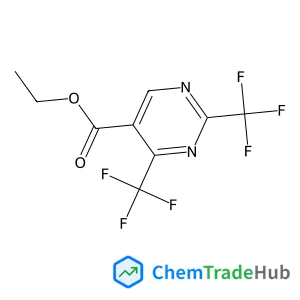
Ethyl 2,4-bis(trifluoromethyl)-5-pyrimidinecarboxylate
CAS Number:
188781-15-9
Molecular Formula:
C9H6F6N2O2
Recommended Suppliers





Disclaimer
This page provides academic journal information for reference and research purposes only. We are not affiliated with any journal publishers and do not handle publication submissions. For publication-related inquiries, please contact the respective journal publishers directly.
If you notice any inaccuracies in the information displayed, please contact us at support@chemtradehub.com. We will promptly review and address your concerns.