


New insights into the synthesis of Sillén–Aurivillius oxyhalides: molten salts induce interlayer halogen competing reaction
Literature Information
Publication Date
2023-11-21
DOI
10.1039/D3TA05438A
Impact Factor
12.732
Authors
Chenliang Zhou, Shishi Xu, Zhichao Mu, Wei Chen, Zhili Chen, Xiangyu Cheng
View Original
Abstract
Numerous studies disclosed that molten salts provide a special liquid reaction environment, accelerate the diffusion rate of active elements, and promote the formation of high-purity materials in the molten-salt synthesis method. Herein, the interlayer halogen-competing reactions between molten salts and halogen layers during the formation of BaBi4TiNbO11X (X = Cl, Br) oxyhalides were discovered for the first time. The liquid environment provided by molten salts can facilitate the full migration of halogen atoms between molten salts and halogen layers and form an even distribution of halogen atoms, which is ascribed to the weak van der Waals forces of the halogen layers between [BaBiO2]+ and [Bi2O2]2+ blocks. By employing this mechanism, BaBi4TiNbO11(Cl1−xBrx) with different x contents could be easily obtained. DFT calculations showed that the mixed halogen oxyhalides, such as BaBi4TiNbO11(Cl0.5Br0.5), introduce new chemical bonds between the O and Bi atoms, which increase their contribution to lowest occupied/unoccupied orbitals, thus regulating the energy band and accelerating the separation and transfer of photogenerated charge carriers. Consequently, the optimized BaBi4TiNbO11(Cl0.5Br0.5) sample showed a superior degradation rate of RhB compared to the traditional P25 photocatalyst, and its O2 evolution performance was also enhanced compared with other blank samples.
Recommended Journals

Proceedings of the National Academy of Sciences of the United States of America

European Journal of Wood and Wood Products

Helvetica Chimica Acta

Nature

Journal of Organometallic Chemistry

Fibre Chemistry

Organic Preparations and Procedures International

Journal of Medicinal Chemistry

Planta Medica

Pure and Applied Chemistry
Related Literature
Photo cleavable thioacetal block copolymers for controlled release
Yongjun Men, Tobias G. Brevé, Antonia G. Denkova, Rienk Eelkema
2021-06-08
Paper
DOI: 10.1039/D1PY00514F
Correction: Synthesis and structural characterization of bio-based bis(cyclic carbonate)s for the preparation of non-isocyanate polyurethanes
Kamila Błażek, Hynek Beneš, Zuzana Walterová, Sabina Abbrent, Arantxa Eceiza, Tamara Calvo-Correas, Janusz Datta
2021-03-31
Correction
DOI: 10.1039/D1PY90040D
High molar mass poly(ricinoleic acid) via entropy-driven ring-opening metathesis polymerization
Marc A. Hillmyer
2021-03-23
Paper
DOI: 10.1039/D1PY00185J
Synthesis and properties of helically-folded poly(arylenediethynylene)s
Michihisa Toya
2021-05-10
Paper
DOI: 10.1039/D1PY00144B
Oxygen tolerant, photoinduced controlled radical polymerization approach for the synthesis of giant amphiphiles
Alexis Theodorou, Petros Mandriotis, Athina Anastasaki, Kelly Velonia
2021-03-18
Paper
DOI: 10.1039/D0PY01608J
A dual stimuli responsive natural polymer based superabsorbent hydrogel engineered through a novel cross-linker
Safiya Nisar, Sonal Chauhan, Gurmeet Singh, Virender Singh, Sunita Rattan
2021-03-23
Paper
DOI: 10.1039/D0PY01729A
The synthesis of thermoresponsive POSS-based eight-arm star poly(N-isopropylacrylamide): A comparison between Z-RAFT and R-RAFT strategies
Bo Pang, Rui Liu, Guang Han, Wei Wang
2021-03-02
Paper
DOI: 10.1039/D1PY00087J
You might also like
Compound Q&A
How should waste containing 2-Ethyl-4-Methyl-1H-Imidazole-5-Carbaldehyde (CAS: 88634-80-4) be handled?
Waste containing 2-Ethyl-4-Methyl-1H-Imidazole-5-Carbaldehyde (CAS: 88634-80-4) ...
88634-80-42-Ethyl-4-Methyl-1H-...
Compound Q&A
What industries use Triethoxy(octyl)silane (CAS: 1385031-14-0)?
Triethoxy(octyl)silane (CAS: 1385031-14-0) is widely used in the pharmaceuticals...
1385031-14-0Triethoxy(octyl)sila...
Compound Q&A
Are there alternatives to 3-iodo-7-nitro-1H-indazole (CAS: 864724-64-1) in synthesis?
Several alternatives to 3-iodo-7-nitro-1H-indazole (CAS: 864724-64-1) exist in t...
864724-64-13-iodo-7-nitro-1H-in...
Compound Q&A
Are there alternatives to Benzene, bis[(trimethoxysilyl)ethyl] (CAS: 266317-71-9) in synthesis?
Yes, there are alternatives to Benzene, bis[(trimethoxysilyl)ethyl] (CAS: 266317...
266317-71-9Benzene, bis[(trimet...
Compound Q&A
Is Isothiazole-3-carbonitrile (CAS: 1452-17-1) safe?
Isothiazole-3-carbonitrile (CAS: 1452-17-1) is generally considered safe when us...
1452-17-1Isothiazole-3-carbon...
Compound Q&A
Is (3-Chlorophenyl)methanol (CAS: 873-63-2) safe?
(3-Chlorophenyl)methanol (CAS: 873-63-2) is considered low to moderately toxic. ...
873-63-2(3-Chlorophenyl)meth...
Compound Q&A
How is (2S,3S)-2-Hydroxy-3-({[(2-methyl-2-propanyl)oxy]carbonyl}amino)-3-(2-naphthyl)propanoic acid (CAS: 959583-98-3) typically synthesized?
(2S,3S)-2-Hydroxy-3-({[(2-methyl-2-propanyl)oxy]carbonyl}amino)-3-(2-naphthyl)pr...
959583-98-3(2S,3S)-2-Hydroxy-3-...
Compound Q&A
What precautions should be taken when handling Methyl 2-(bromomethyl)-5-methoxybenzoate (CAS: 788081-99-2)?
Proper handling of methyl 2-(bromomethyl)-5-methoxybenzoate requires the use of ...
788081-99-2Methyl 2-(bromomethy...
Compound Q&A
What is 6,8-Dibromoimidazo[1,2-a]pyridine-2-carboxylic acid (CAS: 904805-36-3)?
6,8-Dibromoimidazo[1,2-a]pyridine-2-carboxylic acid (CAS: 904805-36-3) is an aro...
904805-36-36,8-Dibromoimidazo[1...
Compound Q&A
Is 3-Amino-5-bromo-2-pyridinecarbonitrile (CAS: 573675-27-1) safe?
3-Amino-5-bromo-2-pyridinecarbonitrile is considered safe when handled under pro...
573675-27-13-Amino-5-bromo-2-py...
Source Journal
Journal of Materials Chemistry A

CiteScore:
19.5
Self-citation Rate:
4.7%
Articles per Year:
2211
Journal of Materials Chemistry A, B & C cover high quality studies across all fields of materials chemistry. The journals focus on those theoretical or experimental studies that report new understanding, applications, properties and synthesis of materials. The journals have a strong history of publishing quality reports of interest to interdisciplinary communities and providing an efficient and rigorous service through peer review and publication. The journals are led by an international team of Editors-in-Chief and Associate Editors who are all active researchers in their fields. Journal of Materials Chemistry A, B & C are separated by the intended application of the material studied. Broadly, applications in energy and sustainability are of interest to Journal of Materials Chemistry A, applications in biology and medicine are of interest to Journal of Materials Chemistry B, and applications in optical, magnetic and electronic devices are of interest to Journal of Materials Chemistry C. More than one Journal of Materials Chemistry journal may be suitable for certain fields and researchers are encouraged to submit their paper to the journal that they feel best fits for their particular article. Example topic areas within the scope of Journal of Materials Chemistry A are listed below. This list is neither exhaustive nor exclusive. Artificial photosynthesis Batteries Carbon dioxide conversion Catalysis Fuel cells Gas capture/separation/storage Green/sustainable materials Hydrogen generation Hydrogen storage Photocatalysis Photovoltaics Self-cleaning materials Self-healing materials Sensors Supercapacitors Thermoelectrics Water splitting Water treatment
Recommended Compounds
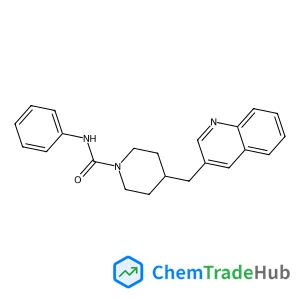
N-phenyl-4-(quinolin-3-ylmethyl)piperidine-1-carboxamide
CAS Number:
959151-50-9
Molecular Formula:
C22H23N3O
methanone structure](https://static.chemtradehub.com/structs/814/81449-01-6-786d.webp "[4-(Hydroxymethyl)phenyl](phenyl)methanone structure")
![4-Nitrophenyl N-{[(2-methyl-2-propanyl)oxy]carbonyl}-L-isoleucinate structure](https://static.chemtradehub.com/structs/169/16948-38-2-c88f.webp "4-Nitrophenyl N-{[(2-methyl-2-propanyl)oxy]carbonyl}-L-isoleucinate structure")
4-Nitrophenyl N-{[(2-methyl-2-propanyl)oxy]carbonyl}-L-isoleucinate
CAS Number:
16948-38-2
Molecular Formula:
C17H24N2O6
Recommended Suppliers





Disclaimer
This page provides academic journal information for reference and research purposes only. We are not affiliated with any journal publishers and do not handle publication submissions. For publication-related inquiries, please contact the respective journal publishers directly.
If you notice any inaccuracies in the information displayed, please contact us at support@chemtradehub.com. We will promptly review and address your concerns.