


Amorphous C/SbSx composites from natural stibnite as low cost and high performance lithium/sodium-ion battery anodes
Literature Information
Publication Date
2023-10-26
DOI
10.1039/D3TA05355E
Impact Factor
12.732
Authors
Shuonan Wang, Kai Zhang, Hao Liu, Libing Liao
View Original
Abstract
Antimony sulfide is a promising anode material for lithium/sodium-ion batteries due to its high theoretical capacity, but it suffers from large volume expansion during cycling and high cost. In the present work, we synthesized low cost amorphous C/SbSx (x ≈ 1.18) composites using natural stibnite and charcoal as raw materials by a fast microwave heating method (tens of seconds). These composites showed excellent cycling performance and rate capability as anodes for lithium/sodium-ion batteries. For instance, the C/SbSx composite with 74 wt% SbSx delivered a stable capacity of 686 mA h g−1 after 500 cycles at a current density of 0.5 A g−1 and a high rate capacity of 520 mA h g−1 at a current density of 2 A g−1 in lithium-ion batteries. The amorphization of SbSx was found to be crucial for the improvement of the cycling performance of the composite, as it could suppress the volume expansion and enhance the reversibility during the electrochemical reactions. The excellent rate capability of this composite was mainly attributed to the reduced size of the active material and the combination with conductive charcoal. This work demonstrates the great potential of using natural stibnite as a raw material for low cost and high performance lithium/sodium-ion battery anodes by a fast microwave heating method.
Recommended Journals

Heteroatom Chemistry

Bioorganic & Medicinal Chemistry Letters

Journal of Chemical Sciences

Main Group Chemistry

Atomization and Sprays

Bioorganic & Medicinal Chemistry

Critical Reviews in Solid State and Materials Sciences

NDT & E International

Chinese Journal of Chemistry

Acta Metallurgica Sinica-English Letters
Related Literature
Room-temperature metal-activator-free phosphorescence from mesoporous silica
Lei Zhao, Tian Ming, Huanjun Chen, Li Gong, Jian Chen, Jianfang Wang
2010-11-26
Paper
DOI: 10.1039/C0CP01981J
Spectroscopic identification of carbon dioxide clusters: (CO2)6 to (CO2)13
A. R. W. McKellar
2010-12-20
Communication
DOI: 10.1039/C0CP02311F
Wave packet calculations on the effect of the femtosecond pulse width in the time-resolved photodissociation of CH3I in the A-band
A. García-Vela, L. Bañares
2010-11-25
Paper
DOI: 10.1039/C0CP01508C
Theoretical study of the infrared and Raman line shapes of liquid methanol
Renhui Zheng, Yuanyuan Sun, Qiang Shi
2010-11-09
Paper
DOI: 10.1039/C0CP01145B
Pd(ii) immobilized on mesoporous silica by N-heterocyclic carbeneionic liquids and catalysis for hydrogenation‡
Gang Liu, Minqiang Hou, Tianbin Wu, Tao Jiang, Honglei Fan, Guanying Yang, Buxing Han
2011-01-12
Paper
DOI: 10.1039/C0CP01213K
Influence of phosphate anion adsorption on the kinetics of oxygen electroreduction on low index Pt(hkl) single crystals
Qinggang He, Xiaofang Yang, Wei Chen, Sanjeev Mukerjee, Bruce Koel, Shaowei Chen
2010-08-20
Paper
DOI: 10.1039/C0CP00433B
The role of aromatic interactions in the structure and energetics of benzyl ketones
Carlos F. R. A. C. Lima, Carlos A. D. Sousa, José E. Rodriguez-Borges, André Melo, John N. Low, Luís M. N. B. F. Santos
2010-07-28
Paper
DOI: 10.1039/C003941A
Microscopic model of carbonaceous nanoporous molecular sieves—anomalous transport in molecularly confined spaces
Piotr Kowalczyk, Piotr A. Gauden, Artur P. Terzyk, Sylwester Furmaniak
2010-08-05
Paper
DOI: 10.1039/B926206G
Time-dependent density functional theory calculations of the spectroscopy of core electrons
Nicholas A. Besley, Frans A. Asmuruf
2010-08-16
Perspective
DOI: 10.1039/C002207A
Amorphization and recrystallization study of lithium insertion into manganese dioxide
Rapela R. Maphanga, Dean C. Sayle, Thi X. T. Sayle, Phuti E. Ngoepe
2010-11-29
Paper
DOI: 10.1039/C0CP00274G
You might also like
Compound Q&A
What precautions should be taken when handling lithium chloride hydrate (1:1:1) (CAS: 16712-20-2)?
When handling lithium chloride hydrate (1:1:1) (CAS: 16712-20-2), it is importan...
16712-20-2Lithium chloride hyd...
Compound Q&A
Is 4-(4H-1,2,4-Triazol-4-yl)piperidine (CAS: 690261-92-8) safe?
4-(4H-1,2,4-Triazol-4-yl)piperidine is generally considered safe for use in phar...
690261-92-84-(4H-1,2,4-Triazol-...
Compound Q&A
How should waste containing 1,3-Thiazole-2-carboxamide (CAS: 16733-85-0) be handled?
Waste containing 1,3-Thiazole-2-carboxamide (CAS: 16733-85-0) should be collecte...
16733-85-01,3-Thiazole-2-carbo...
Compound Q&A
What regulatory guidelines apply to 5-(Difluoromethyl)-2-fluorobenzonitrile (CAS: 934175-58-3)?
5-(Difluoromethyl)-2-fluorobenzonitrile (CAS: 934175-58-3) is subject to regulat...
934175-58-35-(Difluoromethyl)-2...
Compound Q&A
How is Methyl 3-acetamido-2-thiophenecarboxylate (CAS: 22288-79-5) typically synthesized?
Methyl 3-acetamido-2-thiophenecarboxylate can be synthesized by the reaction of ...
22288-79-5Methyl 3-acetamido-2...
Compound Q&A
What is 4-Isoquinolinecarbonitrile (CAS: 34846-65-6)?
4-Isoquinolinecarbonitrile is a chemical compound with the CAS number 34846-65-6...
34846-65-64-Isoquinolinecarbon...
Compound Q&A
How should Methyl 1H-1,2,3-triazole-4-carboxylate (CAS: 877309-59-6) be stored?
Store Methyl 1H-1,2,3-triazole-4-carboxylate (CAS: 877309-59-6) in a cool, dry p...
877309-59-6Methyl 1H-1,2,3-tria...
Compound Q&A
What regulatory guidelines apply to 6-Bromo[1,3]thiazolo[5,4-b]pyridin-2-amine (CAS: 1160791-13-8)?
6-Bromo[1,3]thiazolo[5,4-b]pyridin-2-amine (CAS: 1160791-13-8) is subject to the...
1160791-13-86-Bromo[1,3]thiazolo...
Compound Q&A
Is (2S,3S)-2-Ammonio-3-(3,4-dihydroxyphenyl)-3-hydroxypropanoate (CAS: 23651-95-8) safe?
(2S,3S)-2-Ammonio-3-(3,4-dihydroxyphenyl)-3-hydroxypropanoate (CAS: 23651-95-8) ...
23651-95-8(2S,3S)-2-Ammonio-3-...
Compound Q&A
What are the physical and chemical properties of 7-bromo-3-methyl-3,4-dihydroquinazolin-4-one (CAS: 1293987-84-4)?
7-Bromo-3-methyl-3,4-dihydroquinazolin-4-one is a solid with a crystalline form....
1293987-84-47-bromo-3-methyl-3,4...
Source Journal
Journal of Materials Chemistry A

CiteScore:
19.5
Self-citation Rate:
4.7%
Articles per Year:
2211
Journal of Materials Chemistry A, B & C cover high quality studies across all fields of materials chemistry. The journals focus on those theoretical or experimental studies that report new understanding, applications, properties and synthesis of materials. The journals have a strong history of publishing quality reports of interest to interdisciplinary communities and providing an efficient and rigorous service through peer review and publication. The journals are led by an international team of Editors-in-Chief and Associate Editors who are all active researchers in their fields. Journal of Materials Chemistry A, B & C are separated by the intended application of the material studied. Broadly, applications in energy and sustainability are of interest to Journal of Materials Chemistry A, applications in biology and medicine are of interest to Journal of Materials Chemistry B, and applications in optical, magnetic and electronic devices are of interest to Journal of Materials Chemistry C. More than one Journal of Materials Chemistry journal may be suitable for certain fields and researchers are encouraged to submit their paper to the journal that they feel best fits for their particular article. Example topic areas within the scope of Journal of Materials Chemistry A are listed below. This list is neither exhaustive nor exclusive. Artificial photosynthesis Batteries Carbon dioxide conversion Catalysis Fuel cells Gas capture/separation/storage Green/sustainable materials Hydrogen generation Hydrogen storage Photocatalysis Photovoltaics Self-cleaning materials Self-healing materials Sensors Supercapacitors Thermoelectrics Water splitting Water treatment
Recommended Compounds
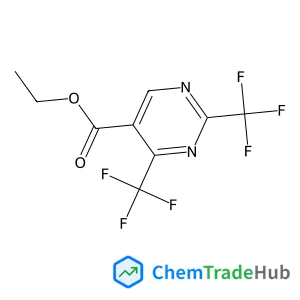
Ethyl 2,4-bis(trifluoromethyl)-5-pyrimidinecarboxylate
CAS Number:
188781-15-9
Molecular Formula:
C9H6F6N2O2
Recommended Suppliers





Disclaimer
This page provides academic journal information for reference and research purposes only. We are not affiliated with any journal publishers and do not handle publication submissions. For publication-related inquiries, please contact the respective journal publishers directly.
If you notice any inaccuracies in the information displayed, please contact us at support@chemtradehub.com. We will promptly review and address your concerns.