












Photocatalytic ethane conversion on rutile TiO2(110): identifying the role of the ethyl radical
Literature Information
Publication Date
2023-11-27
DOI
10.1039/D3SC05623F
Impact Factor
9.825
Authors
Fangliang Li, Yuemiao Lai, Yi Zeng, Xiao Chen, Tao Wang, Qing Guo
View Original
Abstract
Oxidative dehydrogenation of ethane (C2H6, ODHE) is a promising approach to producing ethene (C2H4) in the chemical industry. However, the ODHE needs to be operated at a high temperature, and realizing the ODHE under mild conditions is still a big challenge. Herein, using photocatalytic ODHE to obtain C2H4 has been achieved successfully on a model rutile(R)-TiO2(110) surface with high selectivity. Initially, the C2H6 reacts with hole trapped OTi− centers to produce ethyl radicals , which can be precisely detected by a sensitive TOF method, and then the majority of the radicals spontaneously dehydrogenate into C2H4 without another photo-generated hole. In addition, parts of the radicals rebound with diversified surface sites to produce C2 products via migration along the surface. The mechanistic model built in this work not only advances our knowledge of the C–H bond activation and low temperature C2H6 conversion, but also provides new opportunities for realizing the ODHE with high C2H4 efficiency under mild conditions.
Related Literature
Selective synthesis of double temperature-sensitive polymer–peptide conjugates
Florentina Stoica, Cameron Alexander, Nicola Tirelli, Aline F. Miller, Alberto Saiani
2008-07-16
Communication
DOI: 10.1039/B806782A
Ultra stable ordered mesoporous phenol/formaldehydepolymers as a heterogeneous support for vanadium oxide
Ilke Muylaert, Marijke Borgers, Els Bruneel, Joseph Schaubroeck, Francis Verpoort, Pascal Van Der Voort
2008-07-29
Communication
DOI: 10.1039/B808566H
Translocation of copper within the cavity of cryptands: reversible fluorescence signaling
Kalyan K. Sadhu, Parimal K. Bharadwaj
2008-07-23
Communication
DOI: 10.1039/B806426A
Fine control over the morphology and structure of mesoporous silica nanomaterials by a dual-templating approach
Junhui He
2008-07-28
Communication
DOI: 10.1039/B807787H
Oxidative decarboxylative synthesis of 2-H-imidazolines from glyoxylic acid and 1,2-diamines
Kenichi Murai, Maiko Morishita, Ryo Nakatani, Hiromichi Fujioka, Yasuyuki Kita
2008-08-04
Communication
DOI: 10.1039/B807810F
Sequence-specifically platinum metal deposition on enzymatically synthesized DNA block copolymer
Aya Tanaka, Yasutaka Matsuo, Yuichi Hashimoto, Kuniharu Ijiro
2008-07-17
Communication
DOI: 10.1039/B805989F
Binary stacks of [CuC6F5]4 with arenes
Ami Doshi, Krishnan Venkatasubbaiah, Arnold L. Rheingold, Frieder Jäkle
2008-07-25
Communication
DOI: 10.1039/B807128D
Detection of mismatched DNAsvia the binding affinity of MutS using a gold nanoparticle-based competitive colorimetric method
Minseon Cho, Min Su Han, Changill Ban
2008-09-01
Communication
DOI: 10.1039/B811346G
PVP-functionalized nanometre scale metal oxide coatings for cathode materials: successful application to LiMn2O4 spinel nanoparticles
2008-07-30
Communication
DOI: 10.1039/B807973K
A facile method of achieving low surface coverage of Au nanoparticles on an indium tin oxide electrode and its application to protein detection
Md. Abdul Aziz, Srikanta Patra, Haesik Yang
2008-08-04
Communication
DOI: 10.1039/B808026G
You might also like
Compound Q&A
What precautions should be taken when handling 4-(2-Furylmethyl)thiomorpholine 1,1-dioxide (CAS: 79206-94-3)?
When handling 4-(2-Furylmethyl)thiomorpholine 1,1-dioxide (CAS: 79206-94-3), it ...
79206-94-34-(2-Furylmethyl)thi...
Compound Q&A
What precautions should be taken when handling 4-Chloro-N-[2-(4-morpholinyl)ethyl]benzamide (CAS: 71320-77-9)?
When handling 4-Chloro-N-[2-(4-morpholinyl)ethyl]benzamide (CAS: 71320-77-9), it...
71320-77-94-Chloro-N-[2-(4-mor...
Compound Q&A
How should waste containing 2-[2-(2-Methoxyethoxy)ethoxy]ethyl 4-methylbenzenesulfonate (CAS: 62921-74-8) be handled?
Waste containing this compound (CAS: 62921-74-8) should be handled according to ...
62921-74-82-[2-(2-Methoxyethox...
Compound Q&A
How should waste containing (S)-Methyl 2-amino-3-cyclohexylpropanoate be handled?
Waste containing (S)-Methyl 2-amino-3-cyclohexylpropanoate should be collected i...
40056-18-6(S)-Methyl 2-amino-3...
Compound Q&A
How is 5-({4-[(2S,4R)-4-Hydroxy-2-methyltetrahydro-2H-pyran-4-yl]-2-thienyl}sulfanyl)-1-methyl-1,3-dihydro-2H-indol-2-one (CAS: 166882-70-8) typically synthesized?
This compound can be synthesized using a multi-step process involving the conjug...
166882-70-85-({4-[(2S,4R)-4-Hyd...
Compound Q&A
Are there alternatives to (2E)-3-(3,4-Dichlorophenyl)acrylic acid (CAS: 7312-27-8) in synthesis?
There are several alternatives to (2E)-3-(3,4-Dichlorophenyl)acrylic acid in syn...
7312-27-8(2E)-3-(3,4-Dichloro...
Compound Q&A
How should Ethyl 6-(2-nitrophenyl)imidazo[2,1-b][1,3]thiazole-3-carboxylate (CAS: 925437-84-9) be stored?
Ethyl 6-(2-nitrophenyl)imidazo[2,1-b][1,3]thiazole-3-carboxylate (CAS: 925437-84...
925437-84-9Ethyl 6-(2-nitrophen...
Compound Q&A
How should waste containing 2-(1,3-Thiazol-2-yl)ethanamine (CAS: 18453-07-1) be handled?
Waste containing 2-(1,3-Thiazol-2-yl)ethanamine (CAS: 18453-07-1) should be coll...
18453-07-12-(1,3-Thiazol-2-yl)...
Compound Q&A
How is Methyl 5-iodo-2-methylbenzoate (CAS: 103440-54-6) typically synthesized?
Methyl 5-iodo-2-methylbenzoate can be synthesized through the iodination of meth...
103440-54-6Methyl 5-iodo-2-meth...
Compound Q&A
How is 5-Chloro[1,2,4]triazolo[1,5-a]pyridine (CAS: 1427399-34-5) typically synthesized?
5-Chloro[1,2,4]triazolo[1,5-a]pyridine is commonly synthesized via the condensat...
1427399-34-55-Chloro[1,2,4]triaz...
Source Journal
Chemical Science

CiteScore:
14.4
Self-citation Rate:
3.9%
Articles per Year:
1413
Our journal has a wide-ranging scope which covers the full breadth of the chemical sciences. The research we publish contains the sorts of novel ideas, challenging questions and progressive thinking that bring undiscovered breakthroughs within reach. Your paper could focus on a single area, or cross many. It could be beyond the accepted bounds of the chemical sciences. It might address an immediate challenge, contribute to a future breakthrough or be wholly conceptual. We’re a team from every field of the chemical sciences, and know from experience that breakthroughs that drive the solutions to global challenges can come from anywhere, at any time. You could even start an entirely new area of research. Too bold? Too progressive? No such thing
Recommended Compounds

4-Benzyl-1-(tert-butoxycarbonyl)piperidine-4-carboxylic acid
CAS Number:
170838-87-6
Molecular Formula:
C18H25NO4

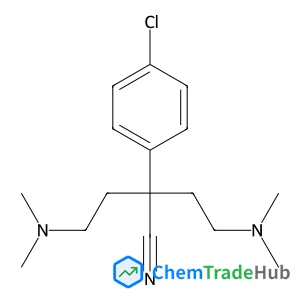
2-(4-Chlorophenyl)-4-(dimethylamino)-2-(2-(dimethylamino)ethyl)butanenitrile
CAS Number:
1246816-57-8
Molecular Formula:
C16H24ClN3

Recommended Suppliers





Disclaimer
This page provides academic journal information for reference and research purposes only. We are not affiliated with any journal publishers and do not handle publication submissions. For publication-related inquiries, please contact the respective journal publishers directly.
If you notice any inaccuracies in the information displayed, please contact us at support@chemtradehub.com. We will promptly review and address your concerns.