












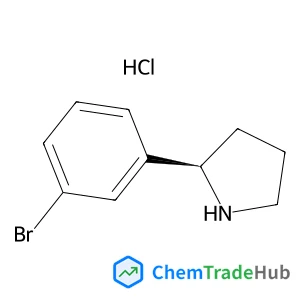
(2R)-2-(3-Bromophenyl)pyrrolidine hydrochloride (1:1)
CAS Number:
1391550-13-2
Molecular Formula:
C10H13BrClN
Yi Zheng, Jianfeng Li, Hongzhang Cao, Yanhui Xu, Weisheng Liu
Selective hydrogenation of alkynol compounds to produce high value-added enols is an important reaction in the fine chemical industry. The construction of selective hydrogenation catalysts for alkynols is challenging because the alkynyl group is prone to over hydrogenation and the selectivity in the hydrogenation is always low. Herein, a simple sacrificial template strategy was designed to prepare mesoporous CeO2, on which ultrafine and highly-dispersed bimetallic PdCu nanoparticles were anchored, obtaining the PdCu@CeO2 catalyst. Introducing non-precious metallic Cu can improve the selectivity of precious metal Pd catalysts for the selective hydrogenation of alkynols through electronic and geometric modulation. The obtained PdCu@CeO2 catalyst showed high selectivity (99%) and good recyclability for the selective hydrogenation of the probe compound propynol ethoxylate under mild conditions. The PdCu@CeO2 catalyst also exhibited excellent performance in the catalytic selective hydrogenation of various substituted alkynols. Therefore, this research work provides a feasible strategy for the effective regulation of catalytic performance, which has potential application for the efficient catalytic selective hydrogenation of alkynols in the fine chemical industry.
Xudong Zheng, Chun Wang, Jiangdong Dai, Weidong Shi, Yongsheng Yan
DOI: 10.1039/C4TA06860B
Ding-Kun Ji, Yi Zang, Wang Liu, Xiongwen Zhang, Jia Li, Guo-Rong Chen, Tony D. James, Xiao-Peng He
DOI: 10.1039/C5TB02057C
Zhiling Luo, Changhong Liu, Shoushan Fan, Enchong Liu
DOI: 10.1039/C9TA04105B
Ming-Lee Chu, Jung-Lee Lin
DOI: 10.1039/D0AN02478C
Andrew T. Bender, Benjamin P. Sullivan, Jane Y. Zhang, David C. Juergens, Lorraine Lillis, David S. Boyle
DOI: 10.1039/D0AN02483J
B. Turner, J. Mizukado, S. G. Kazarian
DOI: 10.1039/C7AN00337D
Yaping Zhou, Hongling Yan, Qingji Xie, Siyu Huang, Jiali Liu, Zou Li, Ming Ma
DOI: 10.1039/C3AN01437A
Zhenyu Gu, Jianguo Zhang, Dan Zhang, Han Zhang, Zhigang Yang, Junle Qu
DOI: 10.1039/D1TB00410G
Long Chuan Zhang, Yu Meng Yang, Ling Liang, Yong Jian Jiang, Chun Mei Li, Yuan Fang Li, Lei Zhan, Hong Yan Zou
DOI: 10.1039/D1AN02147H
N-(4-Methoxybenzyl)-2-pyridinamine (CAS: 52818-63-0) is increasingly being used ...
When handling Ethyl 4-(2-chlorophenyl)-1,3-thiazole-2-carboxylate, appropriate p...
Diethyldiselane (CAS: 628-39-7) is classified under the Globally Harmonized Syst...
The market for oxocopper (CAS: 12053-18-8) is primarily driven by its use in cat...
The market for 5-{[(2-Methyl-2-propanyl)oxy]carbonyl}-5-azaspiro[2.4]heptane-7-c...
2-(1-Pyrrolidinyl)-4-pyridinamine is a chemical compound with the CAS number 359...
2-(3-Pyridinyl)-1-azabicyclo[2.2.2]octane (CAS: 91556-75-1) is a crystalline sol...
(S)-Alpha-allyl-proline hydrochloride is usually synthesized via a Wittig reacti...
3-Methyl-1,2-oxazole-5-carboxylic acid (CAS: 4857-42-5) is an organic compound w...
Lys-SMCC-DM1 is synthesized via a multi-step process involving the coupling of S...
Reaction Chemistry & Engineering is an interdisciplinary journal reporting cutting-edge research focused on enhancing the understanding and efficiency of reactions. Reaction engineering leverages the interface where fundamental molecular chemistry meets chemical engineering and technology. Challenges in chemistry can be overcome by the application of new technologies, while engineers may find improved solutions for process development from the latest developments in reaction chemistry. Reaction Chemistry & Engineering is a unique forum for researchers whose interests span the broad areas of chemical engineering and chemical sciences to come together in solving problems of importance to wider society. All papers should be written to be approachable by readers across the engineering and chemical sciences. Papers that consider multiple scales, from the laboratory up to and including plant scale, are particularly encouraged.
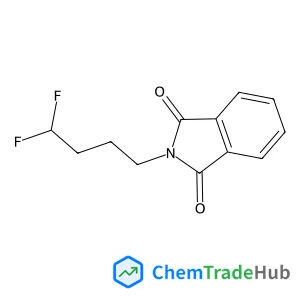
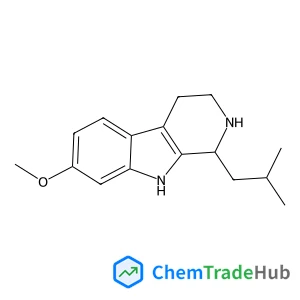
![1-oxaspiro[4.4]nonan-6-one structure](https://static.chemtradehub.com/structs/134/134179-01-4-e051.webp "1-oxaspiro[4.4]nonan-6-one structure")
![N-{[(2-Methyl-2-propanyl)oxy]carbonyl}-L-methionylglycine structure](https://static.chemtradehub.com/structs/234/23446-03-9-e1e5.webp "N-{[(2-Methyl-2-propanyl)oxy]carbonyl}-L-methionylglycine structure")





