


Synthesis of magnetic UiO-66-NH2@EDTA-GO and mechanism study of simultaneous adsorption of Pb(ii) and organic dyes from water
Literature Information
Publication Date
2023-10-05
DOI
10.1039/D3RE00399J
Impact Factor
4.239
Authors
Mingli Cao, Wei Yang
View Original
Abstract
Heavy metal ions and organic dyes are some of the main pollutants in water environments, which have the potential to cause harm to the ecological environment and human health. Although adsorption technology has been widely used in the treatment of pollutants in water, the selection of adsorbents is still a challenge considering the adsorption capacity and regeneration ability of the adsorbents. This article reports a new type of composite nanomaterial Fe3O4/UiO-66-NH2@EDTA-GO with magnetic and highly structured pore channels. The composite material is composed of Fe3O4, UiO-66-NH2, and functionalized graphene oxide, which has the advantages of magnetic recovery, high surface area, and well-developed porous structure. The adsorption behavior of the target pollutants on Fe3O4/UiO-66-NH2@EDTA-GO was investigated by batch adsorption experiments. The experimental results show that when the initial concentration of the target pollutants is 100 mg L−1, the temperature is 293 K, and the solution pH is 6, the adsorption capacity of Pb(II) reaches 82.81 mg g−1 after 60 min of adsorption, the adsorption capacity of methyl orange (MO) reaches 61.08 mg g−1 after 30 min of adsorption, and the adsorption capacity of methylene blue (MB) reaches 86.48 mg g−1 after 60 min of adsorption. This experiment also studied the adsorption capacity of Fe3O4/UiO-66-NH2@EDTA-GO for organic–inorganic binary composite pollutants and the interaction between different pollutants in the composite pollution system. The results show that the composite material has efficient adsorption capacity for different types of pollutants. The component analysis of the samples before and after adsorption was carried out by XPS, and Fe3O4/UiO-66-NH2@EDTA-GO has different adsorption mechanisms for different types of pollutants. This study provides a foundation for the application of new composite materials, which has important scientific and practical significance.
Recommended Journals

Helvetica Chimica Acta

Fibre Chemistry

Pharmacological Reviews

Planta Medica

Journal of Catalysis

Journal of Medicinal Chemistry

Journal of Physics and Chemistry of Solids

Journal of Heterocyclic Chemistry

Proceedings of the National Academy of Sciences of the United States of America

Pure and Applied Chemistry
Related Literature
PD-L1 aptamer isolation via Modular-SELEX and its applications in cancer cell detection and tumor tissue section imaging
Jiyuan Li, Xijiao Ren, Jiaxing Zhao, Xinhui Lou
2021-03-05
Paper
DOI: 10.1039/D1AN00182E
Simultaneous analysis of dopamine and homovanillic acid by high-performance liquid chromatography with wall-jet/thin-layer electrochemical detection
Yaping Zhou, Hongling Yan, Qingji Xie, Siyu Huang, Jiali Liu, Zou Li, Ming Ma
2013-09-13
Paper
DOI: 10.1039/C3AN01437A
Aerosol deposition-carbon furnace atomisation for simultaneous multi-element atomic absorption spectrometry
Paper
DOI: 10.1039/JA9860100287
Wearable superhigh energy density supercapacitors using a hierarchical ternary metal selenide composite of CoNiSe2 microspheres decorated with CoFe2Se4 nanorods
Chandu V. V. Muralee Gopi, Araveeti Eswar Reddy, Hee-Je Kim
2018-03-19
Paper
DOI: 10.1039/C8TA01141A
A facile online multi-gear capacitively coupled contactless conductivity detector for an automatic and wide range monitoring of high salt in HPLC
Weiwen Liu, Ziqi Liang, Yuanyu Wang, Jun Cao, Qiang Zhang, Xiaoping Liu, Yuxing Wang
2021-12-27
Paper
DOI: 10.1039/D1AN02249K
Tethering of spherical DOTAP liposome gold nanoparticles on cysteamine monolayer for sensitive label free electrochemical detection of DNA and transfection
Mohanlal Bhuvana, Venkataraman Dharuman
2014-02-10
Paper
DOI: 10.1039/C4AN00017J
Rhodamine 6G-based efficient chemosensor for trivalent metal ions (Al3+, Cr3+ and Fe3+) upon single excitation with applications in combinational logic circuits and memory devices
Dipankar Das, Rabiul Alam
2021-12-10
Paper
DOI: 10.1039/D1AN01788H
Flexible thread-based electrochemical sensors for oxygen monitoring
2021-03-09
Paper
DOI: 10.1039/D0AN02400G
You might also like
Compound Q&A
What is the market or research trend for N-(4-Methoxybenzyl)-2-pyridinamine (CAS: 52818-63-0)?
N-(4-Methoxybenzyl)-2-pyridinamine (CAS: 52818-63-0) is increasingly being used ...
52818-63-0N-(4-Methoxybenzyl)-...
Compound Q&A
What precautions should be taken when handling Ethyl 4-(2-chlorophenyl)-1,3-thiazole-2-carboxylate (CAS: 1050507-06-6)?
When handling Ethyl 4-(2-chlorophenyl)-1,3-thiazole-2-carboxylate, appropriate p...
1050507-06-6Ethyl 4-(2-chlorophe...
Compound Q&A
What regulatory guidelines apply to diethyldiselane (CAS: 628-39-7)?
Diethyldiselane (CAS: 628-39-7) is classified under the Globally Harmonized Syst...
628-39-7Diethyldiselane
Compound Q&A
What is the market or research trend for oxocopper (CAS: 12053-18-8)?
The market for oxocopper (CAS: 12053-18-8) is primarily driven by its use in cat...
12053-18-8oxocopper; oxo-(oxoc...
Compound Q&A
What is the market or research trend for 5-{[(2-Methyl-2-propanyl)oxy]carbonyl}-5-azaspiro[2.4]heptane-7-carboxylic acid?
The market for 5-{[(2-Methyl-2-propanyl)oxy]carbonyl}-5-azaspiro[2.4]heptane-7-c...
1268519-54-55-{[(2-Methyl-2-prop...
Compound Q&A
What is 2-(1-Pyrrolidinyl)-4-pyridinamine (CAS: 35981-63-6)?
2-(1-Pyrrolidinyl)-4-pyridinamine is a chemical compound with the CAS number 359...
35981-63-62-(1-Pyrrolidinyl)-4...
Compound Q&A
What are the physical and chemical properties of 2-(3-Pyridinyl)-1-azabicyclo[2.2.2]octane (CAS: 91556-75-1)?
2-(3-Pyridinyl)-1-azabicyclo[2.2.2]octane (CAS: 91556-75-1) is a crystalline sol...
91556-75-12-(3-Pyridinyl)-1-az...
Compound Q&A
How is (S)-Alpha-allyl-proline hydrochloride (CAS: 129704-91-2) typically synthesized?
(S)-Alpha-allyl-proline hydrochloride is usually synthesized via a Wittig reacti...
129704-91-2(S)-Alpha-allyl-prol...
Compound Q&A
What is 3-Methyl-1,2-oxazole-5-carboxylic acid (CAS: 4857-42-5)?
3-Methyl-1,2-oxazole-5-carboxylic acid (CAS: 4857-42-5) is an organic compound w...
4857-42-53-Methyl-1,2-oxazole...
Compound Q&A
How is Lys-SMCC-DM1 (CAS: 1281816-04-3) typically synthesized?
Lys-SMCC-DM1 is synthesized via a multi-step process involving the coupling of S...
1281816-04-3Lys-SMCC-DM1
Source Journal
Reaction Chemistry & Engineering

CiteScore:
0
Self-citation Rate:
8.8%
Articles per Year:
284
Reaction Chemistry & Engineering is an interdisciplinary journal reporting cutting-edge research focused on enhancing the understanding and efficiency of reactions. Reaction engineering leverages the interface where fundamental molecular chemistry meets chemical engineering and technology. Challenges in chemistry can be overcome by the application of new technologies, while engineers may find improved solutions for process development from the latest developments in reaction chemistry. Reaction Chemistry & Engineering is a unique forum for researchers whose interests span the broad areas of chemical engineering and chemical sciences to come together in solving problems of importance to wider society. All papers should be written to be approachable by readers across the engineering and chemical sciences. Papers that consider multiple scales, from the laboratory up to and including plant scale, are particularly encouraged.
Recommended Compounds
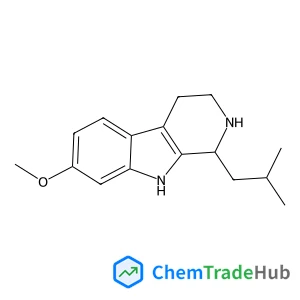
1-Isobutyl-7-methoxy-2,3,4,9-tetrahydro-1H-beta-carboline
CAS Number:
175975-76-5
Molecular Formula:
C16H22N2O
Recommended Suppliers






Disclaimer
This page provides academic journal information for reference and research purposes only. We are not affiliated with any journal publishers and do not handle publication submissions. For publication-related inquiries, please contact the respective journal publishers directly.
If you notice any inaccuracies in the information displayed, please contact us at support@chemtradehub.com. We will promptly review and address your concerns.