












Organo-catalyzed C2,3–H aminochalcogenation of indoles with secondary (aliphatic) amines
Literature Information
Publication Date
2023-10-11
DOI
10.1039/D3QO01457F
Impact Factor
5.281
Authors
Xiaoxiang Zhang, Chenrui Liu, Yingying Zhang, Fang Shen, Wanxing Wei, Zhuan Zhang, Taoyuan Liang
View Original
Abstract
Catalysis by small organic molecules capable of binding and activating substrates through attractive, non-covalent interactions has emerged as a highly significant approach in the fields of organic and organometallic chemistry. Notably, the utilization of organo-chalconium catalysts has gained substantial attention, owing to their remarkable catalytic properties, within the realms of synthetic chemistry and small molecule catalysis. In this study, we present a direct C2,3–H difunctionalization of indoles with unactivated amines (secondary aliphatic amines, more than 66 examples, up to 95% isolated yield), facilitated by the organo-chalconium catalyst generated through the reaction of iodine and chalconium reagents. This exceptional strategy not only provides a formidable tool for the assembly of intricate molecular architectures, but also affords the ability to perform late-stage functionalization of natural products and pharmaceutical compounds. Moreover, this advancement imparts unparalleled potential for optimizing the bioactivity and pharmacokinetic properties of existing drugs.
Related Literature
Boosting photocatalytic conversion of formic acid to CO over P-doped CdS
Pengfei Feng, Junhao Wu, Zimeng Fan, Baochun Ma, Yuanyuan Li
2023-11-15
Communication
DOI: 10.1039/D3CC04586B
Artificial nucleotide codons for enzymatic DNA synthesis
Nazarii Sabat, Andreas Stämpfli, Marie Flamme, Steven Hanlon, Serena Bisagni, Filippo Sladojevich, Kurt Püntener, Marcel Hollenstein
2023-11-15
Communication
DOI: 10.1039/D3CC04933G
meta-Fluorophores: an uncharted ocean of opportunities
Tanmay Chatterjee, Mrinal Mandal, Sukumar Mardanya, Manjeev Singh, Arijit Saha, Swarnali Ghosh
2023-10-17
Feature Article
DOI: 10.1039/D3CC04182D
Dynamic supramolecular hydrogels mediated by chemical reactions
Jingjing Chen, Hucheng Wang, Feng Long, Shengyu Bai, Yiming Wang
2023-11-03
Feature Article
DOI: 10.1039/D3CC04353C
Dual-responsive probe and DNA interstrand crosslink precursor target the unique redox status of cancer cells
Dehao Yu, Luo Wang, Jingao Li, Xuanwei Zeng, Yuanyuan Jia, Junyu Tian, Anahit Campbell, Huabing Sun, Heli Fan
2023-11-07
Communication
DOI: 10.1039/D3CC05175G
[RbSr3X][(BS3)2] (X = Cl, Br): two salt-inclusion thioborates with large birefringence and structure transformation from centrosymmetric to asymmetric
2023-11-18
Communication
DOI: 10.1039/D3CC05205B
A designed DNA/amino acid amphiphile-based supramolecular oxidase-mimetic catalyst for colorimetric DNA detection
Minquan Jiang, Shichao Xu, Yuanxi Liu, Zhen-Gang Wang
2023-11-14
Communication
DOI: 10.1039/D3CC04047J
Synthesis of medium-sized heterocycles from oxetanes based on an allylic amination/ring-opening strategy
Jixing Li, Ming Fang, Maoyan Liao, Hongling Xie, Xiu-Qin Dong, Jianwei Sun, Hai Huang
2023-11-15
Communication
DOI: 10.1039/D3CC04355J
Reshaping carbon-coated Mn2Mo3O8 nanotubes and enhanced sodium storage performance
Lifeng Zhang, Liyue Xue, Jiaxi Bai, Kexin He, Bangmei Lu
2023-10-25
Communication
DOI: 10.1039/D3CC03683A
You might also like
Compound Q&A
What is the market or research trend for N-(4-Methoxybenzyl)-2-pyridinamine (CAS: 52818-63-0)?
N-(4-Methoxybenzyl)-2-pyridinamine (CAS: 52818-63-0) is increasingly being used ...
52818-63-0N-(4-Methoxybenzyl)-...
Compound Q&A
What precautions should be taken when handling Ethyl 4-(2-chlorophenyl)-1,3-thiazole-2-carboxylate (CAS: 1050507-06-6)?
When handling Ethyl 4-(2-chlorophenyl)-1,3-thiazole-2-carboxylate, appropriate p...
1050507-06-6Ethyl 4-(2-chlorophe...
Compound Q&A
What regulatory guidelines apply to diethyldiselane (CAS: 628-39-7)?
Diethyldiselane (CAS: 628-39-7) is classified under the Globally Harmonized Syst...
628-39-7Diethyldiselane
Compound Q&A
What is the market or research trend for oxocopper (CAS: 12053-18-8)?
The market for oxocopper (CAS: 12053-18-8) is primarily driven by its use in cat...
12053-18-8oxocopper; oxo-(oxoc...
Compound Q&A
What is the market or research trend for 5-{[(2-Methyl-2-propanyl)oxy]carbonyl}-5-azaspiro[2.4]heptane-7-carboxylic acid?
The market for 5-{[(2-Methyl-2-propanyl)oxy]carbonyl}-5-azaspiro[2.4]heptane-7-c...
1268519-54-55-{[(2-Methyl-2-prop...
Compound Q&A
What is 2-(1-Pyrrolidinyl)-4-pyridinamine (CAS: 35981-63-6)?
2-(1-Pyrrolidinyl)-4-pyridinamine is a chemical compound with the CAS number 359...
35981-63-62-(1-Pyrrolidinyl)-4...
Compound Q&A
What are the physical and chemical properties of 2-(3-Pyridinyl)-1-azabicyclo[2.2.2]octane (CAS: 91556-75-1)?
2-(3-Pyridinyl)-1-azabicyclo[2.2.2]octane (CAS: 91556-75-1) is a crystalline sol...
91556-75-12-(3-Pyridinyl)-1-az...
Compound Q&A
How is (S)-Alpha-allyl-proline hydrochloride (CAS: 129704-91-2) typically synthesized?
(S)-Alpha-allyl-proline hydrochloride is usually synthesized via a Wittig reacti...
129704-91-2(S)-Alpha-allyl-prol...
Compound Q&A
What is 3-Methyl-1,2-oxazole-5-carboxylic acid (CAS: 4857-42-5)?
3-Methyl-1,2-oxazole-5-carboxylic acid (CAS: 4857-42-5) is an organic compound w...
4857-42-53-Methyl-1,2-oxazole...
Compound Q&A
How is Lys-SMCC-DM1 (CAS: 1281816-04-3) typically synthesized?
Lys-SMCC-DM1 is synthesized via a multi-step process involving the coupling of S...
1281816-04-3Lys-SMCC-DM1
Source Journal
Organic Chemistry Frontiers

CiteScore:
7.8
Self-citation Rate:
8.7%
Articles per Year:
724
Organic Chemistry Frontiers publishes high-quality research from across organic chemistry. Emphases are placed on studies that make significant contributions to the field of organic chemistry by reporting either new or significantly improved protocols or methodologies. Topics include, but are not limited to the following: Organic synthesis Development of synthetic methodologies Catalysis Natural products Functional organic materials Supramolecular and macromolecular chemistry Physical and computational organic chemistry
Recommended Compounds
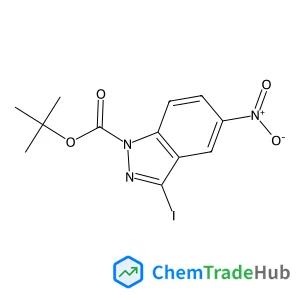
Tert-butyl 3-iodo-5-nitro-1H-indazole-1-carboxylate
CAS Number:
459133-69-8
Molecular Formula:
C12H12IN3O4
Recommended Suppliers






Disclaimer
This page provides academic journal information for reference and research purposes only. We are not affiliated with any journal publishers and do not handle publication submissions. For publication-related inquiries, please contact the respective journal publishers directly.
If you notice any inaccuracies in the information displayed, please contact us at support@chemtradehub.com. We will promptly review and address your concerns.