












Directed copper-catalyzed dehydrogenative C–H amination of unsaturated sialic acids
Literature Information
Publication Date
2023-11-27
DOI
10.1039/D3QO01448G
Impact Factor
5.281
Authors
Samir Messaoudi
View Original
Abstract
This study reports the first example of a Cu-catalyzed dehydrogenative C(sp2)–H amination of sialyl glycals. The scope of this reaction is demonstrated by the use of a variety of substituted azole nucleophiles. This approach offers an efficient entry to an unknown chemical space related to N-branched sialyl glycals. Additionally, removal of the directing group and further post functionalizations on the azole nucleus could also be realized by different cross-coupling processes.
Related Literature
Atomistic insights into the nanohelix of hydrogenated graphene: formation, characterization and application
Liuyang Zhang, Xianqiao Wang
2013-11-19
Paper
DOI: 10.1039/C3CP53978D
Lithium diffusion in congruent LiNbO3 single crystals at low temperatures probed by neutron reflectometry
E. Hüger, J. Rahn, J. Stahn, T. Geue
2014-01-02
Paper
DOI: 10.1039/C3CP54939A
Hybrid pn-junction solar cells based on layers of inorganic nanocrystals and organic semiconductors: optimization of layer thickness by considering the width of the depletion region
Sudip K. Saha, Asim Guchhait, Amlan J. Pal
2013-11-29
Paper
DOI: 10.1039/C3CP52227J
The relationship between enhanced enzyme activity and structural dynamics in ionic liquids: a combined computational and experimental study
Sung Ho Ha, Latsavongsakda Sethaphong, Yoon-Mo Koo, Yaroslava G. Yingling
2013-12-02
Paper
DOI: 10.1039/C3CP52516C
Tuning photocatalytic performance of the near-infrared-driven photocatalyst Cu2(OH)PO4 based on effective mass and dipole moment
Zhujie Li, Ying Dai, Xiangchao Ma, Yingtao Zhu, Baibiao Huang
2013-11-11
Paper
DOI: 10.1039/C3CP53381F
High-pressure formation and stabilization of binary iridium hydrides
2013-12-02
Paper
DOI: 10.1039/C3CP54300E
Theoretical investigation of the effects of doping on the electronic structure and thermoelectric properties of ZnO nanowires
Chao Wang, Yuanxu Wang, Guangbiao Zhang, Chengxiao Peng, Gui Yang
2013-12-17
Paper
DOI: 10.1039/C3CP54289K
The effect of water on the structural, electronic and photocatalytic properties of graphitic carbon nitride
Li-Min Liu, Shi-Jin Zhao
2013-12-16
Paper
DOI: 10.1039/C3CP54333A
Formation of hydroxyacetonitrile (HOCH2CN) and polyoxymethylene (POM)-derivatives in comets from formaldehyde (CH2O) and hydrogen cyanide (HCN) activated by water
Grégoire Danger, Albert Rimola, Ninette Abou Mrad, Fabrice Duvernay, Gaël Roussin, Patrice Theule, Thierry Chiavassa
2013-10-18
Paper
DOI: 10.1039/C3CP54034K
You might also like
Compound Q&A
What is the market or research trend for N-(4-Methoxybenzyl)-2-pyridinamine (CAS: 52818-63-0)?
N-(4-Methoxybenzyl)-2-pyridinamine (CAS: 52818-63-0) is increasingly being used ...
52818-63-0N-(4-Methoxybenzyl)-...
Compound Q&A
What precautions should be taken when handling Ethyl 4-(2-chlorophenyl)-1,3-thiazole-2-carboxylate (CAS: 1050507-06-6)?
When handling Ethyl 4-(2-chlorophenyl)-1,3-thiazole-2-carboxylate, appropriate p...
1050507-06-6Ethyl 4-(2-chlorophe...
Compound Q&A
What regulatory guidelines apply to diethyldiselane (CAS: 628-39-7)?
Diethyldiselane (CAS: 628-39-7) is classified under the Globally Harmonized Syst...
628-39-7Diethyldiselane
Compound Q&A
What is the market or research trend for oxocopper (CAS: 12053-18-8)?
The market for oxocopper (CAS: 12053-18-8) is primarily driven by its use in cat...
12053-18-8oxocopper; oxo-(oxoc...
Compound Q&A
What is the market or research trend for 5-{[(2-Methyl-2-propanyl)oxy]carbonyl}-5-azaspiro[2.4]heptane-7-carboxylic acid?
The market for 5-{[(2-Methyl-2-propanyl)oxy]carbonyl}-5-azaspiro[2.4]heptane-7-c...
1268519-54-55-{[(2-Methyl-2-prop...
Compound Q&A
What is 2-(1-Pyrrolidinyl)-4-pyridinamine (CAS: 35981-63-6)?
2-(1-Pyrrolidinyl)-4-pyridinamine is a chemical compound with the CAS number 359...
35981-63-62-(1-Pyrrolidinyl)-4...
Compound Q&A
What are the physical and chemical properties of 2-(3-Pyridinyl)-1-azabicyclo[2.2.2]octane (CAS: 91556-75-1)?
2-(3-Pyridinyl)-1-azabicyclo[2.2.2]octane (CAS: 91556-75-1) is a crystalline sol...
91556-75-12-(3-Pyridinyl)-1-az...
Compound Q&A
How is (S)-Alpha-allyl-proline hydrochloride (CAS: 129704-91-2) typically synthesized?
(S)-Alpha-allyl-proline hydrochloride is usually synthesized via a Wittig reacti...
129704-91-2(S)-Alpha-allyl-prol...
Compound Q&A
What is 3-Methyl-1,2-oxazole-5-carboxylic acid (CAS: 4857-42-5)?
3-Methyl-1,2-oxazole-5-carboxylic acid (CAS: 4857-42-5) is an organic compound w...
4857-42-53-Methyl-1,2-oxazole...
Compound Q&A
How is Lys-SMCC-DM1 (CAS: 1281816-04-3) typically synthesized?
Lys-SMCC-DM1 is synthesized via a multi-step process involving the coupling of S...
1281816-04-3Lys-SMCC-DM1
Source Journal
Organic Chemistry Frontiers

CiteScore:
7.8
Self-citation Rate:
8.7%
Articles per Year:
724
Organic Chemistry Frontiers publishes high-quality research from across organic chemistry. Emphases are placed on studies that make significant contributions to the field of organic chemistry by reporting either new or significantly improved protocols or methodologies. Topics include, but are not limited to the following: Organic synthesis Development of synthetic methodologies Catalysis Natural products Functional organic materials Supramolecular and macromolecular chemistry Physical and computational organic chemistry
Recommended Compounds
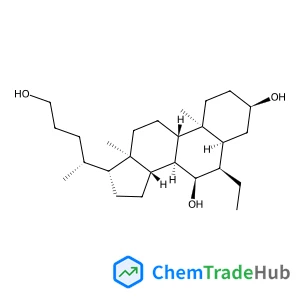
(3alpha,5beta,6alpha,7alpha)-6-Ethylcholane-3,7,24-triol
CAS Number:
1537866-49-1
Molecular Formula:
C26H46O3
Recommended Suppliers





Disclaimer
This page provides academic journal information for reference and research purposes only. We are not affiliated with any journal publishers and do not handle publication submissions. For publication-related inquiries, please contact the respective journal publishers directly.
If you notice any inaccuracies in the information displayed, please contact us at support@chemtradehub.com. We will promptly review and address your concerns.