











Front cover
Literature Information
Publication Date
2023-11-22
DOI
10.1039/D3OB90165C
Impact Factor
3.876
Authors
View Original
Abstract
A graphical abstract is available for this content
Related Literature
Enzymatic synthesis of ionic responsive lignin nanofibres through surface poly(N-isopropylacrylamide) immobilization
Guangzheng Gao, Muzaffer A. Karaaslan, John F. Kadla, Frank Ko
2014-06-23
Paper
DOI: 10.1039/C4GC00757C
Correction: Catalytic aerobic oxidation of renewable furfural to maleic anhydride and furanone derivatives with their mechanistic studies
Jihong Lan, Zhuqi Chen, Jinchi Lin, Guochuan Yin
2014-09-10
Correction
DOI: 10.1039/C4GC90039A
Development of a tripartite solvent blend for sustainable chromatography
Florence M. Chardon, Nicole Blaquiere, Georgette M. Castanedo, Stefan G. Koenig
2014-07-11
Communication
DOI: 10.1039/C4GC00884G
Towards the rational biosynthesis of substituted phenazines and phenoxazinones by laccases
M. Conceição Oliveira, Lígia O. Martins
2014-06-06
Paper
DOI: 10.1039/C4GC00901K
Lysinol: a renewably resourced alternative to petrochemical polyamines and aminoalcohols
Pranit S. Metkar, Mark A. Scialdone, Kenneth G. Moloy
2014-08-06
Paper
DOI: 10.1039/C4GC01167H
Electrocatalytic oxidation of 5-hydroxymethylfurfural to 2,5-furandicarboxylic acid on supported Au and Pd bimetallic nanoparticles
David J. Chadderdon, Le Xin, Ji Qi, Yang Qiu, Phani Krishna, Karren L. More, Wenzhen Li
2014-04-24
Paper
DOI: 10.1039/C4GC00401A
Selective conversion of lignin in corncob residue to monophenols with high yield and selectivity
Zhicheng Jiang, Ting He, Jianmei Li, Changwei Hu
2014-06-30
Paper
DOI: 10.1039/C4GC00620H
Total photocatalysis conversion from cyclohexane to cyclohexanone by C3N4/Au nanocomposites
Juan Liu, Yanmei Yang, Naiyun Liu, Yang Liu, Hui Huang, Zhenhui Kang
2014-07-21
Paper
DOI: 10.1039/C4GC01126K
TiO2-photocatalytic acceptorless dehydrogenation coupling of primary alkyl alcohols into acetals
Zhenping Zhu, Yupeng Wu, Tianjian Zhao, Li Li
2014-05-13
Communication
DOI: 10.1039/C4GC00413B
Synthesis of a CO2-philic poly(vinyl acetate)-based cationic amphiphilic surfactant by RAFT/ATRP and its application in preparing monolithic materials
Wei Luo, Bien Tan
2014-07-16
Paper
DOI: 10.1039/C4GC00822G
You might also like
Compound Q&A
How should 2-Methylbenzene-1,4-diamine dihydrochloride (CAS: 615-45-2) be stored?
2-Methylbenzene-1,4-diamine dihydrochloride (CAS: 615-45-2) should be stored in ...
615-45-22-Methylbenzene-1,4-...
Compound Q&A
Is (1S,4S)-2,5-Diazabicyclo[2.2.1]heptane dihydrobromide (CAS: 132747-20-7) safe?
(1S,4S)-2,5-Diazabicyclo[2.2.1]heptane dihydrobromide is generally considered sa...
132747-20-7(1S,4S)-2,5-Diazabic...
Compound Q&A
What industries use (6-Chloropyridazin-3-YL)methanamine (CAS: 871826-15-2)?
(6-Chloropyridazin-3-YL)methanamine finds applications in the pharmaceutical ind...
871826-15-2(6-Chloropyridazin-3...
Compound Q&A
What are the main uses of 2-Fluoro-3-methylphenol (CAS: 77772-72-6)?
2-Fluoro-3-methylphenol is primarily used in the synthesis of pharmaceuticals, p...
77772-72-62-Fluoro-3-methylphe...
Compound Q&A
What precautions should be taken when handling 3-Methoxy-4-nitrobenzonitrile (CAS: 177476-75-4)?
When handling 3-Methoxy-4-nitrobenzonitrile, it is important to wear appropriate...
177476-75-43-Methoxy-4-nitroben...
Compound Q&A
What precautions should be taken when handling 1,3-Oxazolo[4,5-b]pyridine-2(3H)-thione (CAS: 211949-57-4)?
When handling 1,3-Oxazolo[4,5-b]pyridine-2(3H)-thione (CAS: 211949-57-4), it is ...
211949-57-4[1,3]Oxazolo[4,5-b]p...
Compound Q&A
What regulatory guidelines apply to 4-Ethynylbenzamide (CAS: 90347-86-7)?
4-Ethynylbenzamide (CAS: 90347-86-7) falls under various regulatory guidelines i...
90347-86-74-Ethynylbenzamide
Compound Q&A
What are the main uses of 3-(2-Ethylphenyl)-2-thioxo-4-imidazolidinone (CAS: 186822-57-1)?
3-(2-Ethylphenyl)-2-thioxo-4-imidazolidinone is primarily used as an intermediat...
186822-57-13-(2-Ethylphenyl)-2-...
Compound Q&A
What is (2-Fluoro-6-methoxyphenyl)acetic acid (CAS: 500912-19-6)?
(2-Fluoro-6-methoxyphenyl)acetic acid, also known as 4-fluoro-3-methoxybenzoic a...
500912-19-6(2-Fluoro-6-methoxyp...
Compound Q&A
What is the market or research trend for 2-[4-(Hydroxymethyl)phenoxy]ethanol (CAS: 102196-18-9)?
Market trends for 2-[4-(Hydroxymethyl)phenoxy]ethanol (CAS: 102196-18-9) indicat...
102196-18-92-[4-(Hydroxymethyl)...
Source Journal
Organic & Biomolecular Chemistry

CiteScore:
3.4
Self-citation Rate:
10.3%
Articles per Year:
1041
Organic & Biomolecular Chemistry (OBC) publishes original and high impact research and reviews in organic chemistry. We welcome research that shows new or significantly improved protocols or methodologies in total synthesis, synthetic methodology or physical and theoretical organic chemistry as well as research that shows a significant advance in the organic chemistry or molecular design aspects of chemical biology, catalysis, supramolecular and macromolecular chemistry, theoretical chemistry, mechanism-oriented physical organic chemistry, medicinal chemistry or natural products. Articles published in the journal should report new work which makes a highly-significant impact in the field. Routine and incremental work is generally not suitable for publication in the journal. More details about key areas of our scope are below. In all cases authors should include in their article clear rationale for why their research has been carried out.
Recommended Compounds
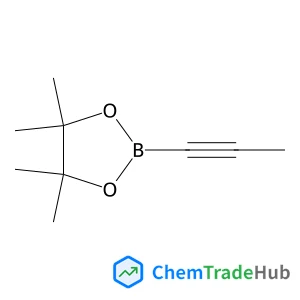
4,4,5,5-Tetramethyl-2-(1-propyn-1-YL)-1,3,2-dioxaborolane
CAS Number:
347389-75-7
Molecular Formula:
C9H15BO2
![Methyl 2-[5-(3-Phenoxyphenyl)-2H-tetrazol-2-yl]acetate structure](https://static.chemtradehub.com/structs/130/1305320-60-8-84b4.webp "Methyl 2-[5-(3-Phenoxyphenyl)-2H-tetrazol-2-yl]acetate structure")
Methyl 2-[5-(3-Phenoxyphenyl)-2H-tetrazol-2-yl]acetate
CAS Number:
1305320-60-8
Molecular Formula:
C16H14N4O3
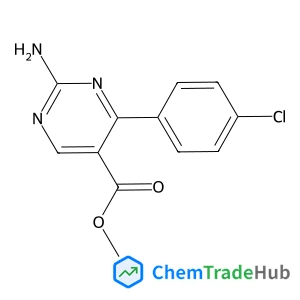
Methyl 2-amino-4-(4-chlorophenyl)-5-pyrimidinecarboxylate
CAS Number:
1133115-56-6
Molecular Formula:
C12H10ClN3O2
Recommended Suppliers



Disclaimer
This page provides academic journal information for reference and research purposes only. We are not affiliated with any journal publishers and do not handle publication submissions. For publication-related inquiries, please contact the respective journal publishers directly.
If you notice any inaccuracies in the information displayed, please contact us at support@chemtradehub.com. We will promptly review and address your concerns.