












Enzymatic synthesis of ionic responsive lignin nanofibres through surface poly(N-isopropylacrylamide) immobilization
Literature Information
Publication Date
2014-06-23
DOI
10.1039/C4GC00757C
Impact Factor
10.182
Authors
Guangzheng Gao, Muzaffer A. Karaaslan, John F. Kadla, Frank Ko
View Original
Abstract
Surface modification of electrospun lignin nanofibres with poly(N-isopropylacrylamide) (PNIPAM) was conducted through surface-initiated atom transfer radical polymerization (ATRPase) using various biocatalysts under aqueous conditions. Three biocatalysts were investigated, a catalase from bovine liver (CBL), a peroxidase from horseradish (HRP), and a laccase from Trametes versicolor (LTV). All of the biocatalysts were found to successfully graft PNIPAM polymer brushes from the nanofibre surfaces. PNIPAM brush thickness was dependent on enzyme activity and significantly influenced by the reaction conditions; manipulating the type of enzyme, the concentration of reducing reagent and solution pH resulted in PNIPAM brushes of various molecular weight, thickness, and grafting density. Lignin fibre surface immobilized PNIPAM brushes with a thickness of >100 nm and a corresponding molecular weight of more than 1 × 10⁶ g mol−1 and a polydispersity index of less than 1.30 were obtained using LTV as the catalyst and ascorbic acid as the reducing agent. The effect of reducing reagent on the weight percentage of PNIPAM on the nanofibre surface was determined by measuring the enthalpy (ΔH) of the phase transition, which was found to exhibit a similar trend as that of the measured PNIPAM brush thickness. Finally, the low critical solution temperature (LCST) of PNIPAM immobilized lignin nanofibre was similar to that of pure PNIPAM and decreased with increasing the ionic concentration, which simultaneously changed the modified fibre mats from hydrophilic to hydrophobic.
Related Literature
New electron correlation theories for transition metal chemistry
Konrad H. Marti, Markus Reiher
2011-01-13
Perspective
DOI: 10.1039/C0CP01883J
Eley–Rideal recombination of hydrogen atoms on a tungsten surface
M. Rutigliano, M. Cacciatore
2011-03-22
Paper
DOI: 10.1039/C0CP02514C
Emission properties of dihydropterins in aqueous solutions
Mariana P. Serrano, Mariana Vignoni, M. Laura Dántola, Esther Oliveros, Carolina Lorente, Andrés H. Thomas
2011-03-15
Paper
DOI: 10.1039/C0CP02912B
Revealing time bunching effect in single-molecule enzyme conformational dynamics
H. Peter Lu
2011-03-15
Perspective
DOI: 10.1039/C0CP02860F
Solvent-assisted conformational isomerization and the conformationally-pure REMPI spectrum of 3-aminophenol
Woon Yong Sohn, Minho Kim, Sang-Su Kim, Young Dong Park, Hyuk Kang
2011-03-11
Paper
DOI: 10.1039/C0CP02592E
Large-scale screening of metal hydrides for hydrogen storage from first-principles calculations based on equilibrium reaction thermodynamics
Ki Chul Kim, Anant D. Kulkarni, J. Karl Johnson, David S. Sholl
2011-03-14
Paper
DOI: 10.1039/C0CP02950E
Chemical evolution of biomolecule building blocks. Can thermodynamics explain the accumulation of glycine in the prebiotic ocean?
Milán Szőri, Balázs Jójárt, Kornél Szőri, Béla Viskolcz
2011-03-22
Paper
DOI: 10.1039/C0CP02687E
On the nature of gallium species in gallium-modified mordenite and MFI zeolites. A comparative DRIFT study of carbon monoxide adsorption and hydrogen dissociation
Alexander I. Serykh, Stanislav P. Kolesnikov
2011-03-10
Paper
DOI: 10.1039/C0CP02088E
Fe3O4nanoparticle-integrated graphene sheets for high-performance half and full lithium ion cells
Liwen Ji, Zhongkui Tan, Tevye R. Kuykendall, Shaul Aloni, Shidi Xun, Eric Lin, Vincent Battaglia, Yuegang Zhang
2011-03-14
Paper
DOI: 10.1039/C1CP20455F
Power-law analysis of surface-plasmon-enhanced electromagnetic field dependence of blinking SERS of thiacyanine or thiacarbocyanine adsorbed on single silver nanoaggregates
Yasutaka Kitahama, Yuhei Tanaka, Tamitake Itoh, Yukihiro Ozaki
2011-03-17
Paper
DOI: 10.1039/C0CP02802A
You might also like
Compound Q&A
How should 2-Methylbenzene-1,4-diamine dihydrochloride (CAS: 615-45-2) be stored?
2-Methylbenzene-1,4-diamine dihydrochloride (CAS: 615-45-2) should be stored in ...
615-45-22-Methylbenzene-1,4-...
Compound Q&A
Is (1S,4S)-2,5-Diazabicyclo[2.2.1]heptane dihydrobromide (CAS: 132747-20-7) safe?
(1S,4S)-2,5-Diazabicyclo[2.2.1]heptane dihydrobromide is generally considered sa...
132747-20-7(1S,4S)-2,5-Diazabic...
Compound Q&A
What industries use (6-Chloropyridazin-3-YL)methanamine (CAS: 871826-15-2)?
(6-Chloropyridazin-3-YL)methanamine finds applications in the pharmaceutical ind...
871826-15-2(6-Chloropyridazin-3...
Compound Q&A
What are the main uses of 2-Fluoro-3-methylphenol (CAS: 77772-72-6)?
2-Fluoro-3-methylphenol is primarily used in the synthesis of pharmaceuticals, p...
77772-72-62-Fluoro-3-methylphe...
Compound Q&A
What precautions should be taken when handling 3-Methoxy-4-nitrobenzonitrile (CAS: 177476-75-4)?
When handling 3-Methoxy-4-nitrobenzonitrile, it is important to wear appropriate...
177476-75-43-Methoxy-4-nitroben...
Compound Q&A
What precautions should be taken when handling 1,3-Oxazolo[4,5-b]pyridine-2(3H)-thione (CAS: 211949-57-4)?
When handling 1,3-Oxazolo[4,5-b]pyridine-2(3H)-thione (CAS: 211949-57-4), it is ...
211949-57-4[1,3]Oxazolo[4,5-b]p...
Compound Q&A
What regulatory guidelines apply to 4-Ethynylbenzamide (CAS: 90347-86-7)?
4-Ethynylbenzamide (CAS: 90347-86-7) falls under various regulatory guidelines i...
90347-86-74-Ethynylbenzamide
Compound Q&A
What are the main uses of 3-(2-Ethylphenyl)-2-thioxo-4-imidazolidinone (CAS: 186822-57-1)?
3-(2-Ethylphenyl)-2-thioxo-4-imidazolidinone is primarily used as an intermediat...
186822-57-13-(2-Ethylphenyl)-2-...
Compound Q&A
What is (2-Fluoro-6-methoxyphenyl)acetic acid (CAS: 500912-19-6)?
(2-Fluoro-6-methoxyphenyl)acetic acid, also known as 4-fluoro-3-methoxybenzoic a...
500912-19-6(2-Fluoro-6-methoxyp...
Compound Q&A
What is the market or research trend for 2-[4-(Hydroxymethyl)phenoxy]ethanol (CAS: 102196-18-9)?
Market trends for 2-[4-(Hydroxymethyl)phenoxy]ethanol (CAS: 102196-18-9) indicat...
102196-18-92-[4-(Hydroxymethyl)...
Source Journal
Green Chemistry

CiteScore:
16.1
Self-citation Rate:
7.5%
Articles per Year:
944
Green Chemistry provides a unique forum for the publication of innovative research on the development of alternative green and sustainable technologies. The scope of Green Chemistry is based on, but not limited to, the definition proposed by Anastas and Warner (Green Chemistry: Theory and Practice, P T Anastas and J C Warner, Oxford University Press, Oxford, 1998). Green chemistry is the utilisation of a set of principles that reduces or eliminates the use or generation of hazardous substances in the design, manufacture and application of chemical products. Green Chemistry is at the frontiers of this continuously-evolving interdisciplinary science and publishes research that attempts to reduce the environmental impact of the chemical enterprise by developing a technology base that is inherently non-toxic to living things and the environment. Submissions on all aspects of research relating to the endeavour are welcome. The journal publishes original and significant cutting-edge research that is likely to be of wide general appeal. To be published, work must present a significant advance in green chemistry. Papers must contain a comparison with existing methods and demonstrate advantages over those methods before publication can be considered. For more information please see this Editorial. Coverage includes the following, but is not limited to: Design (e.g. biomimicry, design for degradation/recycling/reduced toxicity…) Reagents & Feedstocks (e.g. renewables, CO2, solvents, auxiliary agents, waste utilization…) Synthesis (e.g. organic, inorganic, synthetic biology…) Catalysis (e.g. homogeneous, heterogeneous, enzyme, whole cell…) Process (e.g. process design, intensification, separations, recycling, efficiency…) Energy (e.g. renewable energy, fuels, photovoltaics, fuel cells, energy storage, energy carriers…) Applications (e.g. electronics, dyes, consumer products, coatings, pharmaceuticals, preservatives, building materials, chemicals for industry/agriculture/mining…) Impact (e.g. safety, metrics, LCA, sustainability, (eco)toxicology…) Green chemistry is, by definition, a continuously-evolving frontier. Therefore, the inclusion of a particular material or technology does not, of itself, guarantee that a paper is suitable for the journal. To be suitable, the novel advance should have the potential for reduced environmental impact relative to the state of the art. Green Chemistry does not normally deal with research associated with 'end-of-pipe' or remediation issues.
Recommended Compounds
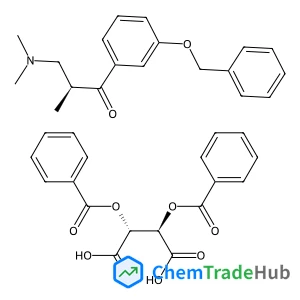
(S)-1-(3-(Benzyloxy)phenyl)-3-(dimethylamino)-2-methylpropan-1-one (2r,3r)-2,3-bis(benzoyloxy)succinate
CAS Number:
1004315-81-4
Molecular Formula:
C37H37NO10

2,3,6-Tri-O-acetyl-4-O-(2,3,4,6-tetra-O-acetyl-beta-D-galactopyranosyl)-alpha-D-glucopyranosyl bromide
CAS Number:
4753-07-5
Molecular Formula:
C26H35BrO17
![5-Bromo-3-isopropyl-1H-pyrrolo[2,3-b]pyridine structure](https://static.chemtradehub.com/structs/125/1256819-54-1-8620.webp "5-Bromo-3-isopropyl-1H-pyrrolo[2,3-b]pyridine structure")
Recommended Suppliers




Disclaimer
This page provides academic journal information for reference and research purposes only. We are not affiliated with any journal publishers and do not handle publication submissions. For publication-related inquiries, please contact the respective journal publishers directly.
If you notice any inaccuracies in the information displayed, please contact us at support@chemtradehub.com. We will promptly review and address your concerns.