












![(3R,4aR,7aS,9aR,10S,11R,13aR,13bS,15aS,15bR)-3,11-Dihydroxy-10-(hydroxymethyl)-4,4,7a,10,13a,15b-hexamethyl-1,2,3,4,4a,7,7a,8,9,9a,10,11,12,13,13a,13b,14,15,15a,15b-icosahydro-5H-naphtho[2',1':4,5]cyc
lohepta[1,2-a]naphthalen-5-one structure](https://static.chemtradehub.com/structs/538/53800-21-8-9f18.webp "(3R,4aR,7aS,9aR,10S,11R,13aR,13bS,15aS,15bR)-3,11-Dihydroxy-10-(hydroxymethyl)-4,4,7a,10,13a,15b-hexamethyl-1,2,3,4,4a,7,7a,8,9,9a,10,11,12,13,13a,13b,14,15,15a,15b-icosahydro-5H-naphtho[2',1':4,5]cyc
lohepta[1,2-a]naphthalen-5-one structure")
Towards the rational biosynthesis of substituted phenazines and phenoxazinones by laccases
Literature Information
Publication Date
2014-06-06
DOI
10.1039/C4GC00901K
Impact Factor
10.182
Authors
M. Conceição Oliveira, Lígia O. Martins
View Original
Abstract
Laccases are multi-copper oxidases that oxidise a wide range of substrates including phenol and aniline derivatives, which could be further involved in coupling reactions leading to the formation of dimeric and trimeric structures. This paper describes the enzyme-mediated dimerisation of several ortho and meta,para-disubstituted aromatic amines into phenazine (“head-to-tail” dimers) and phenoxazinone chromophores. The redox properties of substituted aromatic amines were studied by cyclic voltammetry and the kinetic constants of CotA and Trametes versicolor laccases were measured for selected aromatic amines. The structure of novel enzymatically synthesised phenazine and phenoxazinone dyes using CotA laccase was assessed by NMR and MS. Overall our data show that this enzymatic green process is an efficient alternative to the classic chemical oxidation of aromatic amines and phenols, with an impact on the broad field of applications of these heterocyclic compounds.
Related Literature
The role of the πσ* state in intramolecular charge transfer of 4-(dimethylamino)benzonitrile
Takashige Fujiwara, Marek Z. Zgierski, Edward C. Lim
2011-03-11
Communication
DOI: 10.1039/C0CP02706E
The predicted spectrum of the hypermetallic molecule MgOMg
B. Ostojić, P. Schwerdtfeger, B. Assadollahzadeh, Per Jensen
2011-03-22
Paper
DOI: 10.1039/C0CP02996C
Defect chemistry, redox kinetics, and chemical diffusion of lithium deficient lithium niobate
Jianmin Shi, Holger Fritze, Günter Borchardt, Klaus-Dieter Becker
2011-02-23
Paper
DOI: 10.1039/C0CP02703K
RutileTiO2 nano-branched arrays on FTO for dye-sensitized solar cells
Hua Wang, Yusong Bai, Qiong Wu, Wei Zhou, Hao Zhang, Jinghong Li, Lin Guo
2011-03-11
Paper
DOI: 10.1039/C1CP20351G
A complete look at the multi-channel dissociation of propenal photoexcited at 193 nm: branching ratios and distributions of kinetic energy
Chanchal Chaudhuri, Shih-Huang Lee
2011-03-21
Paper
DOI: 10.1039/C0CP01641A
93Nb NMR and DFT investigation of the polymorphs of NaNbO3
Karen E. Johnston, John M. Griffin, Richard I. Walton, Daniel M. Dawson, Philip Lightfoot, Sharon E. Ashbrook
2011-03-21
Paper
DOI: 10.1039/C1CP20258H
Solvent-assisted conformational isomerization and the conformationally-pure REMPI spectrum of 3-aminophenol
Woon Yong Sohn, Minho Kim, Sang-Su Kim, Young Dong Park, Hyuk Kang
2011-03-11
Paper
DOI: 10.1039/C0CP02592E
Large-scale screening of metal hydrides for hydrogen storage from first-principles calculations based on equilibrium reaction thermodynamics
Ki Chul Kim, Anant D. Kulkarni, J. Karl Johnson, David S. Sholl
2011-03-14
Paper
DOI: 10.1039/C0CP02950E
Ab initio and DFT studies of the spin–orbit and spin–spin contributions to the zero-field splitting tensors of triplet nitrenes with aryl scaffolds
Kenji Sugisaki, Kazuo Toyota, Kazunobu Sato, Daisuke Shiomi, Masahiro Kitagawa, Takeji Takui
2011-03-10
Paper
DOI: 10.1039/C0CP02809F
VUV state-selected photoionization of thermally-desorbed biomolecules by coupling an aerosol source to an imaging photoelectron/photoion coincidence spectrometer: case of the amino acids tryptophan and phenylalanine
François Gaie-Levrel, Gustavo A. Garcia, Martin Schwell, Laurent Nahon
2011-03-11
Paper
DOI: 10.1039/C0CP02798G
You might also like
Compound Q&A
How should 2-Methylbenzene-1,4-diamine dihydrochloride (CAS: 615-45-2) be stored?
2-Methylbenzene-1,4-diamine dihydrochloride (CAS: 615-45-2) should be stored in ...
615-45-22-Methylbenzene-1,4-...
Compound Q&A
Is (1S,4S)-2,5-Diazabicyclo[2.2.1]heptane dihydrobromide (CAS: 132747-20-7) safe?
(1S,4S)-2,5-Diazabicyclo[2.2.1]heptane dihydrobromide is generally considered sa...
132747-20-7(1S,4S)-2,5-Diazabic...
Compound Q&A
What industries use (6-Chloropyridazin-3-YL)methanamine (CAS: 871826-15-2)?
(6-Chloropyridazin-3-YL)methanamine finds applications in the pharmaceutical ind...
871826-15-2(6-Chloropyridazin-3...
Compound Q&A
What are the main uses of 2-Fluoro-3-methylphenol (CAS: 77772-72-6)?
2-Fluoro-3-methylphenol is primarily used in the synthesis of pharmaceuticals, p...
77772-72-62-Fluoro-3-methylphe...
Compound Q&A
What precautions should be taken when handling 3-Methoxy-4-nitrobenzonitrile (CAS: 177476-75-4)?
When handling 3-Methoxy-4-nitrobenzonitrile, it is important to wear appropriate...
177476-75-43-Methoxy-4-nitroben...
Compound Q&A
What precautions should be taken when handling 1,3-Oxazolo[4,5-b]pyridine-2(3H)-thione (CAS: 211949-57-4)?
When handling 1,3-Oxazolo[4,5-b]pyridine-2(3H)-thione (CAS: 211949-57-4), it is ...
211949-57-4[1,3]Oxazolo[4,5-b]p...
Compound Q&A
What regulatory guidelines apply to 4-Ethynylbenzamide (CAS: 90347-86-7)?
4-Ethynylbenzamide (CAS: 90347-86-7) falls under various regulatory guidelines i...
90347-86-74-Ethynylbenzamide
Compound Q&A
What are the main uses of 3-(2-Ethylphenyl)-2-thioxo-4-imidazolidinone (CAS: 186822-57-1)?
3-(2-Ethylphenyl)-2-thioxo-4-imidazolidinone is primarily used as an intermediat...
186822-57-13-(2-Ethylphenyl)-2-...
Compound Q&A
What is (2-Fluoro-6-methoxyphenyl)acetic acid (CAS: 500912-19-6)?
(2-Fluoro-6-methoxyphenyl)acetic acid, also known as 4-fluoro-3-methoxybenzoic a...
500912-19-6(2-Fluoro-6-methoxyp...
Compound Q&A
What is the market or research trend for 2-[4-(Hydroxymethyl)phenoxy]ethanol (CAS: 102196-18-9)?
Market trends for 2-[4-(Hydroxymethyl)phenoxy]ethanol (CAS: 102196-18-9) indicat...
102196-18-92-[4-(Hydroxymethyl)...
Source Journal
Green Chemistry

CiteScore:
16.1
Self-citation Rate:
7.5%
Articles per Year:
944
Green Chemistry provides a unique forum for the publication of innovative research on the development of alternative green and sustainable technologies. The scope of Green Chemistry is based on, but not limited to, the definition proposed by Anastas and Warner (Green Chemistry: Theory and Practice, P T Anastas and J C Warner, Oxford University Press, Oxford, 1998). Green chemistry is the utilisation of a set of principles that reduces or eliminates the use or generation of hazardous substances in the design, manufacture and application of chemical products. Green Chemistry is at the frontiers of this continuously-evolving interdisciplinary science and publishes research that attempts to reduce the environmental impact of the chemical enterprise by developing a technology base that is inherently non-toxic to living things and the environment. Submissions on all aspects of research relating to the endeavour are welcome. The journal publishes original and significant cutting-edge research that is likely to be of wide general appeal. To be published, work must present a significant advance in green chemistry. Papers must contain a comparison with existing methods and demonstrate advantages over those methods before publication can be considered. For more information please see this Editorial. Coverage includes the following, but is not limited to: Design (e.g. biomimicry, design for degradation/recycling/reduced toxicity…) Reagents & Feedstocks (e.g. renewables, CO2, solvents, auxiliary agents, waste utilization…) Synthesis (e.g. organic, inorganic, synthetic biology…) Catalysis (e.g. homogeneous, heterogeneous, enzyme, whole cell…) Process (e.g. process design, intensification, separations, recycling, efficiency…) Energy (e.g. renewable energy, fuels, photovoltaics, fuel cells, energy storage, energy carriers…) Applications (e.g. electronics, dyes, consumer products, coatings, pharmaceuticals, preservatives, building materials, chemicals for industry/agriculture/mining…) Impact (e.g. safety, metrics, LCA, sustainability, (eco)toxicology…) Green chemistry is, by definition, a continuously-evolving frontier. Therefore, the inclusion of a particular material or technology does not, of itself, guarantee that a paper is suitable for the journal. To be suitable, the novel advance should have the potential for reduced environmental impact relative to the state of the art. Green Chemistry does not normally deal with research associated with 'end-of-pipe' or remediation issues.
Recommended Compounds
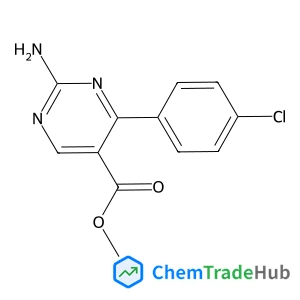
Methyl 2-amino-4-(4-chlorophenyl)-5-pyrimidinecarboxylate
CAS Number:
1133115-56-6
Molecular Formula:
C12H10ClN3O2

Recommended Suppliers





Disclaimer
This page provides academic journal information for reference and research purposes only. We are not affiliated with any journal publishers and do not handle publication submissions. For publication-related inquiries, please contact the respective journal publishers directly.
If you notice any inaccuracies in the information displayed, please contact us at support@chemtradehub.com. We will promptly review and address your concerns.