












Lysinol: a renewably resourced alternative to petrochemical polyamines and aminoalcohols
Literature Information
Publication Date
2014-08-06
DOI
10.1039/C4GC01167H
Impact Factor
10.182
Authors
Pranit S. Metkar, Mark A. Scialdone, Kenneth G. Moloy
View Original
Abstract
This paper reports the preparation of lysinol (2,6-diamino-1-hexanol) by the hydrogenation of lysine and an example of its use as a replacement for petrochemical-derived amines. Lysine is presently manufactured by fermentation of sugars and other carbon sources at scale exceeding 109 kg per year. Therefore, lysinol is potentially a renewable, platform aminoalcohol of previously unrecognized potential. Lysine hydrogenation proceeds under relatively modest conditions with Ru/C catalyst in water (100–150 °C, 48–70 bar, pH 1.5–2) to give lysinol in good yield (100% conversion, >90% selectivity; 50–70% isolated yield after purification by distillation). The impact of the various reaction parameters on conversion and selectivity are presented and discussed. Lysine hydrogenation at higher temperatures provides a pathway to piperidines and other products via further reduction and elimination of lysinol. The feasibility of lysinol synthesis from commodity, animal feed-grade lysine sources is presented as well. An example of the potential utility of lysinol is demonstrated by its use as a diamine curing agent with a standard epoxy resin. The properties of the resulting thermoset are contrasted with that obtained with a typical petrochemical amine used in this application (diethylenetriamine, DETA).
Related Literature
Dissection of the difference between the group I metal ions in inhibiting GSK3β: a computational study
Shao-Yong Lu, Yong-Jun Jiang, Jian-Wei Zou, Tian-Xing Wu
2011-03-14
Paper
DOI: 10.1039/C0CP02498H
Pattern formation in the Belousov–Zhabotinsky-PAMAM dendrimer system
Diana I. Roncaglia, Jorge Carballido-Landeira, Alberto P. Muñuzuri
2011-03-22
Paper
DOI: 10.1039/C0CP02656E
Isomerization of spirobenzopyrans bearing electron-donating and electron-withdrawing groups in acidic aqueous solutions
Taku Satoh, Kimio Sumaru, Toshiyuki Takagi, Katsuki Takai, Toshiyuki Kanamori
2011-03-11
Paper
DOI: 10.1039/C0CP01989E
Fluorescence excitation and excited state intramolecular proton transfer of jet-cooled naphthol derivatives: Part 1. 1-hydroxy-2-naphthaldehyde
Annemarie McCarthy, Albert A. Ruth
2011-03-21
Paper
DOI: 10.1039/C0CP02601H
Structures and electronic properties of silicene clusters: a promising material for FET and hydrogen storage
Deepthi Jose, Ayan Datta
2011-02-28
Paper
DOI: 10.1039/C0CP02580A
First principles study of oxygen adsorption and dissociation on the Pd/Au surface alloys
Jianhui Yang, Hong Chen, Liang Chen
2011-03-16
Paper
DOI: 10.1039/C0CP02007A
On the nature of gallium species in gallium-modified mordenite and MFI zeolites. A comparative DRIFT study of carbon monoxide adsorption and hydrogen dissociation
Alexander I. Serykh, Stanislav P. Kolesnikov
2011-03-10
Paper
DOI: 10.1039/C0CP02088E
Competitive reaction pathways for functionalization and volatilization in the heterogeneous oxidation of coronene thin films by hydroxyl radicals and ozone
E. R. Mysak, J. D. Smith, P. D. Ashby, J. T. Newberg, K. R. Wilson, H. Bluhm
2011-03-22
Paper
DOI: 10.1039/C0CP02323J
Corrosion of Ni in 1-butyl-1-methyl-pyrrolidinium bis (trifluoromethylsulfonyl) amide room-temperature ionic liquid: an in situ X-ray imaging and spectromicroscopy study
Benedetto Bozzini, Alessandra Gianoncelli, Burkhard Kaulich, Maya Kiskinova, Claudio Mele, Mauro Prasciolu
2011-03-24
Paper
DOI: 10.1039/C0CP02618B
Infrared photodissociation spectroscopy of H+(H2O)6·Mm (M = Ne, Ar, Kr, Xe, H2, N2, and CH4): messenger-dependent balance between H3O+ and H5O2+ core isomers
Kenta Mizuse, Asuka Fujii
2011-03-11
Paper
DOI: 10.1039/C1CP20207C
You might also like
Compound Q&A
How should 2-Methylbenzene-1,4-diamine dihydrochloride (CAS: 615-45-2) be stored?
2-Methylbenzene-1,4-diamine dihydrochloride (CAS: 615-45-2) should be stored in ...
615-45-22-Methylbenzene-1,4-...
Compound Q&A
Is (1S,4S)-2,5-Diazabicyclo[2.2.1]heptane dihydrobromide (CAS: 132747-20-7) safe?
(1S,4S)-2,5-Diazabicyclo[2.2.1]heptane dihydrobromide is generally considered sa...
132747-20-7(1S,4S)-2,5-Diazabic...
Compound Q&A
What industries use (6-Chloropyridazin-3-YL)methanamine (CAS: 871826-15-2)?
(6-Chloropyridazin-3-YL)methanamine finds applications in the pharmaceutical ind...
871826-15-2(6-Chloropyridazin-3...
Compound Q&A
What are the main uses of 2-Fluoro-3-methylphenol (CAS: 77772-72-6)?
2-Fluoro-3-methylphenol is primarily used in the synthesis of pharmaceuticals, p...
77772-72-62-Fluoro-3-methylphe...
Compound Q&A
What precautions should be taken when handling 3-Methoxy-4-nitrobenzonitrile (CAS: 177476-75-4)?
When handling 3-Methoxy-4-nitrobenzonitrile, it is important to wear appropriate...
177476-75-43-Methoxy-4-nitroben...
Compound Q&A
What precautions should be taken when handling 1,3-Oxazolo[4,5-b]pyridine-2(3H)-thione (CAS: 211949-57-4)?
When handling 1,3-Oxazolo[4,5-b]pyridine-2(3H)-thione (CAS: 211949-57-4), it is ...
211949-57-4[1,3]Oxazolo[4,5-b]p...
Compound Q&A
What regulatory guidelines apply to 4-Ethynylbenzamide (CAS: 90347-86-7)?
4-Ethynylbenzamide (CAS: 90347-86-7) falls under various regulatory guidelines i...
90347-86-74-Ethynylbenzamide
Compound Q&A
What are the main uses of 3-(2-Ethylphenyl)-2-thioxo-4-imidazolidinone (CAS: 186822-57-1)?
3-(2-Ethylphenyl)-2-thioxo-4-imidazolidinone is primarily used as an intermediat...
186822-57-13-(2-Ethylphenyl)-2-...
Compound Q&A
What is (2-Fluoro-6-methoxyphenyl)acetic acid (CAS: 500912-19-6)?
(2-Fluoro-6-methoxyphenyl)acetic acid, also known as 4-fluoro-3-methoxybenzoic a...
500912-19-6(2-Fluoro-6-methoxyp...
Compound Q&A
What is the market or research trend for 2-[4-(Hydroxymethyl)phenoxy]ethanol (CAS: 102196-18-9)?
Market trends for 2-[4-(Hydroxymethyl)phenoxy]ethanol (CAS: 102196-18-9) indicat...
102196-18-92-[4-(Hydroxymethyl)...
Source Journal
Green Chemistry

CiteScore:
16.1
Self-citation Rate:
7.5%
Articles per Year:
944
Green Chemistry provides a unique forum for the publication of innovative research on the development of alternative green and sustainable technologies. The scope of Green Chemistry is based on, but not limited to, the definition proposed by Anastas and Warner (Green Chemistry: Theory and Practice, P T Anastas and J C Warner, Oxford University Press, Oxford, 1998). Green chemistry is the utilisation of a set of principles that reduces or eliminates the use or generation of hazardous substances in the design, manufacture and application of chemical products. Green Chemistry is at the frontiers of this continuously-evolving interdisciplinary science and publishes research that attempts to reduce the environmental impact of the chemical enterprise by developing a technology base that is inherently non-toxic to living things and the environment. Submissions on all aspects of research relating to the endeavour are welcome. The journal publishes original and significant cutting-edge research that is likely to be of wide general appeal. To be published, work must present a significant advance in green chemistry. Papers must contain a comparison with existing methods and demonstrate advantages over those methods before publication can be considered. For more information please see this Editorial. Coverage includes the following, but is not limited to: Design (e.g. biomimicry, design for degradation/recycling/reduced toxicity…) Reagents & Feedstocks (e.g. renewables, CO2, solvents, auxiliary agents, waste utilization…) Synthesis (e.g. organic, inorganic, synthetic biology…) Catalysis (e.g. homogeneous, heterogeneous, enzyme, whole cell…) Process (e.g. process design, intensification, separations, recycling, efficiency…) Energy (e.g. renewable energy, fuels, photovoltaics, fuel cells, energy storage, energy carriers…) Applications (e.g. electronics, dyes, consumer products, coatings, pharmaceuticals, preservatives, building materials, chemicals for industry/agriculture/mining…) Impact (e.g. safety, metrics, LCA, sustainability, (eco)toxicology…) Green chemistry is, by definition, a continuously-evolving frontier. Therefore, the inclusion of a particular material or technology does not, of itself, guarantee that a paper is suitable for the journal. To be suitable, the novel advance should have the potential for reduced environmental impact relative to the state of the art. Green Chemistry does not normally deal with research associated with 'end-of-pipe' or remediation issues.
Recommended Compounds
![1H-Imidazo[4,5-c]pyridine-7-carboxylic acid structure](https://static.chemtradehub.com/structs/123/1234616-39-7-1344.webp "1H-Imidazo[4,5-c]pyridine-7-carboxylic acid structure")
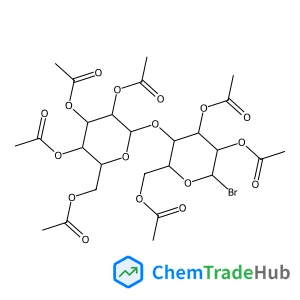
2,3,6-Tri-O-acetyl-4-O-(2,3,4,6-tetra-O-acetyl-beta-D-galactopyranosyl)-alpha-D-glucopyranosyl bromide
CAS Number:
4753-07-5
Molecular Formula:
C26H35BrO17
Recommended Suppliers




Disclaimer
This page provides academic journal information for reference and research purposes only. We are not affiliated with any journal publishers and do not handle publication submissions. For publication-related inquiries, please contact the respective journal publishers directly.
If you notice any inaccuracies in the information displayed, please contact us at support@chemtradehub.com. We will promptly review and address your concerns.