












Total photocatalysis conversion from cyclohexane to cyclohexanone by C3N4/Au nanocomposites
Literature Information
Publication Date
2014-07-21
DOI
10.1039/C4GC01126K
Impact Factor
10.182
Authors
Juan Liu, Yanmei Yang, Naiyun Liu, Yang Liu, Hui Huang, Zhenhui Kang
View Original
Abstract
Green strategy for high-efficiency and high-selectivity catalytic oxidation of alkanes is always a huge challenge for current catalysis chemistry and chemical production. Despite extensive development efforts on new catalysts for cyclohexane oxidation, current commercial processes still suffer from low conversion, poor selectivity, and excessive production of waste. We demonstrate the design and synthesis of composites made from carbon nitride (C3N4) and Au nanoparticles for a higher conversion efficiency of 10.54% and 100% selectivity to cyclohexanone photocatalyst systems without any oxidation or initiators under visible light for a total green oxidation of cyclohexane. C3N4/Au composites may provide a powerful pathway for the development of high-performance catalysts and production processes for the green chemical industry.
Related Literature
On the direct scavenging activity of melatonin towards hydroxyl and a series of peroxyl radicals
Annia Galano
2011-03-15
Paper
DOI: 10.1039/C0CP02801K
Electronic structure and magnetic properties of the graphene/Fe/Ni(111) intercalation-like system
M. Weser, E. N. Voloshina, K. Horn, Yu. S. Dedkov
2011-03-22
Paper
DOI: 10.1039/C1CP00014D
Electronic and magnetic properties of substituted BN sheets: A density functional theory study
P. Yang, Z. G. Wang, X. T. Zu, H. Y. Xiao, X. Sun, M. A. Khaleel, F. Gao
2011-03-21
Paper
DOI: 10.1039/C0CP02001J
Solvation of Ti(iv) in aqueous solution under ambient and supercritical conditions
Jelle van Sijl, Neil L. Allan, Gareth R. Davies, Wim van Westrenen
2011-03-18
Paper
DOI: 10.1039/C0CP01637C
Competitive reaction pathways for functionalization and volatilization in the heterogeneous oxidation of coronene thin films by hydroxyl radicals and ozone
E. R. Mysak, J. D. Smith, P. D. Ashby, J. T. Newberg, K. R. Wilson, H. Bluhm
2011-03-22
Paper
DOI: 10.1039/C0CP02323J
The predicted spectrum of the hypermetallic molecule MgOMg
B. Ostojić, P. Schwerdtfeger, B. Assadollahzadeh, Per Jensen
2011-03-22
Paper
DOI: 10.1039/C0CP02996C
High-resolution FTIR spectroscopy of the ν8 and Coriolis perturbation allowed ν12 bands of ketenimine‡
Michael K. Bane, Christopher D. Thompson, Evan G. Robertson, Dominique R. T. Appadoo, Don McNaughton
2010-11-29
Paper
DOI: 10.1039/C0CP01816C
Structures and electronic properties of silicene clusters: a promising material for FET and hydrogen storage
Deepthi Jose, Ayan Datta
2011-02-28
Paper
DOI: 10.1039/C0CP02580A
Revealing time bunching effect in single-molecule enzyme conformational dynamics
H. Peter Lu
2011-03-15
Perspective
DOI: 10.1039/C0CP02860F
You might also like
Compound Q&A
How should 2-Methylbenzene-1,4-diamine dihydrochloride (CAS: 615-45-2) be stored?
2-Methylbenzene-1,4-diamine dihydrochloride (CAS: 615-45-2) should be stored in ...
615-45-22-Methylbenzene-1,4-...
Compound Q&A
Is (1S,4S)-2,5-Diazabicyclo[2.2.1]heptane dihydrobromide (CAS: 132747-20-7) safe?
(1S,4S)-2,5-Diazabicyclo[2.2.1]heptane dihydrobromide is generally considered sa...
132747-20-7(1S,4S)-2,5-Diazabic...
Compound Q&A
What industries use (6-Chloropyridazin-3-YL)methanamine (CAS: 871826-15-2)?
(6-Chloropyridazin-3-YL)methanamine finds applications in the pharmaceutical ind...
871826-15-2(6-Chloropyridazin-3...
Compound Q&A
What are the main uses of 2-Fluoro-3-methylphenol (CAS: 77772-72-6)?
2-Fluoro-3-methylphenol is primarily used in the synthesis of pharmaceuticals, p...
77772-72-62-Fluoro-3-methylphe...
Compound Q&A
What precautions should be taken when handling 3-Methoxy-4-nitrobenzonitrile (CAS: 177476-75-4)?
When handling 3-Methoxy-4-nitrobenzonitrile, it is important to wear appropriate...
177476-75-43-Methoxy-4-nitroben...
Compound Q&A
What precautions should be taken when handling 1,3-Oxazolo[4,5-b]pyridine-2(3H)-thione (CAS: 211949-57-4)?
When handling 1,3-Oxazolo[4,5-b]pyridine-2(3H)-thione (CAS: 211949-57-4), it is ...
211949-57-4[1,3]Oxazolo[4,5-b]p...
Compound Q&A
What regulatory guidelines apply to 4-Ethynylbenzamide (CAS: 90347-86-7)?
4-Ethynylbenzamide (CAS: 90347-86-7) falls under various regulatory guidelines i...
90347-86-74-Ethynylbenzamide
Compound Q&A
What are the main uses of 3-(2-Ethylphenyl)-2-thioxo-4-imidazolidinone (CAS: 186822-57-1)?
3-(2-Ethylphenyl)-2-thioxo-4-imidazolidinone is primarily used as an intermediat...
186822-57-13-(2-Ethylphenyl)-2-...
Compound Q&A
What is (2-Fluoro-6-methoxyphenyl)acetic acid (CAS: 500912-19-6)?
(2-Fluoro-6-methoxyphenyl)acetic acid, also known as 4-fluoro-3-methoxybenzoic a...
500912-19-6(2-Fluoro-6-methoxyp...
Compound Q&A
What is the market or research trend for 2-[4-(Hydroxymethyl)phenoxy]ethanol (CAS: 102196-18-9)?
Market trends for 2-[4-(Hydroxymethyl)phenoxy]ethanol (CAS: 102196-18-9) indicat...
102196-18-92-[4-(Hydroxymethyl)...
Source Journal
Green Chemistry

CiteScore:
16.1
Self-citation Rate:
7.5%
Articles per Year:
944
Green Chemistry provides a unique forum for the publication of innovative research on the development of alternative green and sustainable technologies. The scope of Green Chemistry is based on, but not limited to, the definition proposed by Anastas and Warner (Green Chemistry: Theory and Practice, P T Anastas and J C Warner, Oxford University Press, Oxford, 1998). Green chemistry is the utilisation of a set of principles that reduces or eliminates the use or generation of hazardous substances in the design, manufacture and application of chemical products. Green Chemistry is at the frontiers of this continuously-evolving interdisciplinary science and publishes research that attempts to reduce the environmental impact of the chemical enterprise by developing a technology base that is inherently non-toxic to living things and the environment. Submissions on all aspects of research relating to the endeavour are welcome. The journal publishes original and significant cutting-edge research that is likely to be of wide general appeal. To be published, work must present a significant advance in green chemistry. Papers must contain a comparison with existing methods and demonstrate advantages over those methods before publication can be considered. For more information please see this Editorial. Coverage includes the following, but is not limited to: Design (e.g. biomimicry, design for degradation/recycling/reduced toxicity…) Reagents & Feedstocks (e.g. renewables, CO2, solvents, auxiliary agents, waste utilization…) Synthesis (e.g. organic, inorganic, synthetic biology…) Catalysis (e.g. homogeneous, heterogeneous, enzyme, whole cell…) Process (e.g. process design, intensification, separations, recycling, efficiency…) Energy (e.g. renewable energy, fuels, photovoltaics, fuel cells, energy storage, energy carriers…) Applications (e.g. electronics, dyes, consumer products, coatings, pharmaceuticals, preservatives, building materials, chemicals for industry/agriculture/mining…) Impact (e.g. safety, metrics, LCA, sustainability, (eco)toxicology…) Green chemistry is, by definition, a continuously-evolving frontier. Therefore, the inclusion of a particular material or technology does not, of itself, guarantee that a paper is suitable for the journal. To be suitable, the novel advance should have the potential for reduced environmental impact relative to the state of the art. Green Chemistry does not normally deal with research associated with 'end-of-pipe' or remediation issues.
Recommended Compounds
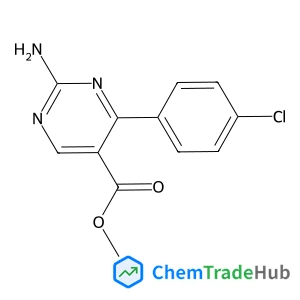
Methyl 2-amino-4-(4-chlorophenyl)-5-pyrimidinecarboxylate
CAS Number:
1133115-56-6
Molecular Formula:
C12H10ClN3O2
![5-Bromo-3-isopropyl-1H-pyrrolo[2,3-b]pyridine structure](https://static.chemtradehub.com/structs/125/1256819-54-1-8620.webp "5-Bromo-3-isopropyl-1H-pyrrolo[2,3-b]pyridine structure")
Recommended Suppliers





Disclaimer
This page provides academic journal information for reference and research purposes only. We are not affiliated with any journal publishers and do not handle publication submissions. For publication-related inquiries, please contact the respective journal publishers directly.
If you notice any inaccuracies in the information displayed, please contact us at support@chemtradehub.com. We will promptly review and address your concerns.