![3-[(3R,4R)-3-[(6-aminopyrimidin-4-yl)-methyl-amino]-4-methyl-1-piperidyl]-3-oxo-propanenitrile structure](https://static.chemtradehub.com/structs/164/1640971-60-3-83a4.webp "3-[(3R,4R)-3-[(6-aminopyrimidin-4-yl)-methyl-amino]-4-methyl-1-piperidyl]-3-oxo-propanenitrile structure")
3-[(3R,4R)-3-[(6-aminopyrimidin-4-yl)-methyl-amino]-4-methyl-1-piperidyl]-3-oxo-propanenitrile
CAS Number:
1640971-60-3
Molecular Formula:
C14H20N6O
Xu Yao, Qu-Tong Zheng, Ji-Chang Xiao
Owing to the ubiquity of the hydroxyl group, reductive deoxygenation of alcohols has become an active research area. The classic Barton–McCombie reaction suffers from a tedious two-step procedure. New efficient methods have been developed, but they have some limitations, such as a narrow substrate scope and the use of moisture-sensitive Lewis acids. In this work, we describe the Ph3P/ICH2CH2I-promoted reductive deoxygenation of alcohols with NaBH4. The process is applicable to benzyl, allyl and propargyl alcohols, and also to primary and secondary alcohols, demonstrating a wide substrate scope and a good level of functional group tolerance. This protocol features convenient operation and low cost of all reagents.
Rongchang Luo, Xiantai Zhou, Wuying Zhang, Zhongxiu Liang, Jun Jiang, Hongbing Ji
DOI: 10.1039/C4GC00671B
João V. Rodrigues, Diana Ruivo, Ana Rodríguez, Francisco J. Deive, José M. S. S. Esperança, Isabel M. Marrucho, Cláudio M. Gomes, Luís Paulo N. Rebelo
DOI: 10.1039/C4GC01329H
You-Quan Zou, Wei Guo, Feng-Lei Liu, Liang-Qiu Lu, Jia-Rong Chen
DOI: 10.1039/C4GC00647J
Marijana Blesic, H. Q. Nimal Gunaratne, Johan Jacquemin, Peter Nockemann, Sonia Olejarz, Kenneth R. Seddon, Christopher R. Strauss
DOI: 10.1039/C4GC01159G
Douglas R. Greer, Thalita P. Basso, Ana B. Ibanez, Stefan Bauer, Jeffrey M. Skerker, A. Evren Ozcam, Dacia Leon, Chaeyoung Shin, Adam P. Arkin
DOI: 10.1039/C4GC00756E
Guangzheng Gao, Muzaffer A. Karaaslan, John F. Kadla, Frank Ko
DOI: 10.1039/C4GC00757C
Jinquan Wang, Jiayu Leong, Yugen Zhang
DOI: 10.1039/C4GC01060D
Luigi Vaccaro, Daniela Lanari, Assunta Marrocchi, Giacomo Strappaveccia
DOI: 10.1039/C4GC00410H
Hao Chen, Qinyan Ye, Xulin He, Jingjing Ding, Yongzheng Zhang, Junfeng Han, Jiang Liu, Cheng Liao, Jun Mei, Woonming Lau
DOI: 10.1039/C4GC00142G
2-Methylbenzene-1,4-diamine dihydrochloride (CAS: 615-45-2) should be stored in ...
(1S,4S)-2,5-Diazabicyclo[2.2.1]heptane dihydrobromide is generally considered sa...
(6-Chloropyridazin-3-YL)methanamine finds applications in the pharmaceutical ind...
2-Fluoro-3-methylphenol is primarily used in the synthesis of pharmaceuticals, p...
When handling 3-Methoxy-4-nitrobenzonitrile, it is important to wear appropriate...
When handling 1,3-Oxazolo[4,5-b]pyridine-2(3H)-thione (CAS: 211949-57-4), it is ...
4-Ethynylbenzamide (CAS: 90347-86-7) falls under various regulatory guidelines i...
3-(2-Ethylphenyl)-2-thioxo-4-imidazolidinone is primarily used as an intermediat...
(2-Fluoro-6-methoxyphenyl)acetic acid, also known as 4-fluoro-3-methoxybenzoic a...
Market trends for 2-[4-(Hydroxymethyl)phenoxy]ethanol (CAS: 102196-18-9) indicat...

Organic & Biomolecular Chemistry (OBC) publishes original and high impact research and reviews in organic chemistry. We welcome research that shows new or significantly improved protocols or methodologies in total synthesis, synthetic methodology or physical and theoretical organic chemistry as well as research that shows a significant advance in the organic chemistry or molecular design aspects of chemical biology, catalysis, supramolecular and macromolecular chemistry, theoretical chemistry, mechanism-oriented physical organic chemistry, medicinal chemistry or natural products. Articles published in the journal should report new work which makes a highly-significant impact in the field. Routine and incremental work is generally not suitable for publication in the journal. More details about key areas of our scope are below. In all cases authors should include in their article clear rationale for why their research has been carried out.
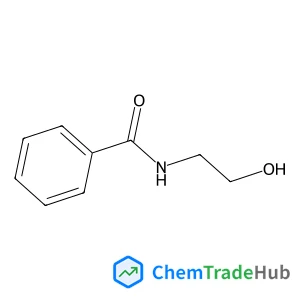
![1H-Imidazo[4,5-c]pyridine-7-carboxylic acid structure](https://static.chemtradehub.com/structs/123/1234616-39-7-1344.webp "1H-Imidazo[4,5-c]pyridine-7-carboxylic acid structure")