












Flow approaches towards sustainability
Literature Information
Publication Date
2014-04-24
DOI
10.1039/C4GC00410H
Impact Factor
10.182
Authors
Luigi Vaccaro, Daniela Lanari, Assunta Marrocchi, Giacomo Strappaveccia
View Original
Abstract
Green chemistry and flow chemistry are ideal partners for accessing novel chemical spaces and define highly efficient synthetic tools. In this review article contributions have been selected according to the advantages offered in terms of features that are not immediately related to classic green metrics such as minimization of reaction time, optimization for time screening, waste minimization, safety improvement, process intensification and easy scale up, energy and cost efficiency. Such features make processes in flow highly interesting in terms of developing a green and sustainable chemistry.
Related Literature
93Nb NMR and DFT investigation of the polymorphs of NaNbO3
Karen E. Johnston, John M. Griffin, Richard I. Walton, Daniel M. Dawson, Philip Lightfoot, Sharon E. Ashbrook
2011-03-21
Paper
DOI: 10.1039/C1CP20258H
Coriolis coupling effects in the dynamics of deep well reactions: application to the H+ + D2 reaction
M. Hankel
2011-03-29
Paper
DOI: 10.1039/C1CP20144A
In situRaman spectroscopy of H2 interaction with WO3 films
J. Z. Ou, M. H. Yaacob, H. D. Zheng, J. L. Campbell, K. Latham, J. du. Plessis, W. Wlodarski, K. Kalantar-zadeh
2011-03-09
Paper
DOI: 10.1039/C0CP02050H
Prediction of electronic structure of organic radicaloid anions using efficient, economical multireference gradient approach
Sudip Chattopadhyay, Rajat K. Chaudhuri, Karl F. Freed
2011-03-21
Paper
DOI: 10.1039/C0CP02106G
Charge transfer in porphyrin–calixarene complexes: ultrafast kinetics, cyclic voltammetry, and DFT calculations
Pavel Kubát, Jakub Šebera, Stanislav Záliš, Jan Langmaier, Marcel Fuciman, Tomáš Polívka, Kamil Lang
2011-03-11
Paper
DOI: 10.1039/C0CP01726D
On the nature of gallium species in gallium-modified mordenite and MFI zeolites. A comparative DRIFT study of carbon monoxide adsorption and hydrogen dissociation
Alexander I. Serykh, Stanislav P. Kolesnikov
2011-03-10
Paper
DOI: 10.1039/C0CP02088E
Tautomers of cytosine and their excited electronic states: a matrix isolation spectroscopic and quantum chemical study‡
Gábor Bazsó, György Tarczay, Géza Fogarasi, Péter G. Szalay
2011-01-14
Paper
DOI: 10.1039/C0CP02354J
Photochemistry of coronene with water at 10 K: first tentative identification by infrared spectroscopy of oxygen containing coronene products
Zohra Guennoun, Christian Aupetit, Joëlle Mascetti
2011-03-22
Paper
DOI: 10.1039/C0CP01756F
You might also like
Compound Q&A
How should 2-Methylbenzene-1,4-diamine dihydrochloride (CAS: 615-45-2) be stored?
2-Methylbenzene-1,4-diamine dihydrochloride (CAS: 615-45-2) should be stored in ...
615-45-22-Methylbenzene-1,4-...
Compound Q&A
Is (1S,4S)-2,5-Diazabicyclo[2.2.1]heptane dihydrobromide (CAS: 132747-20-7) safe?
(1S,4S)-2,5-Diazabicyclo[2.2.1]heptane dihydrobromide is generally considered sa...
132747-20-7(1S,4S)-2,5-Diazabic...
Compound Q&A
What industries use (6-Chloropyridazin-3-YL)methanamine (CAS: 871826-15-2)?
(6-Chloropyridazin-3-YL)methanamine finds applications in the pharmaceutical ind...
871826-15-2(6-Chloropyridazin-3...
Compound Q&A
What are the main uses of 2-Fluoro-3-methylphenol (CAS: 77772-72-6)?
2-Fluoro-3-methylphenol is primarily used in the synthesis of pharmaceuticals, p...
77772-72-62-Fluoro-3-methylphe...
Compound Q&A
What precautions should be taken when handling 3-Methoxy-4-nitrobenzonitrile (CAS: 177476-75-4)?
When handling 3-Methoxy-4-nitrobenzonitrile, it is important to wear appropriate...
177476-75-43-Methoxy-4-nitroben...
Compound Q&A
What precautions should be taken when handling 1,3-Oxazolo[4,5-b]pyridine-2(3H)-thione (CAS: 211949-57-4)?
When handling 1,3-Oxazolo[4,5-b]pyridine-2(3H)-thione (CAS: 211949-57-4), it is ...
211949-57-4[1,3]Oxazolo[4,5-b]p...
Compound Q&A
What regulatory guidelines apply to 4-Ethynylbenzamide (CAS: 90347-86-7)?
4-Ethynylbenzamide (CAS: 90347-86-7) falls under various regulatory guidelines i...
90347-86-74-Ethynylbenzamide
Compound Q&A
What are the main uses of 3-(2-Ethylphenyl)-2-thioxo-4-imidazolidinone (CAS: 186822-57-1)?
3-(2-Ethylphenyl)-2-thioxo-4-imidazolidinone is primarily used as an intermediat...
186822-57-13-(2-Ethylphenyl)-2-...
Compound Q&A
What is (2-Fluoro-6-methoxyphenyl)acetic acid (CAS: 500912-19-6)?
(2-Fluoro-6-methoxyphenyl)acetic acid, also known as 4-fluoro-3-methoxybenzoic a...
500912-19-6(2-Fluoro-6-methoxyp...
Compound Q&A
What is the market or research trend for 2-[4-(Hydroxymethyl)phenoxy]ethanol (CAS: 102196-18-9)?
Market trends for 2-[4-(Hydroxymethyl)phenoxy]ethanol (CAS: 102196-18-9) indicat...
102196-18-92-[4-(Hydroxymethyl)...
Source Journal
Green Chemistry

CiteScore:
16.1
Self-citation Rate:
7.5%
Articles per Year:
944
Green Chemistry provides a unique forum for the publication of innovative research on the development of alternative green and sustainable technologies. The scope of Green Chemistry is based on, but not limited to, the definition proposed by Anastas and Warner (Green Chemistry: Theory and Practice, P T Anastas and J C Warner, Oxford University Press, Oxford, 1998). Green chemistry is the utilisation of a set of principles that reduces or eliminates the use or generation of hazardous substances in the design, manufacture and application of chemical products. Green Chemistry is at the frontiers of this continuously-evolving interdisciplinary science and publishes research that attempts to reduce the environmental impact of the chemical enterprise by developing a technology base that is inherently non-toxic to living things and the environment. Submissions on all aspects of research relating to the endeavour are welcome. The journal publishes original and significant cutting-edge research that is likely to be of wide general appeal. To be published, work must present a significant advance in green chemistry. Papers must contain a comparison with existing methods and demonstrate advantages over those methods before publication can be considered. For more information please see this Editorial. Coverage includes the following, but is not limited to: Design (e.g. biomimicry, design for degradation/recycling/reduced toxicity…) Reagents & Feedstocks (e.g. renewables, CO2, solvents, auxiliary agents, waste utilization…) Synthesis (e.g. organic, inorganic, synthetic biology…) Catalysis (e.g. homogeneous, heterogeneous, enzyme, whole cell…) Process (e.g. process design, intensification, separations, recycling, efficiency…) Energy (e.g. renewable energy, fuels, photovoltaics, fuel cells, energy storage, energy carriers…) Applications (e.g. electronics, dyes, consumer products, coatings, pharmaceuticals, preservatives, building materials, chemicals for industry/agriculture/mining…) Impact (e.g. safety, metrics, LCA, sustainability, (eco)toxicology…) Green chemistry is, by definition, a continuously-evolving frontier. Therefore, the inclusion of a particular material or technology does not, of itself, guarantee that a paper is suitable for the journal. To be suitable, the novel advance should have the potential for reduced environmental impact relative to the state of the art. Green Chemistry does not normally deal with research associated with 'end-of-pipe' or remediation issues.
Recommended Compounds
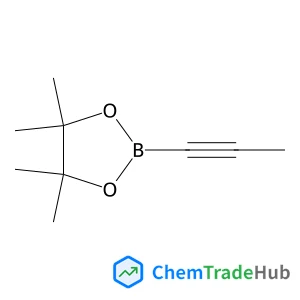
4,4,5,5-Tetramethyl-2-(1-propyn-1-YL)-1,3,2-dioxaborolane
CAS Number:
347389-75-7
Molecular Formula:
C9H15BO2
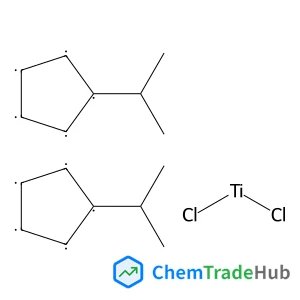
BIS(I-PROPYLCYCLOPENTADIENYL)TITANIUM DICHLORIDE
CAS Number:
12130-65-3
Molecular Formula:
C16H22Cl2Ti
Recommended Suppliers




Disclaimer
This page provides academic journal information for reference and research purposes only. We are not affiliated with any journal publishers and do not handle publication submissions. For publication-related inquiries, please contact the respective journal publishers directly.
If you notice any inaccuracies in the information displayed, please contact us at support@chemtradehub.com. We will promptly review and address your concerns.