












Recent advances in radical thiocyanation cyclization or spirocyclization reactions
Literature Information
Publication Date
2023-11-09
DOI
10.1039/D3OB01659E
Impact Factor
3.876
Authors
Qinqin Yan, Shiliu Chen, Jie Fan, Zejiang Li
View Original
Abstract
Organic thiocyanates are valuable biological moities and drug-building blocks. They can also transform effectively into thioethers, thiols, alkynyl thioethers, and thiocarbamates in synthetic chemistry. With respect to the merits of thiocyanates, many chemists and our research team have developed diverse strategies to access SCN-revised heterocycles/spirocycles via an effective radical cyclization process. Hence, this review article first describes the importance/application of thiocyanates. Subsequently, it summarizes the reaction conditions, substrate scopes, and plausible mechanism, respectively, of the excellent work stated above.
Related Literature
Visible-light-induced photocatalytic formyloxylation reactions of 3-bromooxindoles with water and DMF: the scope and mechanism
You-Quan Zou, Wei Guo, Feng-Lei Liu, Liang-Qiu Lu, Jia-Rong Chen
2014-05-08
Paper
DOI: 10.1039/C4GC00647J
Hydrogenation of levulinic acid to γ-valerolactone by Ni and MoOx co-loaded carbon catalysts
Shota Kanno, Kenichi Kon
2014-06-05
Paper
DOI: 10.1039/C4GC00735B
Tunable thermomorphism and applications of ionic liquid analogues of Girard's reagents
Marijana Blesic, H. Q. Nimal Gunaratne, Johan Jacquemin, Peter Nockemann, Sonia Olejarz, Kenneth R. Seddon, Christopher R. Strauss
2014-08-06
Communication
DOI: 10.1039/C4GC01159G
Towards non-toxic solvents for membrane preparation: a review
A. Figoli, T. Marino, S. Simone, E. Di Nicolò, X.-M. Li, T. He, S. Tornaghi, E. Drioli
2014-07-03
Tutorial Review
DOI: 10.1039/C4GC00613E
Efficient photocatalytic Suzuki cross-coupling reactions on Au–Pd alloy nanoparticles under visible light irradiation
Qi Xiao, Sarina Sarina, Esa Jaatinen, Jianfeng Jia, Dennis P. Arnold, Hongwei Liu, Huaiyong Zhu
2014-06-26
Paper
DOI: 10.1039/C4GC00588K
Sustainable chromatography (an oxymoron?)
Emily A. Peterson, Barry Dillon, Izzat Raheem, Paul Richardson, Daniel Richter, Rachel Schmidt, Helen F. Sneddon
2014-07-15
Perspective
DOI: 10.1039/C4GC00615A
Room-temperature transfer hydrogenation and fast separation of unsaturated compounds over heterogeneous catalysts in an aqueous solution of formic acid
Ling-Hong Gong, Yi-Yu Cai, Xin-Hao Li, Ya-Nan Zhang, Juan Su, Jie-Sheng Chen
2014-06-17
Communication
DOI: 10.1039/C4GC00981A
Ruthenium complexes of tetradentate bipyridine ligands: highly efficient catalysts for the hydrogenation of carboxylic esters and lactones
Wei Li, Jian-Hua Xie, Ming-Lei Yuan, Qi-Lin Zhou
2014-06-13
Communication
DOI: 10.1039/C4GC00835A
Coupling metal halides with a co-solvent to produce furfural and 5-HMF at high yields directly from lignocellulosic biomass as an integrated biofuels strategy
Rajeev Kumar
2014-06-03
Paper
DOI: 10.1039/C4GC00747F
Chitosan: an efficient recyclable catalyst for transamidation of carboxamides with amines under neat conditions
Sadu Nageswara Rao, Darapaneni Chandra Mohan, Subbarayappa Adimurthy
2014-07-28
Communication
DOI: 10.1039/C4GC01402B
You might also like
Compound Q&A
How should 2-Methylbenzene-1,4-diamine dihydrochloride (CAS: 615-45-2) be stored?
2-Methylbenzene-1,4-diamine dihydrochloride (CAS: 615-45-2) should be stored in ...
615-45-22-Methylbenzene-1,4-...
Compound Q&A
Is (1S,4S)-2,5-Diazabicyclo[2.2.1]heptane dihydrobromide (CAS: 132747-20-7) safe?
(1S,4S)-2,5-Diazabicyclo[2.2.1]heptane dihydrobromide is generally considered sa...
132747-20-7(1S,4S)-2,5-Diazabic...
Compound Q&A
What industries use (6-Chloropyridazin-3-YL)methanamine (CAS: 871826-15-2)?
(6-Chloropyridazin-3-YL)methanamine finds applications in the pharmaceutical ind...
871826-15-2(6-Chloropyridazin-3...
Compound Q&A
What are the main uses of 2-Fluoro-3-methylphenol (CAS: 77772-72-6)?
2-Fluoro-3-methylphenol is primarily used in the synthesis of pharmaceuticals, p...
77772-72-62-Fluoro-3-methylphe...
Compound Q&A
What precautions should be taken when handling 3-Methoxy-4-nitrobenzonitrile (CAS: 177476-75-4)?
When handling 3-Methoxy-4-nitrobenzonitrile, it is important to wear appropriate...
177476-75-43-Methoxy-4-nitroben...
Compound Q&A
What precautions should be taken when handling 1,3-Oxazolo[4,5-b]pyridine-2(3H)-thione (CAS: 211949-57-4)?
When handling 1,3-Oxazolo[4,5-b]pyridine-2(3H)-thione (CAS: 211949-57-4), it is ...
211949-57-4[1,3]Oxazolo[4,5-b]p...
Compound Q&A
What regulatory guidelines apply to 4-Ethynylbenzamide (CAS: 90347-86-7)?
4-Ethynylbenzamide (CAS: 90347-86-7) falls under various regulatory guidelines i...
90347-86-74-Ethynylbenzamide
Compound Q&A
What are the main uses of 3-(2-Ethylphenyl)-2-thioxo-4-imidazolidinone (CAS: 186822-57-1)?
3-(2-Ethylphenyl)-2-thioxo-4-imidazolidinone is primarily used as an intermediat...
186822-57-13-(2-Ethylphenyl)-2-...
Compound Q&A
What is (2-Fluoro-6-methoxyphenyl)acetic acid (CAS: 500912-19-6)?
(2-Fluoro-6-methoxyphenyl)acetic acid, also known as 4-fluoro-3-methoxybenzoic a...
500912-19-6(2-Fluoro-6-methoxyp...
Compound Q&A
What is the market or research trend for 2-[4-(Hydroxymethyl)phenoxy]ethanol (CAS: 102196-18-9)?
Market trends for 2-[4-(Hydroxymethyl)phenoxy]ethanol (CAS: 102196-18-9) indicat...
102196-18-92-[4-(Hydroxymethyl)...
Source Journal
Organic & Biomolecular Chemistry

CiteScore:
3.4
Self-citation Rate:
10.3%
Articles per Year:
1041
Organic & Biomolecular Chemistry (OBC) publishes original and high impact research and reviews in organic chemistry. We welcome research that shows new or significantly improved protocols or methodologies in total synthesis, synthetic methodology or physical and theoretical organic chemistry as well as research that shows a significant advance in the organic chemistry or molecular design aspects of chemical biology, catalysis, supramolecular and macromolecular chemistry, theoretical chemistry, mechanism-oriented physical organic chemistry, medicinal chemistry or natural products. Articles published in the journal should report new work which makes a highly-significant impact in the field. Routine and incremental work is generally not suitable for publication in the journal. More details about key areas of our scope are below. In all cases authors should include in their article clear rationale for why their research has been carried out.
Recommended Compounds
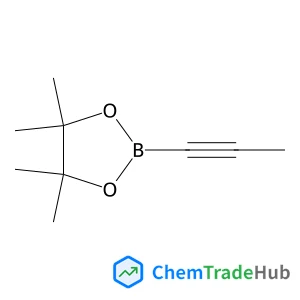
4,4,5,5-Tetramethyl-2-(1-propyn-1-YL)-1,3,2-dioxaborolane
CAS Number:
347389-75-7
Molecular Formula:
C9H15BO2
![1H-Imidazo[4,5-c]pyridine-7-carboxylic acid structure](https://static.chemtradehub.com/structs/123/1234616-39-7-1344.webp "1H-Imidazo[4,5-c]pyridine-7-carboxylic acid structure")
Recommended Suppliers







Disclaimer
This page provides academic journal information for reference and research purposes only. We are not affiliated with any journal publishers and do not handle publication submissions. For publication-related inquiries, please contact the respective journal publishers directly.
If you notice any inaccuracies in the information displayed, please contact us at support@chemtradehub.com. We will promptly review and address your concerns.