












Room-temperature transfer hydrogenation and fast separation of unsaturated compounds over heterogeneous catalysts in an aqueous solution of formic acid
Literature Information
Publication Date
2014-06-17
DOI
10.1039/C4GC00981A
Impact Factor
10.182
Authors
Ling-Hong Gong, Yi-Yu Cai, Xin-Hao Li, Ya-Nan Zhang, Juan Su, Jie-Sheng Chen
View Original
Abstract
The facile conversion of olefins and unsaturated biomass to saturated compounds is achieved over heterogeneous catalysts composed of noble metal nanoparticles and carbon nitride. Reactions could proceed smoothly at room temperature in water using formic acid as the hydrogen source. The reusability of such a hybrid catalyst is high due to the strong Mott–Schottky effect between the metal nanoparticles and the carbon nitride support. The fast and automatic separation of the as-formed saturated hydrocarbons from water combined with the mild reaction conditions and the excellent reusability of catalysts make the catalytic process a highly “green” path for hydrogenation of unsaturated compounds and biofuel upgrading.
Related Literature
Coupling microscopic and mesoscopic scales to simulate chemical equilibrium between a nanometric carboncluster and detonation products fluid
Emeric Bourasseau, Jean-Bernard Maillet
2011-03-11
Paper
DOI: 10.1039/C0CP02622K
Extending the molecular size in accurate quantum-chemical calculations: the equilibrium structure and spectroscopic properties of uracil
Cristina Puzzarini, Vincenzo Barone
2011-03-16
Paper
DOI: 10.1039/C0CP02636K
Structures and electronic properties of silicene clusters: a promising material for FET and hydrogen storage
Deepthi Jose, Ayan Datta
2011-02-28
Paper
DOI: 10.1039/C0CP02580A
In situ growth of epitaxial cerium tungstate (100) thin films
Tomáš Skála, Nataliya Tsud, Tevfik Onur Menteş, Andrea Locatelli, Kevin Charles Prince, Vladimír Matolín
2011-03-11
Paper
DOI: 10.1039/C0CP03012K
The role of the πσ* state in intramolecular charge transfer of 4-(dimethylamino)benzonitrile
Takashige Fujiwara, Marek Z. Zgierski, Edward C. Lim
2011-03-11
Communication
DOI: 10.1039/C0CP02706E
Energy decomposition analysis based on a block-localized wavefunction and multistate density functional theory
Yirong Mo, Peng Bao, Jiali Gao
2011-03-02
Perspective
DOI: 10.1039/C0CP02206C
Photochemistry of coronene with water at 10 K: first tentative identification by infrared spectroscopy of oxygen containing coronene products
Zohra Guennoun, Christian Aupetit, Joëlle Mascetti
2011-03-22
Paper
DOI: 10.1039/C0CP01756F
Power-law analysis of surface-plasmon-enhanced electromagnetic field dependence of blinking SERS of thiacyanine or thiacarbocyanine adsorbed on single silver nanoaggregates
Yasutaka Kitahama, Yuhei Tanaka, Tamitake Itoh, Yukihiro Ozaki
2011-03-17
Paper
DOI: 10.1039/C0CP02802A
93Nb NMR and DFT investigation of the polymorphs of NaNbO3
Karen E. Johnston, John M. Griffin, Richard I. Walton, Daniel M. Dawson, Philip Lightfoot, Sharon E. Ashbrook
2011-03-21
Paper
DOI: 10.1039/C1CP20258H
You might also like
Compound Q&A
How should 2-Methylbenzene-1,4-diamine dihydrochloride (CAS: 615-45-2) be stored?
2-Methylbenzene-1,4-diamine dihydrochloride (CAS: 615-45-2) should be stored in ...
615-45-22-Methylbenzene-1,4-...
Compound Q&A
Is (1S,4S)-2,5-Diazabicyclo[2.2.1]heptane dihydrobromide (CAS: 132747-20-7) safe?
(1S,4S)-2,5-Diazabicyclo[2.2.1]heptane dihydrobromide is generally considered sa...
132747-20-7(1S,4S)-2,5-Diazabic...
Compound Q&A
What industries use (6-Chloropyridazin-3-YL)methanamine (CAS: 871826-15-2)?
(6-Chloropyridazin-3-YL)methanamine finds applications in the pharmaceutical ind...
871826-15-2(6-Chloropyridazin-3...
Compound Q&A
What are the main uses of 2-Fluoro-3-methylphenol (CAS: 77772-72-6)?
2-Fluoro-3-methylphenol is primarily used in the synthesis of pharmaceuticals, p...
77772-72-62-Fluoro-3-methylphe...
Compound Q&A
What precautions should be taken when handling 3-Methoxy-4-nitrobenzonitrile (CAS: 177476-75-4)?
When handling 3-Methoxy-4-nitrobenzonitrile, it is important to wear appropriate...
177476-75-43-Methoxy-4-nitroben...
Compound Q&A
What precautions should be taken when handling 1,3-Oxazolo[4,5-b]pyridine-2(3H)-thione (CAS: 211949-57-4)?
When handling 1,3-Oxazolo[4,5-b]pyridine-2(3H)-thione (CAS: 211949-57-4), it is ...
211949-57-4[1,3]Oxazolo[4,5-b]p...
Compound Q&A
What regulatory guidelines apply to 4-Ethynylbenzamide (CAS: 90347-86-7)?
4-Ethynylbenzamide (CAS: 90347-86-7) falls under various regulatory guidelines i...
90347-86-74-Ethynylbenzamide
Compound Q&A
What are the main uses of 3-(2-Ethylphenyl)-2-thioxo-4-imidazolidinone (CAS: 186822-57-1)?
3-(2-Ethylphenyl)-2-thioxo-4-imidazolidinone is primarily used as an intermediat...
186822-57-13-(2-Ethylphenyl)-2-...
Compound Q&A
What is (2-Fluoro-6-methoxyphenyl)acetic acid (CAS: 500912-19-6)?
(2-Fluoro-6-methoxyphenyl)acetic acid, also known as 4-fluoro-3-methoxybenzoic a...
500912-19-6(2-Fluoro-6-methoxyp...
Compound Q&A
What is the market or research trend for 2-[4-(Hydroxymethyl)phenoxy]ethanol (CAS: 102196-18-9)?
Market trends for 2-[4-(Hydroxymethyl)phenoxy]ethanol (CAS: 102196-18-9) indicat...
102196-18-92-[4-(Hydroxymethyl)...
Source Journal
Green Chemistry

CiteScore:
16.1
Self-citation Rate:
7.5%
Articles per Year:
944
Green Chemistry provides a unique forum for the publication of innovative research on the development of alternative green and sustainable technologies. The scope of Green Chemistry is based on, but not limited to, the definition proposed by Anastas and Warner (Green Chemistry: Theory and Practice, P T Anastas and J C Warner, Oxford University Press, Oxford, 1998). Green chemistry is the utilisation of a set of principles that reduces or eliminates the use or generation of hazardous substances in the design, manufacture and application of chemical products. Green Chemistry is at the frontiers of this continuously-evolving interdisciplinary science and publishes research that attempts to reduce the environmental impact of the chemical enterprise by developing a technology base that is inherently non-toxic to living things and the environment. Submissions on all aspects of research relating to the endeavour are welcome. The journal publishes original and significant cutting-edge research that is likely to be of wide general appeal. To be published, work must present a significant advance in green chemistry. Papers must contain a comparison with existing methods and demonstrate advantages over those methods before publication can be considered. For more information please see this Editorial. Coverage includes the following, but is not limited to: Design (e.g. biomimicry, design for degradation/recycling/reduced toxicity…) Reagents & Feedstocks (e.g. renewables, CO2, solvents, auxiliary agents, waste utilization…) Synthesis (e.g. organic, inorganic, synthetic biology…) Catalysis (e.g. homogeneous, heterogeneous, enzyme, whole cell…) Process (e.g. process design, intensification, separations, recycling, efficiency…) Energy (e.g. renewable energy, fuels, photovoltaics, fuel cells, energy storage, energy carriers…) Applications (e.g. electronics, dyes, consumer products, coatings, pharmaceuticals, preservatives, building materials, chemicals for industry/agriculture/mining…) Impact (e.g. safety, metrics, LCA, sustainability, (eco)toxicology…) Green chemistry is, by definition, a continuously-evolving frontier. Therefore, the inclusion of a particular material or technology does not, of itself, guarantee that a paper is suitable for the journal. To be suitable, the novel advance should have the potential for reduced environmental impact relative to the state of the art. Green Chemistry does not normally deal with research associated with 'end-of-pipe' or remediation issues.
Recommended Compounds
![1-Benzyl-1,7-diazaspiro[4.4]nonane dihydrochloride structure](https://static.chemtradehub.com/structs/115/1159822-71-5-0320.webp "1-Benzyl-1,7-diazaspiro[4.4]nonane dihydrochloride structure")
1-Benzyl-1,7-diazaspiro[4.4]nonane dihydrochloride
CAS Number:
1159822-71-5
Molecular Formula:
C14H22Cl2N2
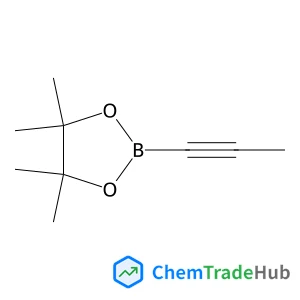
4,4,5,5-Tetramethyl-2-(1-propyn-1-YL)-1,3,2-dioxaborolane
CAS Number:
347389-75-7
Molecular Formula:
C9H15BO2
Recommended Suppliers





Disclaimer
This page provides academic journal information for reference and research purposes only. We are not affiliated with any journal publishers and do not handle publication submissions. For publication-related inquiries, please contact the respective journal publishers directly.
If you notice any inaccuracies in the information displayed, please contact us at support@chemtradehub.com. We will promptly review and address your concerns.