












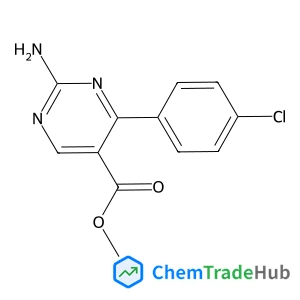
Methyl 2-amino-4-(4-chlorophenyl)-5-pyrimidinecarboxylate
CAS Number:
1133115-56-6
Molecular Formula:
C12H10ClN3O2
Qi Xiao, Sarina Sarina, Esa Jaatinen, Jianfeng Jia, Dennis P. Arnold, Hongwei Liu, Huaiyong Zhu
We report herein highly efficient photocatalysts comprising supported nanoparticles (NPs) of gold (Au) and palladium (Pd) alloys, which utilize visible light to catalyse the Suzuki cross-coupling reactions at ambient temperature. The alloy NPs strongly absorb visible light, energizing the conduction electrons of NPs which produce highly energetic electrons at the surface sites. The surface of the energized NPs activates the substrates and these particles exhibit good activity on a range of typical Suzuki reaction combinations. The photocatalytic efficiencies strongly depend on the Au : Pd ratio of the alloy NPs, irradiation light intensity and wavelength. The results show that the alloy nanoparticles efficiently couple thermal and photonic energy sources to drive Suzuki reactions. Results of the density functional theory (DFT) calculations indicate that transfer of the light-excited electrons from the nanoparticle surface to the reactant molecules adsorbed on the nanoparticle surface activates the reactants. The knowledge acquired in this study may inspire further studies of new efficient photocatalysts and a wide range of organic syntheses driven by sunlight.
Katarzyna Nowicka, Anna Bujacz, Piotr Paluch, Adam Sobczuk, Agata Jeziorna, Włodzimierz Ciesielski, Grzegorz D. Bujacz, Janusz Jurczak, Marek J. Potrzebowski
DOI: 10.1039/C0CP02401E
Eudald Vilaseca, Adriana Isvoran, Sergio Madurga, Isabel Pastor, Josep Lluís Garcés, Francesc Mas
DOI: 10.1039/C0CP01218A
Diana I. Roncaglia, Jorge Carballido-Landeira, Alberto P. Muñuzuri
DOI: 10.1039/C0CP02656E
Thomas Hsu-Yao, Kevin P. Browne, Nicole Honesty, YuYe J. Tong
DOI: 10.1039/C0CP02805C
Kenta Mizuse, Asuka Fujii
DOI: 10.1039/C1CP20207C
Jules Tshishimbi Muya, G. Gopakumar, Minh Tho Nguyen, Arnout Ceulemans
DOI: 10.1039/C0CP02130J
Xiaoli Shi, Lei Qin, Xuejie Zhang, Chunyang Xiong, Jing Fang, Xiaohong Fang, Youyi Zhang
DOI: 10.1039/C1CP20154A
Taku Satoh, Kimio Sumaru, Toshiyuki Takagi, Katsuki Takai, Toshiyuki Kanamori
DOI: 10.1039/C0CP01989E
Shao-Yong Lu, Yong-Jun Jiang, Jian-Wei Zou, Tian-Xing Wu
DOI: 10.1039/C0CP02498H
2-Methylbenzene-1,4-diamine dihydrochloride (CAS: 615-45-2) should be stored in ...
(1S,4S)-2,5-Diazabicyclo[2.2.1]heptane dihydrobromide is generally considered sa...
(6-Chloropyridazin-3-YL)methanamine finds applications in the pharmaceutical ind...
2-Fluoro-3-methylphenol is primarily used in the synthesis of pharmaceuticals, p...
When handling 3-Methoxy-4-nitrobenzonitrile, it is important to wear appropriate...
When handling 1,3-Oxazolo[4,5-b]pyridine-2(3H)-thione (CAS: 211949-57-4), it is ...
4-Ethynylbenzamide (CAS: 90347-86-7) falls under various regulatory guidelines i...
3-(2-Ethylphenyl)-2-thioxo-4-imidazolidinone is primarily used as an intermediat...
(2-Fluoro-6-methoxyphenyl)acetic acid, also known as 4-fluoro-3-methoxybenzoic a...
Market trends for 2-[4-(Hydroxymethyl)phenoxy]ethanol (CAS: 102196-18-9) indicat...

Green Chemistry provides a unique forum for the publication of innovative research on the development of alternative green and sustainable technologies. The scope of Green Chemistry is based on, but not limited to, the definition proposed by Anastas and Warner (Green Chemistry: Theory and Practice, P T Anastas and J C Warner, Oxford University Press, Oxford, 1998). Green chemistry is the utilisation of a set of principles that reduces or eliminates the use or generation of hazardous substances in the design, manufacture and application of chemical products. Green Chemistry is at the frontiers of this continuously-evolving interdisciplinary science and publishes research that attempts to reduce the environmental impact of the chemical enterprise by developing a technology base that is inherently non-toxic to living things and the environment. Submissions on all aspects of research relating to the endeavour are welcome. The journal publishes original and significant cutting-edge research that is likely to be of wide general appeal. To be published, work must present a significant advance in green chemistry. Papers must contain a comparison with existing methods and demonstrate advantages over those methods before publication can be considered. For more information please see this Editorial. Coverage includes the following, but is not limited to: Design (e.g. biomimicry, design for degradation/recycling/reduced toxicity…) Reagents & Feedstocks (e.g. renewables, CO2, solvents, auxiliary agents, waste utilization…) Synthesis (e.g. organic, inorganic, synthetic biology…) Catalysis (e.g. homogeneous, heterogeneous, enzyme, whole cell…) Process (e.g. process design, intensification, separations, recycling, efficiency…) Energy (e.g. renewable energy, fuels, photovoltaics, fuel cells, energy storage, energy carriers…) Applications (e.g. electronics, dyes, consumer products, coatings, pharmaceuticals, preservatives, building materials, chemicals for industry/agriculture/mining…) Impact (e.g. safety, metrics, LCA, sustainability, (eco)toxicology…) Green chemistry is, by definition, a continuously-evolving frontier. Therefore, the inclusion of a particular material or technology does not, of itself, guarantee that a paper is suitable for the journal. To be suitable, the novel advance should have the potential for reduced environmental impact relative to the state of the art. Green Chemistry does not normally deal with research associated with 'end-of-pipe' or remediation issues.
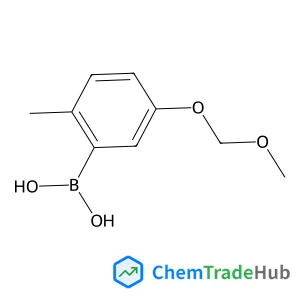
![1-Benzyl-1,7-diazaspiro[4.4]nonane dihydrochloride structure](https://static.chemtradehub.com/structs/115/1159822-71-5-0320.webp "1-Benzyl-1,7-diazaspiro[4.4]nonane dihydrochloride structure")
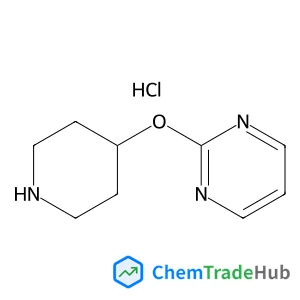
![trans-2-{[(Tert-butoxy)carbonyl]amino}cyclobutane-1-carboxylic acid structure](https://static.chemtradehub.com/structs/951/951173-25-4-27cd.webp "trans-2-{[(Tert-butoxy)carbonyl]amino}cyclobutane-1-carboxylic acid structure")





