(S)-1-(3-(Benzyloxy)phenyl)-3-(dimethylamino)-2-methylpropan-1-one (2r,3r)-2,3-bis(benzoyloxy)succinate
CAS Number:
1004315-81-4
Molecular Formula:
C37H37NO10
Mohammed Sadik N. K., Purushothaman C. Harikrishnan, Sasikumar Parameswaran
A method involving stereoselective glycosylation catalyzed by (+)-isomenthol ester of pentacarbomethoxycyclopentadiene as a chiral Brønsted acid, with n-pentenyl glycosides in the presence of N-iodosuccinimide as the promoter is described; this method offered a chiral recognition of racemic substrates.
DOI: 10.1039/C4GC00897A
Yong Yang, Robert M. Rioux
DOI: 10.1039/C4GC00642A
Hilda Gómez Bernal, Luca Bernazzani
DOI: 10.1039/C4GC00450G
Juan Liu, Yanmei Yang, Naiyun Liu, Yang Liu, Hui Huang, Zhenhui Kang
DOI: 10.1039/C4GC01126K
Ruichang Xiong, Stanley I. Sandler, Dionisios G. Vlachos, Paul J. Dauenhauer
DOI: 10.1039/C4GC00727A
David J. Chadderdon, Le Xin, Ji Qi, Yang Qiu, Phani Krishna, Karren L. More, Wenzhen Li
DOI: 10.1039/C4GC00401A
Luigi Vaccaro, Daniela Lanari, Assunta Marrocchi, Giacomo Strappaveccia
DOI: 10.1039/C4GC00410H
Zhenping Zhu, Yupeng Wu, Tianjian Zhao, Li Li
DOI: 10.1039/C4GC00413B
Liyuan Zhang, Yangyang Wang, Wanting Yu, Baiwan Deng, Kai Zhang, Jiexi Wang
DOI: 10.1039/C4GC00761A
Hao Chen, Qinyan Ye, Xulin He, Jingjing Ding, Yongzheng Zhang, Junfeng Han, Jiang Liu, Cheng Liao, Jun Mei, Woonming Lau
DOI: 10.1039/C4GC00142G
2-Methylbenzene-1,4-diamine dihydrochloride (CAS: 615-45-2) should be stored in ...
(1S,4S)-2,5-Diazabicyclo[2.2.1]heptane dihydrobromide is generally considered sa...
(6-Chloropyridazin-3-YL)methanamine finds applications in the pharmaceutical ind...
2-Fluoro-3-methylphenol is primarily used in the synthesis of pharmaceuticals, p...
When handling 3-Methoxy-4-nitrobenzonitrile, it is important to wear appropriate...
When handling 1,3-Oxazolo[4,5-b]pyridine-2(3H)-thione (CAS: 211949-57-4), it is ...
4-Ethynylbenzamide (CAS: 90347-86-7) falls under various regulatory guidelines i...
3-(2-Ethylphenyl)-2-thioxo-4-imidazolidinone is primarily used as an intermediat...
(2-Fluoro-6-methoxyphenyl)acetic acid, also known as 4-fluoro-3-methoxybenzoic a...
Market trends for 2-[4-(Hydroxymethyl)phenoxy]ethanol (CAS: 102196-18-9) indicat...

Organic & Biomolecular Chemistry (OBC) publishes original and high impact research and reviews in organic chemistry. We welcome research that shows new or significantly improved protocols or methodologies in total synthesis, synthetic methodology or physical and theoretical organic chemistry as well as research that shows a significant advance in the organic chemistry or molecular design aspects of chemical biology, catalysis, supramolecular and macromolecular chemistry, theoretical chemistry, mechanism-oriented physical organic chemistry, medicinal chemistry or natural products. Articles published in the journal should report new work which makes a highly-significant impact in the field. Routine and incremental work is generally not suitable for publication in the journal. More details about key areas of our scope are below. In all cases authors should include in their article clear rationale for why their research has been carried out.
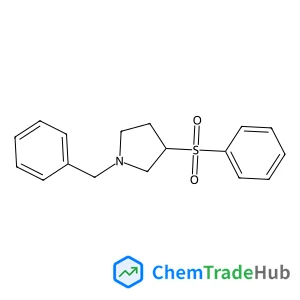
![trans-2-{[(Tert-butoxy)carbonyl]amino}cyclobutane-1-carboxylic acid structure](https://static.chemtradehub.com/structs/951/951173-25-4-27cd.webp "trans-2-{[(Tert-butoxy)carbonyl]amino}cyclobutane-1-carboxylic acid structure")