












Highly stereoselective anti-Markovnikov hydrothiolation of alkynes and electron-deficient alkenes by a supported Cu-NHC complex
Literature Information
Publication Date
2014-05-29
DOI
10.1039/C4GC00642A
Impact Factor
10.182
Authors
Yong Yang, Robert M. Rioux
View Original
Abstract
A practical, efficient, and low-cost heterogeneous catalyst consisting of a Cu-NHC (N-heterocyclic carbene) complex grafted to SBA-15 silica for the catalytic hydrothiolation of alkynes and electron-deficient alkenes under mild reaction conditions has been developed. The heterogeneous catalyst displays higher activity and stereoselectivity to Z-anti-Markovnikov isomers compared with the homogeneous analog under otherwise identical reaction conditions. The catalytic system is applicable to a broad range of alkynes and thiols and is recyclable without significant loss in catalytic performance. High activity and perfect selectivity to alkyl sulfides formed by the addition of electron-deficient alkenes to various thiols catalyzed by the supported Cu-NHC complex were also realized.
Related Literature
Elasticity of cardiac cells on the polymer substrates with different stiffness: an atomic force microscopy study
Xiaoli Shi, Lei Qin, Xuejie Zhang, Chunyang Xiong, Jing Fang, Xiaohong Fang, Youyi Zhang
2011-03-18
Paper
DOI: 10.1039/C1CP20154A
Multi-beam single-molecule defocused fluorescence imaging reveals local anisotropic nature of polymer thin films
Satoshi Habuchi, Tatsuya Oba, Martin Vacha
2011-03-11
Paper
DOI: 10.1039/C0CP02825H
On the nature of gallium species in gallium-modified mordenite and MFI zeolites. A comparative DRIFT study of carbon monoxide adsorption and hydrogen dissociation
Alexander I. Serykh, Stanislav P. Kolesnikov
2011-03-10
Paper
DOI: 10.1039/C0CP02088E
Ionization-loss stimulated Raman spectroscopy for conformational probing of flexible molecules
Nitzan Mayorkas, Itamar Malka, Ilana Bar
2011-02-14
Paper
DOI: 10.1039/C0CP02334E
A master-equation approach to the description of proton-driven spin diffusion from crystal geometry using simulated zero-quantum lineshapes
Jean-Nicolas Dumez, Lyndon Emsley
2011-03-22
Paper
DOI: 10.1039/C1CP00004G
Fe3O4nanoparticle-integrated graphene sheets for high-performance half and full lithium ion cells
Liwen Ji, Zhongkui Tan, Tevye R. Kuykendall, Shaul Aloni, Shidi Xun, Eric Lin, Vincent Battaglia, Yuegang Zhang
2011-03-14
Paper
DOI: 10.1039/C1CP20455F
Reply to the ‘Comment on “Multiconfigurational perturbation theory can predict a false ground state”’ by J. Soto, F. Avila, J. C. Otero and J. F. Arenas, Phys. Chem. Chem. Phys., 2011, DOI: 10.1039/C0CP01917H
Cristopher Camacho, Renzo Cimiraglia, Henryk A. Witek
2011-03-11
Comment
DOI: 10.1039/C1CP20177H
Isomerization of spirobenzopyrans bearing electron-donating and electron-withdrawing groups in acidic aqueous solutions
Taku Satoh, Kimio Sumaru, Toshiyuki Takagi, Katsuki Takai, Toshiyuki Kanamori
2011-03-11
Paper
DOI: 10.1039/C0CP01989E
Stability and growth behavior of transition metal nanoparticles in ionic liquids prepared by thermal evaporation: how stable are they really?
Kai Richter, Alexander Birkner, Anja-Verena Mudring
2011-03-14
Paper
DOI: 10.1039/C0CP02623A
You might also like
Compound Q&A
How should 2-Methylbenzene-1,4-diamine dihydrochloride (CAS: 615-45-2) be stored?
2-Methylbenzene-1,4-diamine dihydrochloride (CAS: 615-45-2) should be stored in ...
615-45-22-Methylbenzene-1,4-...
Compound Q&A
Is (1S,4S)-2,5-Diazabicyclo[2.2.1]heptane dihydrobromide (CAS: 132747-20-7) safe?
(1S,4S)-2,5-Diazabicyclo[2.2.1]heptane dihydrobromide is generally considered sa...
132747-20-7(1S,4S)-2,5-Diazabic...
Compound Q&A
What industries use (6-Chloropyridazin-3-YL)methanamine (CAS: 871826-15-2)?
(6-Chloropyridazin-3-YL)methanamine finds applications in the pharmaceutical ind...
871826-15-2(6-Chloropyridazin-3...
Compound Q&A
What are the main uses of 2-Fluoro-3-methylphenol (CAS: 77772-72-6)?
2-Fluoro-3-methylphenol is primarily used in the synthesis of pharmaceuticals, p...
77772-72-62-Fluoro-3-methylphe...
Compound Q&A
What precautions should be taken when handling 3-Methoxy-4-nitrobenzonitrile (CAS: 177476-75-4)?
When handling 3-Methoxy-4-nitrobenzonitrile, it is important to wear appropriate...
177476-75-43-Methoxy-4-nitroben...
Compound Q&A
What precautions should be taken when handling 1,3-Oxazolo[4,5-b]pyridine-2(3H)-thione (CAS: 211949-57-4)?
When handling 1,3-Oxazolo[4,5-b]pyridine-2(3H)-thione (CAS: 211949-57-4), it is ...
211949-57-4[1,3]Oxazolo[4,5-b]p...
Compound Q&A
What regulatory guidelines apply to 4-Ethynylbenzamide (CAS: 90347-86-7)?
4-Ethynylbenzamide (CAS: 90347-86-7) falls under various regulatory guidelines i...
90347-86-74-Ethynylbenzamide
Compound Q&A
What are the main uses of 3-(2-Ethylphenyl)-2-thioxo-4-imidazolidinone (CAS: 186822-57-1)?
3-(2-Ethylphenyl)-2-thioxo-4-imidazolidinone is primarily used as an intermediat...
186822-57-13-(2-Ethylphenyl)-2-...
Compound Q&A
What is (2-Fluoro-6-methoxyphenyl)acetic acid (CAS: 500912-19-6)?
(2-Fluoro-6-methoxyphenyl)acetic acid, also known as 4-fluoro-3-methoxybenzoic a...
500912-19-6(2-Fluoro-6-methoxyp...
Compound Q&A
What is the market or research trend for 2-[4-(Hydroxymethyl)phenoxy]ethanol (CAS: 102196-18-9)?
Market trends for 2-[4-(Hydroxymethyl)phenoxy]ethanol (CAS: 102196-18-9) indicat...
102196-18-92-[4-(Hydroxymethyl)...
Source Journal
Green Chemistry

CiteScore:
16.1
Self-citation Rate:
7.5%
Articles per Year:
944
Green Chemistry provides a unique forum for the publication of innovative research on the development of alternative green and sustainable technologies. The scope of Green Chemistry is based on, but not limited to, the definition proposed by Anastas and Warner (Green Chemistry: Theory and Practice, P T Anastas and J C Warner, Oxford University Press, Oxford, 1998). Green chemistry is the utilisation of a set of principles that reduces or eliminates the use or generation of hazardous substances in the design, manufacture and application of chemical products. Green Chemistry is at the frontiers of this continuously-evolving interdisciplinary science and publishes research that attempts to reduce the environmental impact of the chemical enterprise by developing a technology base that is inherently non-toxic to living things and the environment. Submissions on all aspects of research relating to the endeavour are welcome. The journal publishes original and significant cutting-edge research that is likely to be of wide general appeal. To be published, work must present a significant advance in green chemistry. Papers must contain a comparison with existing methods and demonstrate advantages over those methods before publication can be considered. For more information please see this Editorial. Coverage includes the following, but is not limited to: Design (e.g. biomimicry, design for degradation/recycling/reduced toxicity…) Reagents & Feedstocks (e.g. renewables, CO2, solvents, auxiliary agents, waste utilization…) Synthesis (e.g. organic, inorganic, synthetic biology…) Catalysis (e.g. homogeneous, heterogeneous, enzyme, whole cell…) Process (e.g. process design, intensification, separations, recycling, efficiency…) Energy (e.g. renewable energy, fuels, photovoltaics, fuel cells, energy storage, energy carriers…) Applications (e.g. electronics, dyes, consumer products, coatings, pharmaceuticals, preservatives, building materials, chemicals for industry/agriculture/mining…) Impact (e.g. safety, metrics, LCA, sustainability, (eco)toxicology…) Green chemistry is, by definition, a continuously-evolving frontier. Therefore, the inclusion of a particular material or technology does not, of itself, guarantee that a paper is suitable for the journal. To be suitable, the novel advance should have the potential for reduced environmental impact relative to the state of the art. Green Chemistry does not normally deal with research associated with 'end-of-pipe' or remediation issues.
Recommended Compounds
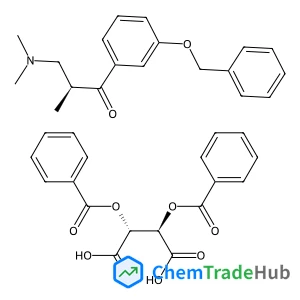
(S)-1-(3-(Benzyloxy)phenyl)-3-(dimethylamino)-2-methylpropan-1-one (2r,3r)-2,3-bis(benzoyloxy)succinate
CAS Number:
1004315-81-4
Molecular Formula:
C37H37NO10

Recommended Suppliers






Disclaimer
This page provides academic journal information for reference and research purposes only. We are not affiliated with any journal publishers and do not handle publication submissions. For publication-related inquiries, please contact the respective journal publishers directly.
If you notice any inaccuracies in the information displayed, please contact us at support@chemtradehub.com. We will promptly review and address your concerns.