












![(3R,4aR,7aS,9aR,10S,11R,13aR,13bS,15aS,15bR)-3,11-Dihydroxy-10-(hydroxymethyl)-4,4,7a,10,13a,15b-hexamethyl-1,2,3,4,4a,7,7a,8,9,9a,10,11,12,13,13a,13b,14,15,15a,15b-icosahydro-5H-naphtho[2',1':4,5]cyc
lohepta[1,2-a]naphthalen-5-one structure](https://static.chemtradehub.com/structs/538/53800-21-8-9f18.webp "(3R,4aR,7aS,9aR,10S,11R,13aR,13bS,15aS,15bR)-3,11-Dihydroxy-10-(hydroxymethyl)-4,4,7a,10,13a,15b-hexamethyl-1,2,3,4,4a,7,7a,8,9,9a,10,11,12,13,13a,13b,14,15,15a,15b-icosahydro-5H-naphtho[2',1':4,5]cyc
lohepta[1,2-a]naphthalen-5-one structure")
Gram-scale synthesis of alstoscholarinoid B via a bio-inspired strategy
Literature Information
Publication Date
2023-10-26
DOI
10.1039/D3OB01625K
Impact Factor
3.876
Authors
Long He, Wenting Zhang, Xiaocheng Zhang, Xiaohui Wu, Yimeng Han, Jiahang Yan
View Original
Abstract
Alstoscholarinoid A is a novel rearranged triterpene with an unprecedented 6/6/5/6/6/6 framework and an additional unique C28 → C11-olide F-ring, and displays antihyperuricemic bioactivity. Herein, we report a bio-inspired synthesis of alstoscholarinoid B in a stepwise manner, which is amenable to gram-scale synthesis. The synthesis involved the Chugaev elimination as a key step to realize the migration of the Δ11,12-double bond of oleanolic acid, and also featured a sequential LiHMDS-mediated intramolecular aldol condensation/lactonization to establish the polycyclic ring system. Additionally, a tandem deprotection/aldol condensation/lactonization process under the influence of LiI/2,4,6-collidine for forging the polycyclic scaffold was also serendipitously discovered. Mechanistic studies indicated that lithium carboxylate might function as an inner base for the chemoselective α-deprotonation of the C12-aldehyde.
Related Literature
Selective extraction of metals using ionic liquids for nickel metal hydride battery recycling
Kristian Larsson, Koen Binnemans
2014-07-31
Paper
DOI: 10.1039/C3GC41930D
Regioselective acetylation of carbohydrates and diols catalyzed by tetramethyl-ammonium hydroxide in water
Yuchao Lu, Peng Wei, Yuxin Pei, Hengfu Xu, Xiaoting Xin
2014-07-31
Communication
DOI: 10.1039/C4GC00770K
Efficient one-step preparation of γ-aminobutyric acid from glucose without an exogenous cofactor by the designed Corynebacterium glutamicum
Taowei Yang, Hongmei Sun, Meijuan Xu, Xian Zhang, Zhenghong Xu, Shangtian Yang
2014-06-23
Paper
DOI: 10.1039/C4GC00607K
Room-temperature transfer hydrogenation and fast separation of unsaturated compounds over heterogeneous catalysts in an aqueous solution of formic acid
Ling-Hong Gong, Yi-Yu Cai, Xin-Hao Li, Ya-Nan Zhang, Juan Su, Jie-Sheng Chen
2014-06-17
Communication
DOI: 10.1039/C4GC00981A
General and selective reductive amination of carbonyl compounds using a core–shell structured Co3O4/NGr@C catalyst
Tobias Stemmler, Felix A. Westerhaus, Annette-Enrica Surkus, Marga-Martina Pohl, Kathrin Junge, Matthias Beller
2014-07-29
Communication
DOI: 10.1039/C4GC00536H
Hydrothermal saline promoted grafting: a route to sulfonic acid SBA-15 silica with ultra-high acid site loading for biodiesel synthesis
C. Pirez, A. F. Lee, J. C. Manayil, C. M. A. Parlett, K. Wilson
2014-07-24
Communication
DOI: 10.1039/C4GC01139B
Synthesis of metal–organic frameworks by continuous flow
Peter A. Bayliss, Eduardo Pérez, Sihai Yang, Chiu C. Tang, Martyn Poliakoff, Martin Schröder
2014-06-06
Paper
DOI: 10.1039/C4GC00313F
Transition-metal-free synthesis of vinyl sulfones via tandem cross-decarboxylative/coupling reactions of sodium sulfinates and cinnamic acids
Yanli Xu, Xiaodong Tang, Weigao Hu, Wanqing Wu, Huanfeng Jiang
2014-04-25
Communication
DOI: 10.1039/C4GC00542B
Mesoporous carbon–silica solid acid catalysts for producing useful bio-products within the sugar-platform of biorefineries
Patrícia A. Russo, Margarida M. Antunes, Patrícia Neves, Paul V. Wiper, Enza Fazio, Fortunato Neri, Francesco Barreca, Luís Mafra, Martyn Pillinger, Nicola Pinna, Anabela A. Valente
2014-07-07
Paper
DOI: 10.1039/C4GC01037J
You might also like
Compound Q&A
How should 2-Methylbenzene-1,4-diamine dihydrochloride (CAS: 615-45-2) be stored?
2-Methylbenzene-1,4-diamine dihydrochloride (CAS: 615-45-2) should be stored in ...
615-45-22-Methylbenzene-1,4-...
Compound Q&A
Is (1S,4S)-2,5-Diazabicyclo[2.2.1]heptane dihydrobromide (CAS: 132747-20-7) safe?
(1S,4S)-2,5-Diazabicyclo[2.2.1]heptane dihydrobromide is generally considered sa...
132747-20-7(1S,4S)-2,5-Diazabic...
Compound Q&A
What industries use (6-Chloropyridazin-3-YL)methanamine (CAS: 871826-15-2)?
(6-Chloropyridazin-3-YL)methanamine finds applications in the pharmaceutical ind...
871826-15-2(6-Chloropyridazin-3...
Compound Q&A
What are the main uses of 2-Fluoro-3-methylphenol (CAS: 77772-72-6)?
2-Fluoro-3-methylphenol is primarily used in the synthesis of pharmaceuticals, p...
77772-72-62-Fluoro-3-methylphe...
Compound Q&A
What precautions should be taken when handling 3-Methoxy-4-nitrobenzonitrile (CAS: 177476-75-4)?
When handling 3-Methoxy-4-nitrobenzonitrile, it is important to wear appropriate...
177476-75-43-Methoxy-4-nitroben...
Compound Q&A
What precautions should be taken when handling 1,3-Oxazolo[4,5-b]pyridine-2(3H)-thione (CAS: 211949-57-4)?
When handling 1,3-Oxazolo[4,5-b]pyridine-2(3H)-thione (CAS: 211949-57-4), it is ...
211949-57-4[1,3]Oxazolo[4,5-b]p...
Compound Q&A
What regulatory guidelines apply to 4-Ethynylbenzamide (CAS: 90347-86-7)?
4-Ethynylbenzamide (CAS: 90347-86-7) falls under various regulatory guidelines i...
90347-86-74-Ethynylbenzamide
Compound Q&A
What are the main uses of 3-(2-Ethylphenyl)-2-thioxo-4-imidazolidinone (CAS: 186822-57-1)?
3-(2-Ethylphenyl)-2-thioxo-4-imidazolidinone is primarily used as an intermediat...
186822-57-13-(2-Ethylphenyl)-2-...
Compound Q&A
What is (2-Fluoro-6-methoxyphenyl)acetic acid (CAS: 500912-19-6)?
(2-Fluoro-6-methoxyphenyl)acetic acid, also known as 4-fluoro-3-methoxybenzoic a...
500912-19-6(2-Fluoro-6-methoxyp...
Compound Q&A
What is the market or research trend for 2-[4-(Hydroxymethyl)phenoxy]ethanol (CAS: 102196-18-9)?
Market trends for 2-[4-(Hydroxymethyl)phenoxy]ethanol (CAS: 102196-18-9) indicat...
102196-18-92-[4-(Hydroxymethyl)...
Source Journal
Organic & Biomolecular Chemistry

CiteScore:
3.4
Self-citation Rate:
10.3%
Articles per Year:
1041
Organic & Biomolecular Chemistry (OBC) publishes original and high impact research and reviews in organic chemistry. We welcome research that shows new or significantly improved protocols or methodologies in total synthesis, synthetic methodology or physical and theoretical organic chemistry as well as research that shows a significant advance in the organic chemistry or molecular design aspects of chemical biology, catalysis, supramolecular and macromolecular chemistry, theoretical chemistry, mechanism-oriented physical organic chemistry, medicinal chemistry or natural products. Articles published in the journal should report new work which makes a highly-significant impact in the field. Routine and incremental work is generally not suitable for publication in the journal. More details about key areas of our scope are below. In all cases authors should include in their article clear rationale for why their research has been carried out.
Recommended Compounds
![5-Bromo-3-isopropyl-1H-pyrrolo[2,3-b]pyridine structure](https://static.chemtradehub.com/structs/125/1256819-54-1-8620.webp "5-Bromo-3-isopropyl-1H-pyrrolo[2,3-b]pyridine structure")
![1H-Imidazo[4,5-c]pyridine-7-carboxylic acid structure](https://static.chemtradehub.com/structs/123/1234616-39-7-1344.webp "1H-Imidazo[4,5-c]pyridine-7-carboxylic acid structure")
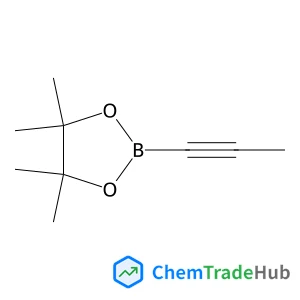
4,4,5,5-Tetramethyl-2-(1-propyn-1-YL)-1,3,2-dioxaborolane
CAS Number:
347389-75-7
Molecular Formula:
C9H15BO2
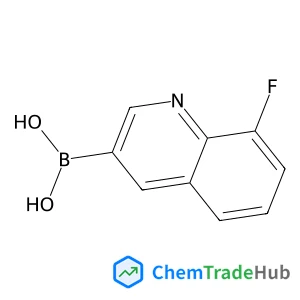
Recommended Suppliers






Disclaimer
This page provides academic journal information for reference and research purposes only. We are not affiliated with any journal publishers and do not handle publication submissions. For publication-related inquiries, please contact the respective journal publishers directly.
If you notice any inaccuracies in the information displayed, please contact us at support@chemtradehub.com. We will promptly review and address your concerns.