












Synthesis of metal–organic frameworks by continuous flow
Literature Information
Publication Date
2014-06-06
DOI
10.1039/C4GC00313F
Impact Factor
10.182
Authors
Peter A. Bayliss, Eduardo Pérez, Sihai Yang, Chiu C. Tang, Martyn Poliakoff, Martin Schröder
View Original
Abstract
A continuous flow process for the synthesis of a metal–organic framework using only water as the reaction medium and requiring only short residence times is described. This affords a new route to scale-up of materials incorporating many of the principles of Green Chemistry. The process is demonstrated by the synthesis MIL-53(Al) via continuous flow reaction requiring only 5–6 minutes with a space time yield of 1300 kg m−3 d−1. We have demonstrated the synthesis of 500 g of MIL-53(Al) using this process, which can be scaled-up further by simply feeding further solutions of metal salt and ligand through the reactor. The product has a higher surface area and a better colour than a commercially produced sample of this MOF. In addition, a new and effective method for the extraction of terephthalic acid from within the pores of MIL-53(Al) using supercritical ethanol has been developed, representing a new methodology for activation and removal of substrates from porous hosts.
Recommended Journals
Related Literature
Tautomers of cytosine and their excited electronic states: a matrix isolation spectroscopic and quantum chemical study‡
Gábor Bazsó, György Tarczay, Géza Fogarasi, Péter G. Szalay
2011-01-14
Paper
DOI: 10.1039/C0CP02354J
Entropy-driven rearrangement of the water network at the hydrated amide group of the trans-formanilide–water cluster in the gas phase
Kenji Sakota, Yuiga Shimazaki, Hiroshi Sekiya
2011-03-03
Communication
DOI: 10.1039/C0CP02836C
An in situSTM/AFM and impedance spectroscopy study of the extremely pure 1-butyl-1-methylpyrrolidinium tris(pentafluoroethyl)trifluorophosphate/Au(111) interface: potential dependent solvation layers and the herringbone reconstruction
Rob Atkin, Marcel Drüschler, Robert Hayes, Benedikt Huber, Bernhard Roling
2011-03-14
Paper
DOI: 10.1039/C0CP02846K
On the direct scavenging activity of melatonin towards hydroxyl and a series of peroxyl radicals
Annia Galano
2011-03-15
Paper
DOI: 10.1039/C0CP02801K
Vibrational relaxation and dephasing of Rb2 attached to helium nanodroplets
B. Grüner, M. Schlesinger, Ph. Heister, W. T. Strunz, F. Stienkemeier, M. Mudrich
2011-03-11
Paper
DOI: 10.1039/C0CP02355H
A complete look at the multi-channel dissociation of propenal photoexcited at 193 nm: branching ratios and distributions of kinetic energy
Chanchal Chaudhuri, Shih-Huang Lee
2011-03-21
Paper
DOI: 10.1039/C0CP01641A
Influence of percentage of guanine molecules, OH radicals, UV irradiation and temperature on electrooxidation of short synthetic oligonucleotides
Anna Maria Nowicka, Ewelina Zabost, Edyta Gilant, Zbigniew Stojek
2011-03-21
Paper
DOI: 10.1039/C0CP02667K
Solvation of Ti(iv) in aqueous solution under ambient and supercritical conditions
Jelle van Sijl, Neil L. Allan, Gareth R. Davies, Wim van Westrenen
2011-03-18
Paper
DOI: 10.1039/C0CP01637C
The Soret effect of mono-, di- and tri-glycols in ethanol
Michael Klein, Simone Wiegand
2011-03-16
Paper
DOI: 10.1039/C1CP00022E
You might also like
Compound Q&A
How should 2-Methylbenzene-1,4-diamine dihydrochloride (CAS: 615-45-2) be stored?
2-Methylbenzene-1,4-diamine dihydrochloride (CAS: 615-45-2) should be stored in ...
615-45-22-Methylbenzene-1,4-...
Compound Q&A
Is (1S,4S)-2,5-Diazabicyclo[2.2.1]heptane dihydrobromide (CAS: 132747-20-7) safe?
(1S,4S)-2,5-Diazabicyclo[2.2.1]heptane dihydrobromide is generally considered sa...
132747-20-7(1S,4S)-2,5-Diazabic...
Compound Q&A
What industries use (6-Chloropyridazin-3-YL)methanamine (CAS: 871826-15-2)?
(6-Chloropyridazin-3-YL)methanamine finds applications in the pharmaceutical ind...
871826-15-2(6-Chloropyridazin-3...
Compound Q&A
What are the main uses of 2-Fluoro-3-methylphenol (CAS: 77772-72-6)?
2-Fluoro-3-methylphenol is primarily used in the synthesis of pharmaceuticals, p...
77772-72-62-Fluoro-3-methylphe...
Compound Q&A
What precautions should be taken when handling 3-Methoxy-4-nitrobenzonitrile (CAS: 177476-75-4)?
When handling 3-Methoxy-4-nitrobenzonitrile, it is important to wear appropriate...
177476-75-43-Methoxy-4-nitroben...
Compound Q&A
What precautions should be taken when handling 1,3-Oxazolo[4,5-b]pyridine-2(3H)-thione (CAS: 211949-57-4)?
When handling 1,3-Oxazolo[4,5-b]pyridine-2(3H)-thione (CAS: 211949-57-4), it is ...
211949-57-4[1,3]Oxazolo[4,5-b]p...
Compound Q&A
What regulatory guidelines apply to 4-Ethynylbenzamide (CAS: 90347-86-7)?
4-Ethynylbenzamide (CAS: 90347-86-7) falls under various regulatory guidelines i...
90347-86-74-Ethynylbenzamide
Compound Q&A
What are the main uses of 3-(2-Ethylphenyl)-2-thioxo-4-imidazolidinone (CAS: 186822-57-1)?
3-(2-Ethylphenyl)-2-thioxo-4-imidazolidinone is primarily used as an intermediat...
186822-57-13-(2-Ethylphenyl)-2-...
Compound Q&A
What is (2-Fluoro-6-methoxyphenyl)acetic acid (CAS: 500912-19-6)?
(2-Fluoro-6-methoxyphenyl)acetic acid, also known as 4-fluoro-3-methoxybenzoic a...
500912-19-6(2-Fluoro-6-methoxyp...
Compound Q&A
What is the market or research trend for 2-[4-(Hydroxymethyl)phenoxy]ethanol (CAS: 102196-18-9)?
Market trends for 2-[4-(Hydroxymethyl)phenoxy]ethanol (CAS: 102196-18-9) indicat...
102196-18-92-[4-(Hydroxymethyl)...
Source Journal
Green Chemistry

CiteScore:
16.1
Self-citation Rate:
7.5%
Articles per Year:
944
Green Chemistry provides a unique forum for the publication of innovative research on the development of alternative green and sustainable technologies. The scope of Green Chemistry is based on, but not limited to, the definition proposed by Anastas and Warner (Green Chemistry: Theory and Practice, P T Anastas and J C Warner, Oxford University Press, Oxford, 1998). Green chemistry is the utilisation of a set of principles that reduces or eliminates the use or generation of hazardous substances in the design, manufacture and application of chemical products. Green Chemistry is at the frontiers of this continuously-evolving interdisciplinary science and publishes research that attempts to reduce the environmental impact of the chemical enterprise by developing a technology base that is inherently non-toxic to living things and the environment. Submissions on all aspects of research relating to the endeavour are welcome. The journal publishes original and significant cutting-edge research that is likely to be of wide general appeal. To be published, work must present a significant advance in green chemistry. Papers must contain a comparison with existing methods and demonstrate advantages over those methods before publication can be considered. For more information please see this Editorial. Coverage includes the following, but is not limited to: Design (e.g. biomimicry, design for degradation/recycling/reduced toxicity…) Reagents & Feedstocks (e.g. renewables, CO2, solvents, auxiliary agents, waste utilization…) Synthesis (e.g. organic, inorganic, synthetic biology…) Catalysis (e.g. homogeneous, heterogeneous, enzyme, whole cell…) Process (e.g. process design, intensification, separations, recycling, efficiency…) Energy (e.g. renewable energy, fuels, photovoltaics, fuel cells, energy storage, energy carriers…) Applications (e.g. electronics, dyes, consumer products, coatings, pharmaceuticals, preservatives, building materials, chemicals for industry/agriculture/mining…) Impact (e.g. safety, metrics, LCA, sustainability, (eco)toxicology…) Green chemistry is, by definition, a continuously-evolving frontier. Therefore, the inclusion of a particular material or technology does not, of itself, guarantee that a paper is suitable for the journal. To be suitable, the novel advance should have the potential for reduced environmental impact relative to the state of the art. Green Chemistry does not normally deal with research associated with 'end-of-pipe' or remediation issues.
Recommended Compounds
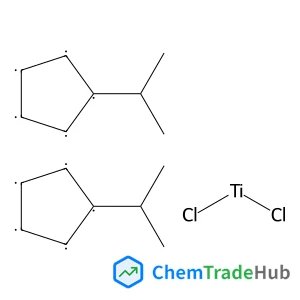
BIS(I-PROPYLCYCLOPENTADIENYL)TITANIUM DICHLORIDE
CAS Number:
12130-65-3
Molecular Formula:
C16H22Cl2Ti
Recommended Suppliers





Disclaimer
This page provides academic journal information for reference and research purposes only. We are not affiliated with any journal publishers and do not handle publication submissions. For publication-related inquiries, please contact the respective journal publishers directly.
If you notice any inaccuracies in the information displayed, please contact us at support@chemtradehub.com. We will promptly review and address your concerns.