












Regioselective acetylation of carbohydrates and diols catalyzed by tetramethyl-ammonium hydroxide in water
Literature Information
Publication Date
2014-07-31
DOI
10.1039/C4GC00770K
Impact Factor
10.182
Authors
Yuchao Lu, Peng Wei, Yuxin Pei, Hengfu Xu, Xiaoting Xin
View Original
Abstract
A novel method for an efficient regioselective acetylation of carbohydrates and diols in aqueous solution is described. Treatment of substrates with 1-acetylimidazole, and tetramethyl-ammonium hydroxide (TMAH) in water under mild conditions gave highly regioselective acetylation for primary hydroxyl groups. This discovery provides an eco-friendly way for selective acetylation of non-protected glycosides and diols in water, avoiding the use of toxic organic solvents and the necessity of pre-protection of secondary hydroxyl groups.
Related Literature
The predicted spectrum of the hypermetallic molecule MgOMg
B. Ostojić, P. Schwerdtfeger, B. Assadollahzadeh, Per Jensen
2011-03-22
Paper
DOI: 10.1039/C0CP02996C
Energy decomposition analysis based on a block-localized wavefunction and multistate density functional theory
Yirong Mo, Peng Bao, Jiali Gao
2011-03-02
Perspective
DOI: 10.1039/C0CP02206C
Electronic structure and magnetic properties of the graphene/Fe/Ni(111) intercalation-like system
M. Weser, E. N. Voloshina, K. Horn, Yu. S. Dedkov
2011-03-22
Paper
DOI: 10.1039/C1CP00014D
Influence of percentage of guanine molecules, OH radicals, UV irradiation and temperature on electrooxidation of short synthetic oligonucleotides
Anna Maria Nowicka, Ewelina Zabost, Edyta Gilant, Zbigniew Stojek
2011-03-21
Paper
DOI: 10.1039/C0CP02667K
On the dissociation of molecular hydrogen by Au supported on transition metal carbides: choice of the most active support
José A. Rodriguez, Francesc Illas
2011-03-15
Paper
DOI: 10.1039/C0CP02882G
Dissection of the difference between the group I metal ions in inhibiting GSK3β: a computational study
Shao-Yong Lu, Yong-Jun Jiang, Jian-Wei Zou, Tian-Xing Wu
2011-03-14
Paper
DOI: 10.1039/C0CP02498H
Electronic and magnetic properties of substituted BN sheets: A density functional theory study
P. Yang, Z. G. Wang, X. T. Zu, H. Y. Xiao, X. Sun, M. A. Khaleel, F. Gao
2011-03-21
Paper
DOI: 10.1039/C0CP02001J
Revealing time bunching effect in single-molecule enzyme conformational dynamics
H. Peter Lu
2011-03-15
Perspective
DOI: 10.1039/C0CP02860F
Fuel-specific influences on the composition of reaction intermediates in premixed flames of three C5H10O2 ester isomers
Bin Yang, Charles K. Westbrook, Terrill A. Cool, Nils Hansen, Katharina Kohse-Höinghaus
2011-03-15
Paper
DOI: 10.1039/C0CP02065F
Catalysis by metal–organic frameworks: fundamentals and opportunities
Marco Ranocchiari
2011-01-14
Perspective
DOI: 10.1039/C0CP02394A
You might also like
Compound Q&A
How should 2-Methylbenzene-1,4-diamine dihydrochloride (CAS: 615-45-2) be stored?
2-Methylbenzene-1,4-diamine dihydrochloride (CAS: 615-45-2) should be stored in ...
615-45-22-Methylbenzene-1,4-...
Compound Q&A
Is (1S,4S)-2,5-Diazabicyclo[2.2.1]heptane dihydrobromide (CAS: 132747-20-7) safe?
(1S,4S)-2,5-Diazabicyclo[2.2.1]heptane dihydrobromide is generally considered sa...
132747-20-7(1S,4S)-2,5-Diazabic...
Compound Q&A
What industries use (6-Chloropyridazin-3-YL)methanamine (CAS: 871826-15-2)?
(6-Chloropyridazin-3-YL)methanamine finds applications in the pharmaceutical ind...
871826-15-2(6-Chloropyridazin-3...
Compound Q&A
What are the main uses of 2-Fluoro-3-methylphenol (CAS: 77772-72-6)?
2-Fluoro-3-methylphenol is primarily used in the synthesis of pharmaceuticals, p...
77772-72-62-Fluoro-3-methylphe...
Compound Q&A
What precautions should be taken when handling 3-Methoxy-4-nitrobenzonitrile (CAS: 177476-75-4)?
When handling 3-Methoxy-4-nitrobenzonitrile, it is important to wear appropriate...
177476-75-43-Methoxy-4-nitroben...
Compound Q&A
What precautions should be taken when handling 1,3-Oxazolo[4,5-b]pyridine-2(3H)-thione (CAS: 211949-57-4)?
When handling 1,3-Oxazolo[4,5-b]pyridine-2(3H)-thione (CAS: 211949-57-4), it is ...
211949-57-4[1,3]Oxazolo[4,5-b]p...
Compound Q&A
What regulatory guidelines apply to 4-Ethynylbenzamide (CAS: 90347-86-7)?
4-Ethynylbenzamide (CAS: 90347-86-7) falls under various regulatory guidelines i...
90347-86-74-Ethynylbenzamide
Compound Q&A
What are the main uses of 3-(2-Ethylphenyl)-2-thioxo-4-imidazolidinone (CAS: 186822-57-1)?
3-(2-Ethylphenyl)-2-thioxo-4-imidazolidinone is primarily used as an intermediat...
186822-57-13-(2-Ethylphenyl)-2-...
Compound Q&A
What is (2-Fluoro-6-methoxyphenyl)acetic acid (CAS: 500912-19-6)?
(2-Fluoro-6-methoxyphenyl)acetic acid, also known as 4-fluoro-3-methoxybenzoic a...
500912-19-6(2-Fluoro-6-methoxyp...
Compound Q&A
What is the market or research trend for 2-[4-(Hydroxymethyl)phenoxy]ethanol (CAS: 102196-18-9)?
Market trends for 2-[4-(Hydroxymethyl)phenoxy]ethanol (CAS: 102196-18-9) indicat...
102196-18-92-[4-(Hydroxymethyl)...
Source Journal
Green Chemistry

CiteScore:
16.1
Self-citation Rate:
7.5%
Articles per Year:
944
Green Chemistry provides a unique forum for the publication of innovative research on the development of alternative green and sustainable technologies. The scope of Green Chemistry is based on, but not limited to, the definition proposed by Anastas and Warner (Green Chemistry: Theory and Practice, P T Anastas and J C Warner, Oxford University Press, Oxford, 1998). Green chemistry is the utilisation of a set of principles that reduces or eliminates the use or generation of hazardous substances in the design, manufacture and application of chemical products. Green Chemistry is at the frontiers of this continuously-evolving interdisciplinary science and publishes research that attempts to reduce the environmental impact of the chemical enterprise by developing a technology base that is inherently non-toxic to living things and the environment. Submissions on all aspects of research relating to the endeavour are welcome. The journal publishes original and significant cutting-edge research that is likely to be of wide general appeal. To be published, work must present a significant advance in green chemistry. Papers must contain a comparison with existing methods and demonstrate advantages over those methods before publication can be considered. For more information please see this Editorial. Coverage includes the following, but is not limited to: Design (e.g. biomimicry, design for degradation/recycling/reduced toxicity…) Reagents & Feedstocks (e.g. renewables, CO2, solvents, auxiliary agents, waste utilization…) Synthesis (e.g. organic, inorganic, synthetic biology…) Catalysis (e.g. homogeneous, heterogeneous, enzyme, whole cell…) Process (e.g. process design, intensification, separations, recycling, efficiency…) Energy (e.g. renewable energy, fuels, photovoltaics, fuel cells, energy storage, energy carriers…) Applications (e.g. electronics, dyes, consumer products, coatings, pharmaceuticals, preservatives, building materials, chemicals for industry/agriculture/mining…) Impact (e.g. safety, metrics, LCA, sustainability, (eco)toxicology…) Green chemistry is, by definition, a continuously-evolving frontier. Therefore, the inclusion of a particular material or technology does not, of itself, guarantee that a paper is suitable for the journal. To be suitable, the novel advance should have the potential for reduced environmental impact relative to the state of the art. Green Chemistry does not normally deal with research associated with 'end-of-pipe' or remediation issues.
Recommended Compounds
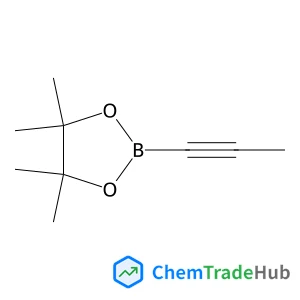
4,4,5,5-Tetramethyl-2-(1-propyn-1-YL)-1,3,2-dioxaborolane
CAS Number:
347389-75-7
Molecular Formula:
C9H15BO2
Recommended Suppliers




Disclaimer
This page provides academic journal information for reference and research purposes only. We are not affiliated with any journal publishers and do not handle publication submissions. For publication-related inquiries, please contact the respective journal publishers directly.
If you notice any inaccuracies in the information displayed, please contact us at support@chemtradehub.com. We will promptly review and address your concerns.