












Enantioselective conjugate addition to nitroolefins catalysed by helical peptides with a single remote stereogenic centre
Literature Information
Publication Date
2023-11-20
DOI
10.1039/D3OB01594G
Impact Factor
3.876
Authors
Iñigo J. Vitórica-Yrezábal, Simon J. Webb
View Original
Abstract
Two short pentapeptides rich in α-aminoisobutyric acid (Aib) residues have been shown to act as enantioselective organocatalysts for the conjugate addition of nucleophiles to nitroolefins. An L-alanine terminated peptide, (Aib)4(L-Ala)NHtBu, which has neither functionalised sidechains nor a highly designed reactive site, used an exposed N-terminal primary amine and the amide bonds of the backbone to mediate catalysis. Folding of this peptide into a 310 helical structure was observed by crystallography. Folding into a helix relays the conformational preference of the chiral alanine residue at the C-terminus to the primary amine at the N-terminus, 0.9 nm distant. The chiral environment and defined shape produced by the 310 helix brings the amine site into proximity to two exposed amide NHs. Reaction scope studies implied that the amine acts as a Brønsted base and the solvent-exposed NH groups of the helix, shown to weakly bind β-nitrostyrene, are needed to obtain an enantiomeric excess. Replacement of L-alanine with D-phenylalanine gave (Aib)4(D-Phe)NHtBu, a peptide that now catalysed the benchmark reaction with the opposite enantioselectivity. These studies show how achiral residues can play a key role in enantioselective catalysis by peptides through the promotion of folding.
Related Literature
Bisubstrate inhibitors for the enzyme catechol-O-methyltransferase (COMT): influence of inhibitor preorganisation and linker length between the two substrate moieties on binding affinity
Christian Lerner, Birgit Masjost, Armin Ruf, Volker Gramlich, Roland Jakob-Roetne, Gerhard Zürcher, Edilio Borroni, François Diederich
2002-11-26
Paper
DOI: 10.1039/B208690P
Differential substituent effects of β-halogens in water-soluble porphyrins
Justin C. Biffinger, Haoran Sun, Andrew P. Nelson, Stephen G. DiMagno
2003-01-24
Paper
DOI: 10.1039/B209345F
Total synthesis, structural revision and biological evaluation of γ-elemene-type sesquiterpenes
Changchun Yuan, Shangyong Zhong, Xingyi Li, Yanhong Wang, Miao-Miao Xun, Yunli Bai, Kongkai Zhu
2018-10-03
Paper
DOI: 10.1039/C8OB02005A
The influence of chain elongation on Karplus-type relationships: a DFT study of scalar coupling constants in polyacetylene derivatives
Ibon Alkorta, José Elguero
2003-01-06
Paper
DOI: 10.1039/B208803G
The fluorescent biomarkers for lipid droplets with quinolone-coumarin unit
Yuan Chen, Xue-Rui Wei, Ru Sun, Yu-Jie Xu
2018-09-27
Paper
DOI: 10.1039/C8OB02047G
Transformations of cyclic nonaketides by Aspergillus terreus mutants blocked for lovastatin biosynthesis at the lovA and lovC genes
John L. Sorensen, Karine Auclair, Jonathan Kennedy, C. Richard Hutchinson, John C. Vederas
2002-11-21
Paper
DOI: 10.1039/B207721C
Recent advances in the synthesis of azaphenalene alkaloids: first enantioselective approaches
Sílvia Alujas-Burgos, Pau Bayón, Marta Figueredo
2018-08-03
Review Article
DOI: 10.1039/C8OB01443D
The base-catalysed cyclisation of phenyl N-(2-hydroxybenzyl)-N-methylcarbamates is concerted
Vojeslav Štěrba, Oldřich Hrabík, Jaromír Kaválek, Jaromír Mindl, Andrew Williams
2002-12-11
Paper
DOI: 10.1039/B209323P
Nitrophenyl derivatives of pyrrole 2,5-diamides: structural behaviour, anion binding and colour change signalled deprotonation
Salvatore Camiolo, Philip A. Gale, Michael B. Hursthouse, Mark E. Light
2003-01-28
Paper
DOI: 10.1039/B210848H
Radicals derived from uric acid and its methyl derivatives in aqueous solution: an EPR spectroscopy and theoretical study
2002-12-23
Paper
DOI: 10.1039/B208827B
You might also like
Compound Q&A
How should 2-Methylbenzene-1,4-diamine dihydrochloride (CAS: 615-45-2) be stored?
2-Methylbenzene-1,4-diamine dihydrochloride (CAS: 615-45-2) should be stored in ...
615-45-22-Methylbenzene-1,4-...
Compound Q&A
Is (1S,4S)-2,5-Diazabicyclo[2.2.1]heptane dihydrobromide (CAS: 132747-20-7) safe?
(1S,4S)-2,5-Diazabicyclo[2.2.1]heptane dihydrobromide is generally considered sa...
132747-20-7(1S,4S)-2,5-Diazabic...
Compound Q&A
What industries use (6-Chloropyridazin-3-YL)methanamine (CAS: 871826-15-2)?
(6-Chloropyridazin-3-YL)methanamine finds applications in the pharmaceutical ind...
871826-15-2(6-Chloropyridazin-3...
Compound Q&A
What are the main uses of 2-Fluoro-3-methylphenol (CAS: 77772-72-6)?
2-Fluoro-3-methylphenol is primarily used in the synthesis of pharmaceuticals, p...
77772-72-62-Fluoro-3-methylphe...
Compound Q&A
What precautions should be taken when handling 3-Methoxy-4-nitrobenzonitrile (CAS: 177476-75-4)?
When handling 3-Methoxy-4-nitrobenzonitrile, it is important to wear appropriate...
177476-75-43-Methoxy-4-nitroben...
Compound Q&A
What precautions should be taken when handling 1,3-Oxazolo[4,5-b]pyridine-2(3H)-thione (CAS: 211949-57-4)?
When handling 1,3-Oxazolo[4,5-b]pyridine-2(3H)-thione (CAS: 211949-57-4), it is ...
211949-57-4[1,3]Oxazolo[4,5-b]p...
Compound Q&A
What regulatory guidelines apply to 4-Ethynylbenzamide (CAS: 90347-86-7)?
4-Ethynylbenzamide (CAS: 90347-86-7) falls under various regulatory guidelines i...
90347-86-74-Ethynylbenzamide
Compound Q&A
What are the main uses of 3-(2-Ethylphenyl)-2-thioxo-4-imidazolidinone (CAS: 186822-57-1)?
3-(2-Ethylphenyl)-2-thioxo-4-imidazolidinone is primarily used as an intermediat...
186822-57-13-(2-Ethylphenyl)-2-...
Compound Q&A
What is (2-Fluoro-6-methoxyphenyl)acetic acid (CAS: 500912-19-6)?
(2-Fluoro-6-methoxyphenyl)acetic acid, also known as 4-fluoro-3-methoxybenzoic a...
500912-19-6(2-Fluoro-6-methoxyp...
Compound Q&A
What is the market or research trend for 2-[4-(Hydroxymethyl)phenoxy]ethanol (CAS: 102196-18-9)?
Market trends for 2-[4-(Hydroxymethyl)phenoxy]ethanol (CAS: 102196-18-9) indicat...
102196-18-92-[4-(Hydroxymethyl)...
Source Journal
Organic & Biomolecular Chemistry

CiteScore:
3.4
Self-citation Rate:
10.3%
Articles per Year:
1041
Organic & Biomolecular Chemistry (OBC) publishes original and high impact research and reviews in organic chemistry. We welcome research that shows new or significantly improved protocols or methodologies in total synthesis, synthetic methodology or physical and theoretical organic chemistry as well as research that shows a significant advance in the organic chemistry or molecular design aspects of chemical biology, catalysis, supramolecular and macromolecular chemistry, theoretical chemistry, mechanism-oriented physical organic chemistry, medicinal chemistry or natural products. Articles published in the journal should report new work which makes a highly-significant impact in the field. Routine and incremental work is generally not suitable for publication in the journal. More details about key areas of our scope are below. In all cases authors should include in their article clear rationale for why their research has been carried out.
Recommended Compounds
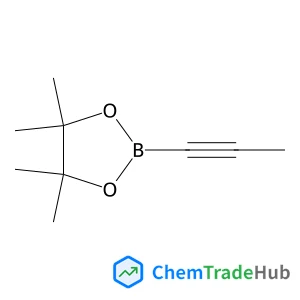
4,4,5,5-Tetramethyl-2-(1-propyn-1-YL)-1,3,2-dioxaborolane
CAS Number:
347389-75-7
Molecular Formula:
C9H15BO2
![1H-Imidazo[4,5-c]pyridine-7-carboxylic acid structure](https://static.chemtradehub.com/structs/123/1234616-39-7-1344.webp "1H-Imidazo[4,5-c]pyridine-7-carboxylic acid structure")
![[1-(5-Methyl-2-pyridinyl)-1H-pyrazol-4-yl]methanol structure](https://static.chemtradehub.com/structs/143/1439822-99-7-6cc9.webp "[1-(5-Methyl-2-pyridinyl)-1H-pyrazol-4-yl]methanol structure")
[1-(5-Methyl-2-pyridinyl)-1H-pyrazol-4-yl]methanol
CAS Number:
1439822-99-7
Molecular Formula:
C10H11N3O
Recommended Suppliers





Disclaimer
This page provides academic journal information for reference and research purposes only. We are not affiliated with any journal publishers and do not handle publication submissions. For publication-related inquiries, please contact the respective journal publishers directly.
If you notice any inaccuracies in the information displayed, please contact us at support@chemtradehub.com. We will promptly review and address your concerns.