











![1H-Imidazo[4,5-c]pyridine-7-carboxylic acid structure](https://static.chemtradehub.com/structs/123/1234616-39-7-1344.webp "1H-Imidazo[4,5-c]pyridine-7-carboxylic acid structure")
Isothiocyanates (in situ) and sulfonyl chlorides in water for N-functionalization of bicyclic amidines: access to N-alkylated γ-/ω-lactam derivatized thiourea and sulfonamides
Literature Information
Publication Date
2023-10-19
DOI
10.1039/D3OB01584J
Impact Factor
3.876
Authors
Pankaj Kumar, Aman Bhalla
View Original
Abstract
Herein, we showcase the potential of isothiocyanates generated in situ and aryl sulfonyl chlorides as electrophiles in water for N-functionalization of bicyclic amidines (DBN and DBU). This strategy provides complementary access to a range of thiouredosulfides, sulfonamides, aroylthioureas and amides derivativatized with distal γ- and ω-lactams. A novel sulfonyl chloride mediated formation of β-uredo sulfides has been achieved from β-isothiocyanato sulfides, removing the requirement for the harsh synthesis of unstable isocyanates. Mechanistic studies suggest a radical mechanism for the difunctionalization of alkenes, the efficacy of H2O in the ring opening of bicyclic amidines, and an oxygen source along with sulfonyl chloride as desulfurization agents for thiourea to afford urea derivatives.
Related Literature
A donor–acceptor substituted molecular motor: unidirectional rotation driven by visible light
Richard A. van Delden, Nagatoshi Koumura, Annemarie Schoevaars, Auke Meetsma, Ben L. Feringa
2002-11-08
Communication
DOI: 10.1039/B209378B
Preparation of a unique glucan with large intervals in molecular weight distribution. Controlled ring-opening polymerization of O-permethylcyclodextrin
Masato Suzuki, Tomofumi Shimazaki
2003-01-20
Paper
DOI: 10.1039/B210122J
Mechanism of the oxidation of aromatic sulfides catalysed by a water soluble iron porphyrin
Enrico Baciocchi, Maria Francesca Gerini, Osvaldo Lanzalunga, Andrea Lapi, Maria Grazia Lo Piparo
2002-12-16
Paper
DOI: 10.1039/B209004J
The type I rat fatty acid synthase ACP shows structural homology and analogous biochemical properties to type II ACPs
Michelle A. C. Reed, Michael Schweizer, Anna E. Szafranska, Chris Arthur, Thomas P. Nicholson, Russell J. Cox, John Crosby, Matthew P. Crump, Thomas J. Simpson
2003-01-03
Paper
DOI: 10.1039/B208941F
From central to planar chirality, the first example of atropenantioselective cycloetherification
Gabriela Islas-Gonzalez, Michèle Bois-Choussy, Jieping Zhu
2002-11-08
Communication
DOI: 10.1039/B208905J
A general microcantilever surface modification method using a multilayer for biospecific recognition
Xiaodong Yan, Yuri Lvov, Hai-Feng Ji, Alok Singh, Thomas Thundat
2002-12-23
Communication
DOI: 10.1039/B209944F
A novel peptide conformation: the γ-bend ribbon
Bruno Drouillat, Cristina Peggion, Barbara Biondi, Karen Wright, François Couty, Marco Crisma
2018-10-09
Paper
DOI: 10.1039/C8OB02279H
Non-steady-state kinetic study of the SN2 reaction between p-nitrophenoxide ion and methyl iodide in aprotic solvents containing water. Evidence for a 2-step mechanism
Yun Lu, Kishan L. Handoo, Vernon D. Parker
2002-11-08
Communication
DOI: 10.1039/B208635B
Tetracyclic pyrazine-fused furazans as insensitive energetic materials: syntheses, structures, and properties
Qi Sun, Xin Li, Qiuhan Lin, Ming Lu
2018-10-11
Communication
DOI: 10.1039/C8OB02155D
The reactions of cytidine and 2′-deoxycytidine with SO4˙− revisited. Pulse radiolysis and product studies
Charuvila T. Aravindakumar, Man Nien Schuchmann, Balijepalli S. M. Rao, Justus von Sonntag
2002-12-09
Paper
DOI: 10.1039/B209626A
You might also like
Compound Q&A
How should 2-Methylbenzene-1,4-diamine dihydrochloride (CAS: 615-45-2) be stored?
2-Methylbenzene-1,4-diamine dihydrochloride (CAS: 615-45-2) should be stored in ...
615-45-22-Methylbenzene-1,4-...
Compound Q&A
Is (1S,4S)-2,5-Diazabicyclo[2.2.1]heptane dihydrobromide (CAS: 132747-20-7) safe?
(1S,4S)-2,5-Diazabicyclo[2.2.1]heptane dihydrobromide is generally considered sa...
132747-20-7(1S,4S)-2,5-Diazabic...
Compound Q&A
What industries use (6-Chloropyridazin-3-YL)methanamine (CAS: 871826-15-2)?
(6-Chloropyridazin-3-YL)methanamine finds applications in the pharmaceutical ind...
871826-15-2(6-Chloropyridazin-3...
Compound Q&A
What are the main uses of 2-Fluoro-3-methylphenol (CAS: 77772-72-6)?
2-Fluoro-3-methylphenol is primarily used in the synthesis of pharmaceuticals, p...
77772-72-62-Fluoro-3-methylphe...
Compound Q&A
What precautions should be taken when handling 3-Methoxy-4-nitrobenzonitrile (CAS: 177476-75-4)?
When handling 3-Methoxy-4-nitrobenzonitrile, it is important to wear appropriate...
177476-75-43-Methoxy-4-nitroben...
Compound Q&A
What precautions should be taken when handling 1,3-Oxazolo[4,5-b]pyridine-2(3H)-thione (CAS: 211949-57-4)?
When handling 1,3-Oxazolo[4,5-b]pyridine-2(3H)-thione (CAS: 211949-57-4), it is ...
211949-57-4[1,3]Oxazolo[4,5-b]p...
Compound Q&A
What regulatory guidelines apply to 4-Ethynylbenzamide (CAS: 90347-86-7)?
4-Ethynylbenzamide (CAS: 90347-86-7) falls under various regulatory guidelines i...
90347-86-74-Ethynylbenzamide
Compound Q&A
What are the main uses of 3-(2-Ethylphenyl)-2-thioxo-4-imidazolidinone (CAS: 186822-57-1)?
3-(2-Ethylphenyl)-2-thioxo-4-imidazolidinone is primarily used as an intermediat...
186822-57-13-(2-Ethylphenyl)-2-...
Compound Q&A
What is (2-Fluoro-6-methoxyphenyl)acetic acid (CAS: 500912-19-6)?
(2-Fluoro-6-methoxyphenyl)acetic acid, also known as 4-fluoro-3-methoxybenzoic a...
500912-19-6(2-Fluoro-6-methoxyp...
Compound Q&A
What is the market or research trend for 2-[4-(Hydroxymethyl)phenoxy]ethanol (CAS: 102196-18-9)?
Market trends for 2-[4-(Hydroxymethyl)phenoxy]ethanol (CAS: 102196-18-9) indicat...
102196-18-92-[4-(Hydroxymethyl)...
Source Journal
Organic & Biomolecular Chemistry

CiteScore:
3.4
Self-citation Rate:
10.3%
Articles per Year:
1041
Organic & Biomolecular Chemistry (OBC) publishes original and high impact research and reviews in organic chemistry. We welcome research that shows new or significantly improved protocols or methodologies in total synthesis, synthetic methodology or physical and theoretical organic chemistry as well as research that shows a significant advance in the organic chemistry or molecular design aspects of chemical biology, catalysis, supramolecular and macromolecular chemistry, theoretical chemistry, mechanism-oriented physical organic chemistry, medicinal chemistry or natural products. Articles published in the journal should report new work which makes a highly-significant impact in the field. Routine and incremental work is generally not suitable for publication in the journal. More details about key areas of our scope are below. In all cases authors should include in their article clear rationale for why their research has been carried out.
Recommended Compounds
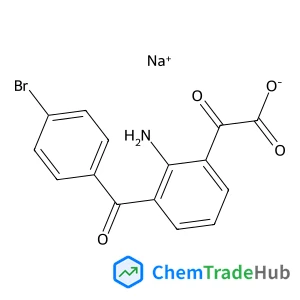
![[1-(5-Methyl-2-pyridinyl)-1H-pyrazol-4-yl]methanol structure](https://static.chemtradehub.com/structs/143/1439822-99-7-6cc9.webp "[1-(5-Methyl-2-pyridinyl)-1H-pyrazol-4-yl]methanol structure")
[1-(5-Methyl-2-pyridinyl)-1H-pyrazol-4-yl]methanol
CAS Number:
1439822-99-7
Molecular Formula:
C10H11N3O
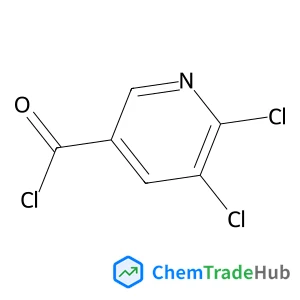

Methyl 2-amino-4-(4-chlorophenyl)-5-pyrimidinecarboxylate
CAS Number:
1133115-56-6
Molecular Formula:
C12H10ClN3O2
Recommended Suppliers




Disclaimer
This page provides academic journal information for reference and research purposes only. We are not affiliated with any journal publishers and do not handle publication submissions. For publication-related inquiries, please contact the respective journal publishers directly.
If you notice any inaccuracies in the information displayed, please contact us at support@chemtradehub.com. We will promptly review and address your concerns.