












![1H-Imidazo[4,5-c]pyridine-7-carboxylic acid structure](https://static.chemtradehub.com/structs/123/1234616-39-7-1344.webp "1H-Imidazo[4,5-c]pyridine-7-carboxylic acid structure")
The reactions of cytidine and 2′-deoxycytidine with SO4˙− revisited. Pulse radiolysis and product studies
Literature Information
Publication Date
2002-12-09
DOI
10.1039/B209626A
Impact Factor
3.876
Authors
Charuvila T. Aravindakumar, Man Nien Schuchmann, Balijepalli S. M. Rao, Justus von Sonntag
View Original
Abstract
The reactions of SO4˙− with 2′-deoxycytidine 1a and cytidine 1b lead to very different intermediates (base radicals with 1a, sugar radicals with 1b). The present study provides spectral and kinetic data for the various intermediates by pulse radiolysis as well as information on final product yields (free cytosine). Taking these and literature data into account allows us to substantiate but also modify in essential aspects the current mechanistic concept (H. Catterall, M. J. Davies and B. C. Gilbert, J. Chem. Soc., Perkin Trans. 2, 1992, 1379). SO4˙− radicals have been generated radiolytically in the reaction of peroxodisulfate with the hydrated electron (and the H˙ atom). In the reaction of SO4˙− with 1a (k = 1.6 × 10⁹ dm3 mol−1 s−1), a transient (λmax = 400 nm, shifted to 450 nm at pH 3) is observed. This absorption is due to two intermediates. The major component (λmax ≈ 385 nm) does not react with O2 and has been attributed to an N-centered radical 4a formed upon sulfate release and deprotonation at nitrogen. The minor component, rapidly wiped out by O2, must be due to C-centered OH-adduct radical(s) 6a and/or 7a suggested to be formed by a water-induced nucleophilic replacement. These radicals decay by second-order kinetics. Free cytosine is only formed in low yields (G = 0.14 × 10⁻⁷ mol J−1 upon electron-beam irradiation). In contrast, 1b gives rise to an intermediate absorbing at λmax = 530 nm (shifted to 600 nm in acid solution) which rapidly decays (k = 6 × 10⁴ s−1). In the presence of O2, the decay is much faster (k ≈ 1.3 × 10⁹ dm3 mol−1 s−1) indicating that this species must be a C-centered radical. This has been attributed to the C(5)-yl radical 8 formed upon the reaction of the C(2′)-OH group with the cytidine SO4˙−-adduct radical 2b. This reaction competes very effectively with the corresponding reaction of water and the release of sulfate and a proton generating the N-centered radical. Upon the decay of 8, sugar radical 11 is formed with the release of cytosine. The latter is formed with a G value of 2.8 × 10⁻⁷ mol J−1 (85% of primary SO4˙−) at high dose rates (electron beam irradiation). At low dose rates (γ-radiolysis) its yield is increased to 7 × 10⁻⁷ mol J−1 due to a chain reaction involving peroxodisulfate and reducing free radicals. Phosphate buffer prevents the formation of the sugar radical at the SO4˙−-adduct stage by enhancing the rate of sulfate release by deprotonation of 2b and also by speeding up the decay of the C(5)-yl radical into another (base) radical. Cytosine release in cytidine is mechanistically related to strand breakage in poly(C). Literature data on the effect of dioxygen on strand breakage yields in poly(C) induced by SO4˙− (suppressed) and upon photoionisation (unaltered) lead us to conclude that in poly(C) and also in the present system free radical cations are not involved to a major extent. This conclusion modifies an essential aspect of the current mechanistic concept.
Related Literature
Cobalt catalysts: very efficient for hydrogenation of biomass-derived ethyl levulinate to gamma-valerolactone under mild conditions
Huacong Zhou, Jinliang Song, Honglei Fan, Binbin Zhang, Yingying Yang, Jiayin Hu, Qinggong Zhu, Buxing Han
2014-06-05
Paper
DOI: 10.1039/C4GC00482E
Visible-light-induced photocatalytic formyloxylation reactions of 3-bromooxindoles with water and DMF: the scope and mechanism
You-Quan Zou, Wei Guo, Feng-Lei Liu, Liang-Qiu Lu, Jia-Rong Chen
2014-05-08
Paper
DOI: 10.1039/C4GC00647J
Correction: Catalytic aerobic oxidation of renewable furfural to maleic anhydride and furanone derivatives with their mechanistic studies
Jihong Lan, Zhuqi Chen, Jinchi Lin, Guochuan Yin
2014-09-10
Correction
DOI: 10.1039/C4GC90039A
A recoverable Pd nanocatalyst for selective semi-hydrogenation of alkynes: hydrogenation of benzyl-propargylamines as a challenging model
Paula M. Uberman, Natalia J. S. Costa, Rafaela C. Carmona, Alcindo A. Dos Santos, Liane M. Rossi
2014-07-22
Paper
DOI: 10.1039/C4GC00669K
Evaluating water miscible deep eutectic solvents (DESs) and ionic liquids as potential lubricants
Andrew P. Abbott, Robert C. Harris, Karl S. Ryder
2014-06-18
Paper
DOI: 10.1039/C4GC00952E
Total photocatalysis conversion from cyclohexane to cyclohexanone by C3N4/Au nanocomposites
Juan Liu, Yanmei Yang, Naiyun Liu, Yang Liu, Hui Huang, Zhenhui Kang
2014-07-21
Paper
DOI: 10.1039/C4GC01126K
Fluoro-functionalized polymeric ionic liquids: highly efficient catalysts for CO2 cycloaddition to cyclic carbonates under mild conditions
Zhen-Zhen Yang, Yanfei Zhao, Guipeng Ji, Hongye Zhang, Bo Yu, Xiang Gao, Zhimin Liu
2014-06-06
Communication
DOI: 10.1039/C4GC00730A
An aza-Michael addition protocol to fluoroalkylated β-amino acid derivatives and enantiopure trifluoromethylated N-heterocycles
Xing Yang, Zhuo Chen, Yuan Cai, Yi-Yong Huang, Norio Shibata
2014-08-15
Communication
DOI: 10.1039/C4GC01357C
Sustainable polyacetals from isohexides
B. S. Rajput, S. R. Gaikwad, S. K. Menon, S. H. Chikkali
2014-04-25
Paper
DOI: 10.1039/C4GC00543K
Carbon-supported iron–ionic liquid: an efficient and recyclable catalyst for benzylation of 1,3-dicarbonyl compounds with alcohols
P. Moriel, A. B. García
2014-07-08
Paper
DOI: 10.1039/C4GC00755G
You might also like
Compound Q&A
How should 2-Methylbenzene-1,4-diamine dihydrochloride (CAS: 615-45-2) be stored?
2-Methylbenzene-1,4-diamine dihydrochloride (CAS: 615-45-2) should be stored in ...
615-45-22-Methylbenzene-1,4-...
Compound Q&A
Is (1S,4S)-2,5-Diazabicyclo[2.2.1]heptane dihydrobromide (CAS: 132747-20-7) safe?
(1S,4S)-2,5-Diazabicyclo[2.2.1]heptane dihydrobromide is generally considered sa...
132747-20-7(1S,4S)-2,5-Diazabic...
Compound Q&A
What industries use (6-Chloropyridazin-3-YL)methanamine (CAS: 871826-15-2)?
(6-Chloropyridazin-3-YL)methanamine finds applications in the pharmaceutical ind...
871826-15-2(6-Chloropyridazin-3...
Compound Q&A
What are the main uses of 2-Fluoro-3-methylphenol (CAS: 77772-72-6)?
2-Fluoro-3-methylphenol is primarily used in the synthesis of pharmaceuticals, p...
77772-72-62-Fluoro-3-methylphe...
Compound Q&A
What precautions should be taken when handling 3-Methoxy-4-nitrobenzonitrile (CAS: 177476-75-4)?
When handling 3-Methoxy-4-nitrobenzonitrile, it is important to wear appropriate...
177476-75-43-Methoxy-4-nitroben...
Compound Q&A
What precautions should be taken when handling 1,3-Oxazolo[4,5-b]pyridine-2(3H)-thione (CAS: 211949-57-4)?
When handling 1,3-Oxazolo[4,5-b]pyridine-2(3H)-thione (CAS: 211949-57-4), it is ...
211949-57-4[1,3]Oxazolo[4,5-b]p...
Compound Q&A
What regulatory guidelines apply to 4-Ethynylbenzamide (CAS: 90347-86-7)?
4-Ethynylbenzamide (CAS: 90347-86-7) falls under various regulatory guidelines i...
90347-86-74-Ethynylbenzamide
Compound Q&A
What are the main uses of 3-(2-Ethylphenyl)-2-thioxo-4-imidazolidinone (CAS: 186822-57-1)?
3-(2-Ethylphenyl)-2-thioxo-4-imidazolidinone is primarily used as an intermediat...
186822-57-13-(2-Ethylphenyl)-2-...
Compound Q&A
What is (2-Fluoro-6-methoxyphenyl)acetic acid (CAS: 500912-19-6)?
(2-Fluoro-6-methoxyphenyl)acetic acid, also known as 4-fluoro-3-methoxybenzoic a...
500912-19-6(2-Fluoro-6-methoxyp...
Compound Q&A
What is the market or research trend for 2-[4-(Hydroxymethyl)phenoxy]ethanol (CAS: 102196-18-9)?
Market trends for 2-[4-(Hydroxymethyl)phenoxy]ethanol (CAS: 102196-18-9) indicat...
102196-18-92-[4-(Hydroxymethyl)...
Source Journal
Organic & Biomolecular Chemistry

CiteScore:
3.4
Self-citation Rate:
10.3%
Articles per Year:
1041
Organic & Biomolecular Chemistry (OBC) publishes original and high impact research and reviews in organic chemistry. We welcome research that shows new or significantly improved protocols or methodologies in total synthesis, synthetic methodology or physical and theoretical organic chemistry as well as research that shows a significant advance in the organic chemistry or molecular design aspects of chemical biology, catalysis, supramolecular and macromolecular chemistry, theoretical chemistry, mechanism-oriented physical organic chemistry, medicinal chemistry or natural products. Articles published in the journal should report new work which makes a highly-significant impact in the field. Routine and incremental work is generally not suitable for publication in the journal. More details about key areas of our scope are below. In all cases authors should include in their article clear rationale for why their research has been carried out.
Recommended Compounds
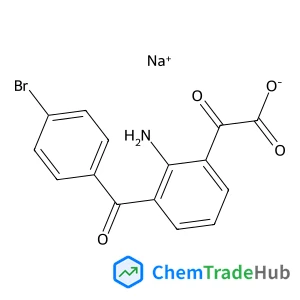
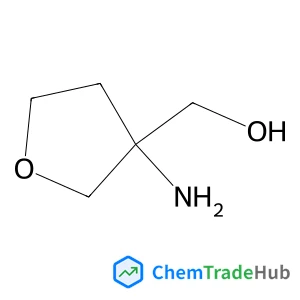
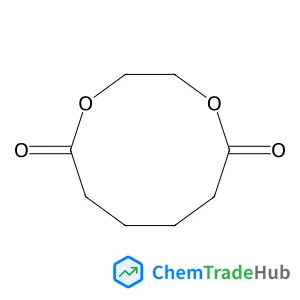
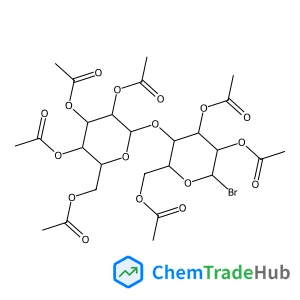
2,3,6-Tri-O-acetyl-4-O-(2,3,4,6-tetra-O-acetyl-beta-D-galactopyranosyl)-alpha-D-glucopyranosyl bromide
CAS Number:
4753-07-5
Molecular Formula:
C26H35BrO17
Recommended Suppliers



Disclaimer
This page provides academic journal information for reference and research purposes only. We are not affiliated with any journal publishers and do not handle publication submissions. For publication-related inquiries, please contact the respective journal publishers directly.
If you notice any inaccuracies in the information displayed, please contact us at support@chemtradehub.com. We will promptly review and address your concerns.