












Shining light on fluoride detection: a comprehensive study exploring the potential of coumarin precursors as selective turn-on fluorescent chemosensors
Literature Information
Publication Date
2023-11-13
DOI
10.1039/D3OB01563G
Impact Factor
3.876
Authors
Sara Amer, Vincent Joseph, Bat-El Oded, Vered Marks, Flavio Grynszpan, Mindy Levine
View Original
Abstract
In this study, we report a fluoride chemosensor based on the use of a non-fluorescent pre-coumarin, compound 1. This compound undergoes selective fluoride-triggered formation of coumarin 2, with a concomitant turn-on fluorescence signal. Although compound 1 exists as a mixture of alkene isomers (2 : 1 in favor of the E isomer), only the minor Z-isomer undergoes cyclization. Nonetheless, comprehensive computational and experimental studies provide evidence that in situ isomerization of E-1 to Z-1, followed by fluoride-triggered phenolate evolution and intramolecular cyclization, facilitates the generation of coumarin 2 in high yield. Moreover, this system is an effective turn-on fluorescence sensor for fluoride anions, which displays outstanding selectivity (limited response to other commonly occurring analytes), sensitivity (lowest reported limits of detection for this sensor class), and practicality (works in solution and on paper to generate both fluorometric and colorimetric responses). Ongoing efforts are focused on expanding this paradigm to other pre-coumarin scaffolds, which also undergo analyte-specific coumarin formation accompanied by turn-on fluorescence.
Related Literature
Room-temperature transfer hydrogenation and fast separation of unsaturated compounds over heterogeneous catalysts in an aqueous solution of formic acid
Ling-Hong Gong, Yi-Yu Cai, Xin-Hao Li, Ya-Nan Zhang, Juan Su, Jie-Sheng Chen
2014-06-17
Communication
DOI: 10.1039/C4GC00981A
Catalytic bio–chemo and bio–bio tandem oxidation reactions for amide and carboxylic acid synthesis
Beatrice Bechi, Susanne Herter, Shane McKenna, Christopher Riley, Silke Leimkühler, Nicholas J. Turner, Andrew J. Carnell
2014-08-18
Communication
DOI: 10.1039/C4GC01321B
High-yield production of levulinic acid from cellulose and its upgrading to γ-valerolactone
Daqian Ding, Jianjian Wang, Jinxu Xi, Xiaohui Liu, Guanzhong Lu, Yanqin Wang
2014-06-19
Paper
DOI: 10.1039/C4GC00737A
Molybdenum carbide nanoparticles within carbon nanotubes as superior catalysts for γ-valerolactone production via levulinic acid hydrogenation
Estevão F. Mai, Marta A. Machado, Thomas E. Davies, Jose A. Lopez-Sanchez, Victor Teixeira da Silva
2014-07-10
Communication
DOI: 10.1039/C4GC00920G
Integrated conversion of agroindustrial residue with high pressure CO2 within the biorefinery concept
Ana R. C. Morais, Ana C. Mata, Rafal Bogel-Lukasik
2014-07-08
Paper
DOI: 10.1039/C4GC01093K
Correction: Catalytic aerobic oxidation of renewable furfural to maleic anhydride and furanone derivatives with their mechanistic studies
Jihong Lan, Zhuqi Chen, Jinchi Lin, Guochuan Yin
2014-09-10
Correction
DOI: 10.1039/C4GC90039A
Highly stereoselective anti-Markovnikov hydrothiolation of alkynes and electron-deficient alkenes by a supported Cu-NHC complex
Yong Yang, Robert M. Rioux
2014-05-29
Paper
DOI: 10.1039/C4GC00642A
Brønsted acid ionic liquid catalyzed facile synthesis of 3-vinylindoles through direct C3 alkenylation of indoles with simple ketones
Amir Taheri, Changhui Liu, Bingbing Lai, Cheng Cheng, Xiaojuan Pan
2014-05-27
Communication
DOI: 10.1039/C4GC00840E
You might also like
Compound Q&A
How should 2-Methylbenzene-1,4-diamine dihydrochloride (CAS: 615-45-2) be stored?
2-Methylbenzene-1,4-diamine dihydrochloride (CAS: 615-45-2) should be stored in ...
615-45-22-Methylbenzene-1,4-...
Compound Q&A
Is (1S,4S)-2,5-Diazabicyclo[2.2.1]heptane dihydrobromide (CAS: 132747-20-7) safe?
(1S,4S)-2,5-Diazabicyclo[2.2.1]heptane dihydrobromide is generally considered sa...
132747-20-7(1S,4S)-2,5-Diazabic...
Compound Q&A
What industries use (6-Chloropyridazin-3-YL)methanamine (CAS: 871826-15-2)?
(6-Chloropyridazin-3-YL)methanamine finds applications in the pharmaceutical ind...
871826-15-2(6-Chloropyridazin-3...
Compound Q&A
What are the main uses of 2-Fluoro-3-methylphenol (CAS: 77772-72-6)?
2-Fluoro-3-methylphenol is primarily used in the synthesis of pharmaceuticals, p...
77772-72-62-Fluoro-3-methylphe...
Compound Q&A
What precautions should be taken when handling 3-Methoxy-4-nitrobenzonitrile (CAS: 177476-75-4)?
When handling 3-Methoxy-4-nitrobenzonitrile, it is important to wear appropriate...
177476-75-43-Methoxy-4-nitroben...
Compound Q&A
What precautions should be taken when handling 1,3-Oxazolo[4,5-b]pyridine-2(3H)-thione (CAS: 211949-57-4)?
When handling 1,3-Oxazolo[4,5-b]pyridine-2(3H)-thione (CAS: 211949-57-4), it is ...
211949-57-4[1,3]Oxazolo[4,5-b]p...
Compound Q&A
What regulatory guidelines apply to 4-Ethynylbenzamide (CAS: 90347-86-7)?
4-Ethynylbenzamide (CAS: 90347-86-7) falls under various regulatory guidelines i...
90347-86-74-Ethynylbenzamide
Compound Q&A
What are the main uses of 3-(2-Ethylphenyl)-2-thioxo-4-imidazolidinone (CAS: 186822-57-1)?
3-(2-Ethylphenyl)-2-thioxo-4-imidazolidinone is primarily used as an intermediat...
186822-57-13-(2-Ethylphenyl)-2-...
Compound Q&A
What is (2-Fluoro-6-methoxyphenyl)acetic acid (CAS: 500912-19-6)?
(2-Fluoro-6-methoxyphenyl)acetic acid, also known as 4-fluoro-3-methoxybenzoic a...
500912-19-6(2-Fluoro-6-methoxyp...
Compound Q&A
What is the market or research trend for 2-[4-(Hydroxymethyl)phenoxy]ethanol (CAS: 102196-18-9)?
Market trends for 2-[4-(Hydroxymethyl)phenoxy]ethanol (CAS: 102196-18-9) indicat...
102196-18-92-[4-(Hydroxymethyl)...
Source Journal
Organic & Biomolecular Chemistry

CiteScore:
3.4
Self-citation Rate:
10.3%
Articles per Year:
1041
Organic & Biomolecular Chemistry (OBC) publishes original and high impact research and reviews in organic chemistry. We welcome research that shows new or significantly improved protocols or methodologies in total synthesis, synthetic methodology or physical and theoretical organic chemistry as well as research that shows a significant advance in the organic chemistry or molecular design aspects of chemical biology, catalysis, supramolecular and macromolecular chemistry, theoretical chemistry, mechanism-oriented physical organic chemistry, medicinal chemistry or natural products. Articles published in the journal should report new work which makes a highly-significant impact in the field. Routine and incremental work is generally not suitable for publication in the journal. More details about key areas of our scope are below. In all cases authors should include in their article clear rationale for why their research has been carried out.
Recommended Compounds
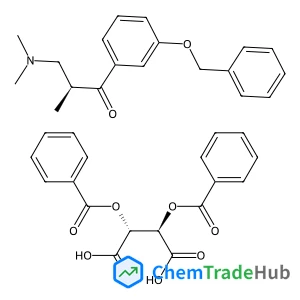
(S)-1-(3-(Benzyloxy)phenyl)-3-(dimethylamino)-2-methylpropan-1-one (2r,3r)-2,3-bis(benzoyloxy)succinate
CAS Number:
1004315-81-4
Molecular Formula:
C37H37NO10
Recommended Suppliers








Disclaimer
This page provides academic journal information for reference and research purposes only. We are not affiliated with any journal publishers and do not handle publication submissions. For publication-related inquiries, please contact the respective journal publishers directly.
If you notice any inaccuracies in the information displayed, please contact us at support@chemtradehub.com. We will promptly review and address your concerns.