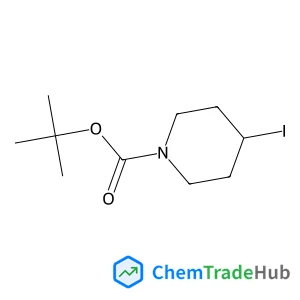
2-Methyl-2-propanyl 4-iodo-1-piperidinecarboxylate
CAS Number:
301673-14-3
Molecular Formula:
C10H18INO2
Chandra Sekhar Bongu, Arthi Gopalakrishnan, Chandra Shekhar Sharma
Developing low-cost electrodes for energy storage devices with high energy and power densities remains a daunting problem. Herein, interconnected porous carbon is created using the Phyllanthus emblica (amla, also known as Indian gooseberry) fruit as a precursor and KOH as an activating agent by a simple carbonization method combined with chemical activation. The activated amla-derived carbon (AAC) has a large specific surface area (up to 1661 m2 g−1) and a hierarchical porous structure with mesopores. Furthermore, the large interlayer spacing (0.367 nm) and the residual elements (N and O) in the porous carbon structure substantially enhance the conductivity and reaction activity. The AAC showed a high reversible capacity of 295 mA h g−1 at 100 mA g−1, as well as remarkable rate properties and good cycling life stability (210 mA h g−1 after 1500 cycles at 1000 mA g−1) with 99.8% coulombic efficiency, when evaluated as an electrode material for potassium ion batteries. The AAC electrode in a symmetric supercapacitor device exhibited a remarkable specific energy of 57.5 W h kg−1 at a specific power of 300 W kg−1 in an organic electrolyte (1 M TEABF4/AN) with a wide voltage window of 0.0–3.0 V. Moreover, it retained a specific energy of 25 W h kg−1 even at a high specific power of 3000 W kg−1, indicating its high-rate capability. Furthermore, it exhibited an excellent efficiency of 97.3% over 10 000 charge–discharge cycles.
Hamid Ardolic
DOI: 10.1039/C5PY01455G
Jie Yang, Zhengtao Li, Yujuan Zhou, Guocan Yu
DOI: 10.1039/C4PY01042F
Rajeev Kumar, Priyadarsi De, Bin Zheng, Kuo-Wei Huang, Jack Emert, Rudolf Faust
DOI: 10.1039/C4PY01039F
Philippe Dubois, Olivier Coulembier, Pascal Gerbaux, Antony Memboeuf
DOI: 10.1039/C4PY01087F
Jing Yang Quek, Xuechao Liu, Peter J. Roth, Andrew B. Lowe
DOI: 10.1039/C4PY01108B
DOI: 10.1039/C4PY90087A
John B. Grande, Tomas Urlich, Tara Dickie, Michael A. Brook
DOI: 10.1039/C4PY00680A
Karoline Täuber, Frederik R. Wurm, Bernhard Schartel
DOI: 10.1039/C4PY00830H
Zilong Wang, Lulin Yan, Lei Zhang, Yujue Chen, Hui Li, Jibo Zhang, Yan Zhang, Xing Li, Bin Xu, Xueqi Fu, Zaicheng Sun, Wenjing Tian
DOI: 10.1039/C4PY00764F
Waste containing (6-Bromo-2-naphthyl)oxy](dimethyl)(2-methyl-2-propanyl)silane (...
7-Fluoro-4-isoquinolinecarboxylic acid can be synthesized via a multi-step proce...
2,3,5,6-Tetrabromothieno[3,2-b]thiophene is a crystalline compound with a high m...
1-[4-(Benzylamino)-7,8-dihydro-5H-pyrano[4,3-d]pyrimidin-2-yl]-2-methyl-1H-indol...
The market for imidazo[5,1-d]-1,2,3,5-tetrazine-8-carboxylic acid, 3,4-dihydro-3...
3-(Triisopropylsilyl)propiolaldehyde is a synthetic organic compound with the CA...
6-Nitro-2H-1,4-benzoxazin-3(4H)-one (CAS: 81721-87-1) is subject to various regu...
Waste containing (3-Fluorophenyl)(4-{[(2-methyl-2-propanyl)oxy]carbonyl}-1-piper...
N,N'-4,4'-Biphenyldiyldiisonicotinamide is a white crystalline solid with a mole...
6-Bromo-8-fluoro-2-quinazolinol is primarily used in the pharmaceutical industry...

NJC (New Journal of Chemistry) is a broad-based primary journal encompassing all branches of chemistry and its sub-disciplines. It contains full research articles, communications, perspectives and focus articles. This well-established journal, owned by the Centre National de la Recherche Scientifique (CNRS) of France, has been co-published with the Royal Society of Chemistry since January 1998. NJC is the forum for the publication of high-quality, original and significant work that opens new directions in chemistry or other scientific disciplines. In addition to having a significant chemical component, work published in NJC must demonstrate that it will have an impact on areas of research other than that of the reported work.
![5-Bromoimidazo[1,2-a]pyridine structure](https://static.chemtradehub.com/structs/692/69214-09-1-d8e2.webp "5-Bromoimidazo[1,2-a]pyridine structure")