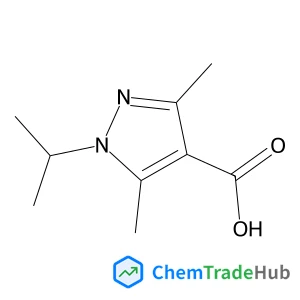
1-isopropyl-3,5-dimethyl-1H-pyrazole-4-carboxylic acid
CAS Number:
1007542-01-9
Molecular Formula:
C9H14N2O2
Lijuan Wang, Xiaowei Fa, Yunzhi Tang, Juan Liao, Yuhui Tan, Ning Song, Jian Huang, Zhen Sun, Men Zhao, Weifei Liu, Man Zhao
Driven by the booming development of signal transmission in 5G, the internet of vehicles and cloud computing, the trade-off between the low profile and high binding force of copper foil has become a prominent issue. Here, we prepared a novel copper foil (RG-VLP) with an ultra-low profile and high peel strength via electrodeposition. The physicochemical properties of the modified copper foils have been studied. The obtained results indicate that the surface of the copper foil exhibits an average diameter of 420 nm copper nanoparticles and a 52% higher surface area than bare copper foil, contributing to the improved peel strength from 0.05 to 0.5 N mm−1. Further contact angle research shows that the rice-grain copper nanoparticles reduced the surface energy of the copper foil by 42%, which agrees well with the significant improvement of the surface area ratio and peel strength. Besides, cyclic voltammetry tests show that the micro-coarsening process belongs to the three-dimensional transient nucleation type.
Hideo Sawada
DOI: 10.1039/C1PY00325A
Minoru Sohmiya, Shingo Omata
DOI: 10.1039/C2PY00465H
Hirofumi Tsuruta, Yoshihisa Fujii, Keiji Tanaka
DOI: 10.1039/C1PY00488C
Taek Joon Lee, Yong-Gi Ko, Hung-Ju Yen, Kyungtae Kim, Dong Min Kim, Wonsang Kwon, Suk Gyu Hahm, Guey-Sheng Liou, Moonhor Ree
DOI: 10.1039/C2PY00617K
Tanja Junkers, Joke Vandenbergh, Peter Adriaensens, Laurence Lutsen
DOI: 10.1039/C1PY00345C
Mehmet Atilla Tasdelen
DOI: 10.1039/C1PY00041A
Matthew T. Hunley, Santanu Kundu, Peter M. Johnson, Michael S. Waters, Richard A. Gross, Kathryn L. Beers
DOI: 10.1039/C1PY00447F
Mark Long, David W. Thornthwaite, Suzanne H. Rogers, Francis R. Livens, Steve P. Rannard
DOI: 10.1039/C1PY00397F
Maren E. Buck
DOI: 10.1039/C1PY00314C
Xiuli Hu, Zhigang Xie, Yubin Huang, Xiabin Jing
DOI: 10.1039/C2PY20049J
4-(4-tert-Butylphenyl)-1H-pyrazol-3-amine finds applications in various industri...
H3TATAB is used in the pharmaceutical industry for the synthesis of certain orga...
1-Ethyl-3-fluorobenzene (CAS: 696-39-9) is primarily used as a precursor in the ...
1-(tert-Butoxycarbonyl)-4-(4-methoxyphenyl)pyrrolidine-3-carboxylic acid is prim...
1-Cyclobutyl-4-piperidinone (CAS: 359880-05-0) is a colorless or white crystalli...
Pyridine-2,6-dicarboxylic acid mono-tert-butyl ester (CAS: 575433-76-0) is a che...
The market for 2,3-Difluorophenylalanine (CAS: 236754-62-4) is growing with incr...
(2-Hydroxy-1-naphthyl)boronic acid can be synthesized through the reduction of 2...
This compound is a crystalline solid with a molecular weight of approximately 52...
While 5,7-Dihydroxy-4-oxo-2-(3,4,5-trihydroxyphenyl)-4H-chromen-3-yl beta-D-gluc...
![6-[2-(Trifluoromethoxy)phenyl]-2-pyridinecarboxylic acid structure](https://static.chemtradehub.com/structs/887/887983-48-4-f6ac.webp "6-[2-(Trifluoromethoxy)phenyl]-2-pyridinecarboxylic acid structure")
![7-Amino-5-methyl-5,7-dihydro-6H-dibenzo[b,d]azepin-6-one hydrochloride (1:1) structure](https://static.chemtradehub.com/structs/209/209984-32-7-9912.webp "7-Amino-5-methyl-5,7-dihydro-6H-dibenzo[b,d]azepin-6-one hydrochloride (1:1) structure")