


Recent advances in ambient electrochemical methane conversion to oxygenates using metal oxide electrocatalysts
Literature Information
Publication Date
2023-12-06
DOI
10.1039/D3GC03513A
Impact Factor
10.182
Authors
Fengli Liu, Yong Yan, Ge Chen, Dong Wang
View Original
Abstract
To reach a decarbonized future, the conversion of greenhouse gases into green fuels and valuable chemicals is of crucial importance. Methane emissions are the second most significant contributor to global warming. Recent advances in electrocatalytic partial oxidation of methane to high-value fuels at ambient temperatures promise to sidestep the requirement of high temperature in conventional thermal catalysis and provide a revolutionary, sustainable, and decentralized alternative to flaring. Electrocatalysts that can selectively produce valuable compounds from methane under mild conditions are essential for commercialization. This review covers current developments in the electrochemical partial oxidation of methane to oxygenates, with an emphasis on metal oxide electrocatalysts. The regularly deployed strategies, including doping and interface engineering, are systematically reviewed in detail. In addition, the design of the electrolytic cell, the electrolyte, time, potential, and temperature are examined thoroughly and discussed.
Recommended Journals

Israel Journal of Chemistry

Pharmacological Reviews

Molecular Pharmacology

Helvetica Chimica Acta

Journal of Medicinal Chemistry

Journal of Heterocyclic Chemistry

Science

Proceedings of the National Academy of Sciences of the United States of America

European Journal of Wood and Wood Products

Fibre Chemistry
Related Literature
The synthesis of thermoresponsive POSS-based eight-arm star poly(N-isopropylacrylamide): A comparison between Z-RAFT and R-RAFT strategies
Bo Pang, Rui Liu, Guang Han, Wei Wang
2021-03-02
Paper
DOI: 10.1039/D1PY00087J
The effect of alkyl chain lengths on the red-to-near-infrared emission of boron-fused azomethine conjugated polymers and their film-state stimuli-responsivities
Shunsuke Ohtani, Natsumi Yamada, Masayuki Gon, Kazuo Tanaka, Yoshiki Chujo
2021-04-19
Paper
DOI: 10.1039/D1PY00213A
A highly efficient metal-free protocol for the synthesis of linear polydicyclopentadiene
Xuejin Yang, Laura M. Murphy, Scott M. Grayson
2021-04-14
Paper
DOI: 10.1039/D1PY00191D
Synthesis and characterization of a pH-responsive mesalazine-polynorbornene supramolecular assembly
Vajk Farkas, Gábor Turczel, János Deme, László Trif, Anvar Mirzaei, Dang Vu Hai, Sándor Kéki, Péter Huszthy, Róbert Tuba
2021-03-05
Paper
DOI: 10.1039/D1PY00194A
Hierarchical ordering and multilayer structure of poly(ε-caprolactone) end-functionalized by a liquid crystalline unit: role of polymer crystallization
Wenqing Xu, Xing Li, Wenhua Yuan, Jian Zhou
2021-07-05
Paper
DOI: 10.1039/D1PY00702E
Droplet nucleation in miniemulsion thiol–ene step photopolymerization
Marc Schmutz
2021-03-08
Paper
DOI: 10.1039/D1PY00139F
Helical polymer self-assembly and chiral nanostructure formation
Randall A. Scanga, James F. Reuther
2021-02-16
Review Article
DOI: 10.1039/D0PY01558J
You might also like
Compound Q&A
How should waste containing 2-Ethyl-4-Methyl-1H-Imidazole-5-Carbaldehyde (CAS: 88634-80-4) be handled?
Waste containing 2-Ethyl-4-Methyl-1H-Imidazole-5-Carbaldehyde (CAS: 88634-80-4) ...
88634-80-42-Ethyl-4-Methyl-1H-...
Compound Q&A
What industries use Triethoxy(octyl)silane (CAS: 1385031-14-0)?
Triethoxy(octyl)silane (CAS: 1385031-14-0) is widely used in the pharmaceuticals...
1385031-14-0Triethoxy(octyl)sila...
Compound Q&A
Are there alternatives to 3-iodo-7-nitro-1H-indazole (CAS: 864724-64-1) in synthesis?
Several alternatives to 3-iodo-7-nitro-1H-indazole (CAS: 864724-64-1) exist in t...
864724-64-13-iodo-7-nitro-1H-in...
Compound Q&A
Are there alternatives to Benzene, bis[(trimethoxysilyl)ethyl] (CAS: 266317-71-9) in synthesis?
Yes, there are alternatives to Benzene, bis[(trimethoxysilyl)ethyl] (CAS: 266317...
266317-71-9Benzene, bis[(trimet...
Compound Q&A
Is Isothiazole-3-carbonitrile (CAS: 1452-17-1) safe?
Isothiazole-3-carbonitrile (CAS: 1452-17-1) is generally considered safe when us...
1452-17-1Isothiazole-3-carbon...
Compound Q&A
Is (3-Chlorophenyl)methanol (CAS: 873-63-2) safe?
(3-Chlorophenyl)methanol (CAS: 873-63-2) is considered low to moderately toxic. ...
873-63-2(3-Chlorophenyl)meth...
Compound Q&A
How is (2S,3S)-2-Hydroxy-3-({[(2-methyl-2-propanyl)oxy]carbonyl}amino)-3-(2-naphthyl)propanoic acid (CAS: 959583-98-3) typically synthesized?
(2S,3S)-2-Hydroxy-3-({[(2-methyl-2-propanyl)oxy]carbonyl}amino)-3-(2-naphthyl)pr...
959583-98-3(2S,3S)-2-Hydroxy-3-...
Compound Q&A
What precautions should be taken when handling Methyl 2-(bromomethyl)-5-methoxybenzoate (CAS: 788081-99-2)?
Proper handling of methyl 2-(bromomethyl)-5-methoxybenzoate requires the use of ...
788081-99-2Methyl 2-(bromomethy...
Compound Q&A
What is 6,8-Dibromoimidazo[1,2-a]pyridine-2-carboxylic acid (CAS: 904805-36-3)?
6,8-Dibromoimidazo[1,2-a]pyridine-2-carboxylic acid (CAS: 904805-36-3) is an aro...
904805-36-36,8-Dibromoimidazo[1...
Compound Q&A
Is 3-Amino-5-bromo-2-pyridinecarbonitrile (CAS: 573675-27-1) safe?
3-Amino-5-bromo-2-pyridinecarbonitrile is considered safe when handled under pro...
573675-27-13-Amino-5-bromo-2-py...
Source Journal
Green Chemistry

CiteScore:
16.1
Self-citation Rate:
7.5%
Articles per Year:
944
Green Chemistry provides a unique forum for the publication of innovative research on the development of alternative green and sustainable technologies. The scope of Green Chemistry is based on, but not limited to, the definition proposed by Anastas and Warner (Green Chemistry: Theory and Practice, P T Anastas and J C Warner, Oxford University Press, Oxford, 1998). Green chemistry is the utilisation of a set of principles that reduces or eliminates the use or generation of hazardous substances in the design, manufacture and application of chemical products. Green Chemistry is at the frontiers of this continuously-evolving interdisciplinary science and publishes research that attempts to reduce the environmental impact of the chemical enterprise by developing a technology base that is inherently non-toxic to living things and the environment. Submissions on all aspects of research relating to the endeavour are welcome. The journal publishes original and significant cutting-edge research that is likely to be of wide general appeal. To be published, work must present a significant advance in green chemistry. Papers must contain a comparison with existing methods and demonstrate advantages over those methods before publication can be considered. For more information please see this Editorial. Coverage includes the following, but is not limited to: Design (e.g. biomimicry, design for degradation/recycling/reduced toxicity…) Reagents & Feedstocks (e.g. renewables, CO2, solvents, auxiliary agents, waste utilization…) Synthesis (e.g. organic, inorganic, synthetic biology…) Catalysis (e.g. homogeneous, heterogeneous, enzyme, whole cell…) Process (e.g. process design, intensification, separations, recycling, efficiency…) Energy (e.g. renewable energy, fuels, photovoltaics, fuel cells, energy storage, energy carriers…) Applications (e.g. electronics, dyes, consumer products, coatings, pharmaceuticals, preservatives, building materials, chemicals for industry/agriculture/mining…) Impact (e.g. safety, metrics, LCA, sustainability, (eco)toxicology…) Green chemistry is, by definition, a continuously-evolving frontier. Therefore, the inclusion of a particular material or technology does not, of itself, guarantee that a paper is suitable for the journal. To be suitable, the novel advance should have the potential for reduced environmental impact relative to the state of the art. Green Chemistry does not normally deal with research associated with 'end-of-pipe' or remediation issues.
Recommended Compounds
![4-chloro-N-[5-methyl-2-(7H-pyrrolo[2,3-d]pyrimidine-4-carbonyl)-3-pyridyl]-3-(trifluoromethyl)benzenesulfonamide structure](https://static.chemtradehub.com/structs/110/1100318-47-5-127d.webp "4-chloro-N-[5-methyl-2-(7H-pyrrolo[2,3-d]pyrimidine-4-carbonyl)-3-pyridyl]-3-(trifluoromethyl)benzenesulfonamide structure")
4-chloro-N-[5-methyl-2-(7H-pyrrolo[2,3-d]pyrimidine-4-carbonyl)-3-pyridyl]-3-(trifluoromethyl)benzenesulfonamide
CAS Number:
1100318-47-5
Molecular Formula:
C20H13ClF3N5O3S
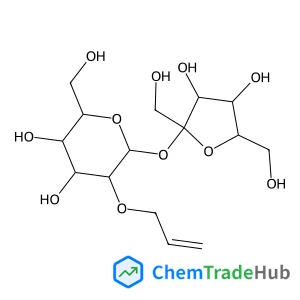
![[3-Chloro-5-(diethylcarbamoyl)phenyl]boronic acid structure](https://static.chemtradehub.com/structs/957/957120-59-1-febc.webp "[3-Chloro-5-(diethylcarbamoyl)phenyl]boronic acid structure")
[3-Chloro-5-(diethylcarbamoyl)phenyl]boronic acid
CAS Number:
957120-59-1
Molecular Formula:
C11H15BClNO3
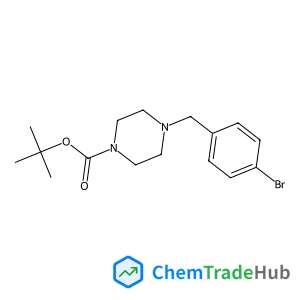
2-Methyl-2-propanyl 4-(4-bromobenzyl)-1-piperazinecarboxylate
CAS Number:
844891-10-7
Molecular Formula:
C16H23BrN2O2
Recommended Suppliers



Disclaimer
This page provides academic journal information for reference and research purposes only. We are not affiliated with any journal publishers and do not handle publication submissions. For publication-related inquiries, please contact the respective journal publishers directly.
If you notice any inaccuracies in the information displayed, please contact us at support@chemtradehub.com. We will promptly review and address your concerns.