












![N-[2-(2-Pyridinyl)ethyl]-1-propanamine structure](https://static.chemtradehub.com/structs/554/55496-57-6-22b4.webp "N-[2-(2-Pyridinyl)ethyl]-1-propanamine structure")
Droplet nucleation in miniemulsion thiol–ene step photopolymerization
Literature Information
Publication Date
2021-03-08
DOI
10.1039/D1PY00139F
Impact Factor
5.582
Authors
Marc Schmutz
View Original
Abstract
Complex and unique polymer colloids have been prepared by miniemulsion polymerization through particle nucleation confined to monomer droplets. Unlike radical chain polymerization, the reaction conditions for a predominant droplet nucleation have not been investigated in step polymerizations such as thiol–ene polymerization. To clarify this issue, an aqueous thiol–ene miniemulsion based on diallyl adipate and 2,2-(ethylenedioxy)diethanedithiol is prepared. Droplet stability is affected by Ostwald ripening due to the limited solubility of hexadecane (costabilizer) in the monomer phase. The control of chemical stability is also difficult, since a self-initiated polymerization is caused by adventitious radicals generated in the emulsification stage (ultrasonication). However, the addition of an appropriate concentration of a radical scavenger (quinone) can halt polymerization for several hours. Under these conditions, batch photopolymerization kinetics, molecular weight progress and particle size distribution have been determined with reproducible results. Emphasis is placed on understanding how initiator solubility, droplet size and monomer solubility affect droplet nucleation. For this purpose, a reliable measurement of droplet (particle) size distributions is achieved by combining size data from dynamic light scattering and transmission electron microscopy. When using a water-soluble photoinitiator, a substantial homogeneous nucleation is reported even for highly water-insoluble monomers. Only when the droplet diameter is low enough (about 100 nm), then droplet nucleation prevails. Conversely, a water-insoluble initiator drives a robust and complete droplet nucleation irrespective of the reaction conditions.
Related Literature
Vibrational Stark fields in carboxylic acid dimers
Manjusha Boda, G. Naresh Patwari
2022-02-04
Paper
DOI: 10.1039/D1CP02211C
Charge transport in the spatially correlated exponential random energy landscape: effect of the nonpositive correlation function
2022-03-30
Paper
DOI: 10.1039/D1CP04991G
Ultralow work function of the electride Sr3CrN3
Cuicui Wang, Miaoting Xu, Keith T. Butler, Lee A. Burton
2022-03-31
Paper
DOI: 10.1039/D1CP05623A
Mobility driven thermoelectric and optical properties of two-dimensional halide-based hybrid perovskites: impact of organic cation rotation
Hardik L. Kagdada, Sanjeev K. Gupta, Dheeraj K. Singh
2022-03-17
Paper
DOI: 10.1039/D1CP05724C
Improved delivery and competitive adsorption of paclitaxel and mitomycin C anticancer drugs on boron nitride nanoparticles: a molecular dynamics insight
Mohaddeseh Habibzadeh Mashatooki, Bahram Ghalami-Choobar
2022-02-19
Paper
DOI: 10.1039/D1CP04006E
A novel PdC monolayer with fully dispersed Pd atoms and a rigid carbon backbone: an intrinsic versatile electrocatalyst for overall water splitting and the corresponding reverse reaction
Kai Zhu, Dong Fan, Xiaojun Hu
2022-02-16
Paper
DOI: 10.1039/D1CP05392B
Absolute determination of chemical kinetic rate constants by optical tracking the reaction on the second timescale using cavity-enhanced absorption spectroscopy
Hongming Yi, Tao Wu, Amélie Lauraguais, Cecile Coeur, Alexandre Tomas, Hongbo Fu, Xiaoming Gao, Weidong Chen
2022-02-28
Paper
DOI: 10.1039/D2CP00206J
Finite-momentum excitons and the role of electron–phonon couplings in the electronic and phonon transport properties of boron arsenide
Haodong Mei, Yujie Xia, Yiming Zhang, Yu Wu, Ying Chen, Congcong Ma, Mingran Kong, Lei Peng, Heyuan Zhu
2022-03-22
Paper
DOI: 10.1039/D1CP05979C
Structure, hydrogen bond dynamics and phase transition in a model ionic liquid electrolyte
Peter Stange, Alexander G. Stepanov
2022-02-11
Paper
DOI: 10.1039/D2CP00452F
Solving the discrepancy between the direct and relative-rate determinations of unimolecular reaction kinetics of dimethyl-substituted Criegee intermediate (CH3)2COO using a new photolytic precursor
Jari Peltola, Prasenjit Seal, Niko Vuorio, Petri Heinonen, Arkke Eskola
2022-01-26
Paper
DOI: 10.1039/D1CP02270A
You might also like
Compound Q&A
What precautions should be taken when handling lithium chloride hydrate (1:1:1) (CAS: 16712-20-2)?
When handling lithium chloride hydrate (1:1:1) (CAS: 16712-20-2), it is importan...
16712-20-2Lithium chloride hyd...
Compound Q&A
Is 4-(4H-1,2,4-Triazol-4-yl)piperidine (CAS: 690261-92-8) safe?
4-(4H-1,2,4-Triazol-4-yl)piperidine is generally considered safe for use in phar...
690261-92-84-(4H-1,2,4-Triazol-...
Compound Q&A
How should waste containing 1,3-Thiazole-2-carboxamide (CAS: 16733-85-0) be handled?
Waste containing 1,3-Thiazole-2-carboxamide (CAS: 16733-85-0) should be collecte...
16733-85-01,3-Thiazole-2-carbo...
Compound Q&A
What regulatory guidelines apply to 5-(Difluoromethyl)-2-fluorobenzonitrile (CAS: 934175-58-3)?
5-(Difluoromethyl)-2-fluorobenzonitrile (CAS: 934175-58-3) is subject to regulat...
934175-58-35-(Difluoromethyl)-2...
Compound Q&A
How is Methyl 3-acetamido-2-thiophenecarboxylate (CAS: 22288-79-5) typically synthesized?
Methyl 3-acetamido-2-thiophenecarboxylate can be synthesized by the reaction of ...
22288-79-5Methyl 3-acetamido-2...
Compound Q&A
What is 4-Isoquinolinecarbonitrile (CAS: 34846-65-6)?
4-Isoquinolinecarbonitrile is a chemical compound with the CAS number 34846-65-6...
34846-65-64-Isoquinolinecarbon...
Compound Q&A
How should Methyl 1H-1,2,3-triazole-4-carboxylate (CAS: 877309-59-6) be stored?
Store Methyl 1H-1,2,3-triazole-4-carboxylate (CAS: 877309-59-6) in a cool, dry p...
877309-59-6Methyl 1H-1,2,3-tria...
Compound Q&A
What regulatory guidelines apply to 6-Bromo[1,3]thiazolo[5,4-b]pyridin-2-amine (CAS: 1160791-13-8)?
6-Bromo[1,3]thiazolo[5,4-b]pyridin-2-amine (CAS: 1160791-13-8) is subject to the...
1160791-13-86-Bromo[1,3]thiazolo...
Compound Q&A
Is (2S,3S)-2-Ammonio-3-(3,4-dihydroxyphenyl)-3-hydroxypropanoate (CAS: 23651-95-8) safe?
(2S,3S)-2-Ammonio-3-(3,4-dihydroxyphenyl)-3-hydroxypropanoate (CAS: 23651-95-8) ...
23651-95-8(2S,3S)-2-Ammonio-3-...
Compound Q&A
What are the physical and chemical properties of 7-bromo-3-methyl-3,4-dihydroquinazolin-4-one (CAS: 1293987-84-4)?
7-Bromo-3-methyl-3,4-dihydroquinazolin-4-one is a solid with a crystalline form....
1293987-84-47-bromo-3-methyl-3,4...
Source Journal
Polymer Chemistry

CiteScore:
8.6
Self-citation Rate:
7.3%
Articles per Year:
457
Polymer Chemistry welcomes submissions in all areas of polymer science that have a strong focus on macromolecular chemistry. Manuscripts may cover a broad range of fields, yet no direct application focus is required.
Recommended Compounds

4-(Bromomethyl)-1-cyclohexyl-2-(trifluoromethyl)benzene
CAS Number:
800381-60-6
Molecular Formula:
C14H16BrF3
![6,6-Dimethylbicyclo[3.1.1]hept-2-ene-2-carbaldehyde structure](https://static.chemtradehub.com/structs/564/564-94-3-e746.webp "6,6-Dimethylbicyclo[3.1.1]hept-2-ene-2-carbaldehyde structure")
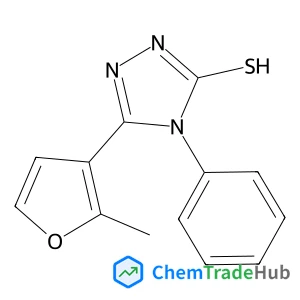
5-(2-Methyl-3-furyl)-4-phenyl-2,4-dihydro-3H-1,2,4-triazole-3-thione
CAS Number:
346464-59-3
Molecular Formula:
C13H11N3OS
![(1R,5R)-3-{[(2-Methyl-2-propanyl)oxy]carbonyl}-3-azabicyclo[3.1.0]hexane-1-carboxylic acid structure](https://static.chemtradehub.com/structs/116/1165450-63-4-bfe1.webp "(1R,5R)-3-{[(2-Methyl-2-propanyl)oxy]carbonyl}-3-azabicyclo[3.1.0]hexane-1-carboxylic acid structure")
(1R,5R)-3-{[(2-Methyl-2-propanyl)oxy]carbonyl}-3-azabicyclo[3.1.0]hexane-1-carboxylic acid
CAS Number:
1165450-63-4
Molecular Formula:
C11H17NO4
Recommended Suppliers




Disclaimer
This page provides academic journal information for reference and research purposes only. We are not affiliated with any journal publishers and do not handle publication submissions. For publication-related inquiries, please contact the respective journal publishers directly.
If you notice any inaccuracies in the information displayed, please contact us at support@chemtradehub.com. We will promptly review and address your concerns.