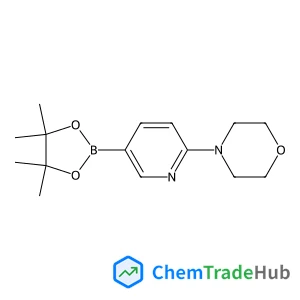
4-(5-(4,4,5,5-tetramethyl-1,3,2-dioxaborolan-2-yl)pyridin-2-yl)morpholine
CAS Number:
485799-04-0
Molecular Formula:
C15H23BN2O3
Anna Hu, Yujie Zhang, Jinchuang Zhang, Tongqing Li, Zhaojun Wang, Qiang Wang
High-moisture extrusion technology emerges as a prime choice for preparing alternative protein products with a meat-like texture. However, the nutritional aspects of these products, prepared from a blend of plant and animal proteins, remain unclear. This study investigated the nutritional qualities of extrudates derived from soy protein isolate (SPI) and surimi, exploring ratios ranging from 90 : 10 to 50 : 50, with varied extrusion temperature (125 °C, 135 °C and 145 °C) and moisture content (65%, 70% and 75%). Results revealed the significant role played by surimi in enhancing both amino acid and fatty acid contents in high-moisture extrudates originating from SPI and surimi. Notably, the first limiting amino acid score (AAS/MET + CYS) increased significantly from 88.82 to 109.50 as the surimi content increased from 10% to 50%. Moreover, the levels of docosahexaenoic acid (DHA) and eicosapentaenoic acid (EPA) in the extrudates significantly increased, concurrently reducing the n-6/n-3 fatty acid ratio. At a higher moisture content (70–75%), increasing extrusion temperature bolstered the fatty acid content in the extrudates. When the SPI–surimi ratio was 90 : 10, the gastric digestibility of the extrudates was the highest (60.20%). Meanwhile, the highest small intestinal digestibility was 93.07% at a SPI–surimi ratio of 70 : 30. At lower extrusion temperatures (125–135 °C), increasing moisture content led to a notable increase in the small intestinal digestibility of the extrudates. SPI–surimi ratios and hydro-thermal combined parameters have significant effects on the in vitro digestibility of high-moisture extrudates. This study could contribute to the improvement of nutritional qualities of alternative protein products based on mixed proteins from soy and surimi.
Yang Chen, Jenny Aveyard, Robert Wilson
DOI: 10.1039/B411181H
Elizabeth A. Whitsitt, Andrew R. Barron
DOI: 10.1039/B212808J
Masaharu Ueno, Hideaki Hisamoto, Takehiko Kitamori, Shū Kobayashi
DOI: 10.1039/B301638B
Sachiko I. Matsushita
DOI: 10.1039/B313410E
Alois Fürstner, Peter Hannen
DOI: 10.1039/B412354A
Cyril Poriel, Yann Ferrand, Paul le Maux, Joëlle Raul-Berthelot, Gerard Simonneaux
DOI: 10.1039/B301717F
Dongliang Chang, Zunsheng Wang, Maarten F. Heringa, Renato Wirthner, Bernard Witholt, Zhi Li
DOI: 10.1039/B300435J
Yu Wang, William B. Euler, Brett L. Lucht
DOI: 10.1039/B312537H
Max J. Cryle, Julia M. U. Stuthe, Paul R. Ortiz de Montellano, James J. De Voss
DOI: 10.1039/B315911F
Steven H. Bertz, Toby J. Sommer
DOI: 10.1039/B300935A
(1R,3S)-1,3-Cyclopentanediol finds applications in various industries. In the ph...
When handling N'-[4-(Dimethylamino)phenyl]-N,N-dimethyl-1,4-benzenediamine, it i...
There are several alternatives to 5-(2,4-Difluorophenyl)-2-methoxypyrimidine in ...
1-(3-Methoxyphenoxy)propan-2-ol (CAS: 382141-68-6) must comply with the Globally...
Tetrodotoxin Citrate is extremely dangerous and should be handled with extreme c...
2-Methyl-2-propanyl [(1R,3S)-3-hydroxycyclopentyl]carbamate (CAS: 225641-84-9) i...
Waste containing 4-(2-Hydroxyhexafluoroisopropyl)Benzoic Acid (CAS: 16261-80-6) ...
2-Methyl-2-proanyl {(2S)-1-[(benzyloxy)amino]-3-hydroxy-3-methyl-1-oxo-2-butanyl...
Benzeneethanamine, α-ethyl-, hydrochloride (1:1) is an organic compound with the...
In the synthesis of compounds similar to 3-{(E)-[4-(Dimethylamino)phenyl]diazeny...