













A metamaterial based sensor for moisture and density of cereal flours
Literature Information
Publication Date
2023-11-07
DOI
10.1039/D3FB00126A
Impact Factor
0
Authors
Aswathi P. V., Anju Sebastian, Lulu Varghese, Joseph V. P., Jolly Andrews
View Original
Abstract
The dielectric properties of cereal grain flours are studied by varying the moisture content and density, using a novel metamaterial Wire Split Ring Resonator (WSRR) based sensor working in the microwave frequency range at room temperature. Four types of cereal grains ground into fine powders are used as the test samples. The WSRR sensor is kept in the electromagnetic field that exists between two monopole antennas connected to the receiving and transmitting ports of a Vector Network Analyzer (VNA) which serves as the measuring device. The LC resonance behavior of the WSRR on interacting with the electromagnetic field and the shift in its resonance frequency in response to any changes in the dielectric environment around it form the basis of sensing. The variation in the moisture content and density of cereal flour samples will cause corresponding changes in the capacitive environment of the sensor which is reflected as the resonance frequency shift. From the resonance–density calibration plot, the maximum packing density of cereal grain powders is found which is useful in determining the efficient use of the available packing space. The moisture content, an essential requirement in ensuring the shelf life of cereal grain powders, is analyzed from the resonance–moisture calibration plot. This simple and accurate metamaterial-inspired measuring technique may find wide applications in the food industry in optimizing the shelf life and packing space of cereal grain powder products.
Recommended Journals
Related Literature
Selective formation of siloxane-based hybrid cages with methylene groups in the frameworks
Atsushi Shimojima
2004-10-14
Communication
DOI: 10.1039/B411794H
Fabrication of nanowires with polymer shells using treated carbon nanotube bundles as macro-initiators
Yuyang Liu, Jing Tang, J. H. Xin
2004-10-26
Communication
DOI: 10.1039/B412282H
Formation of dimers of inclusion cryptand/paraquat complexes driven by dipole–dipole and face-to-face π-stacking interactions
Feihe Huang, Liang Zhou, Jason W. Jones, Harry W. Gibson, Mehdi Ashraf-Khorassani
2004-10-14
Communication
DOI: 10.1039/B411234B
A new route to fullerene substituted phenylalanine derivatives
Jianzhong Yang, Andrew R. Barron
2004-10-25
Communication
DOI: 10.1039/B411118D
Photon-driven nanomechanical cyclic motion
Hai-Feng Ji, Yu Feng, Xiaohe Xu, Vemana Purushotham, Thomas Thundat, Gilbert M. Brown
2004-09-28
Communication
DOI: 10.1039/B408997A
Chiral self-dimerization of vanadium complexes on a SiO2 surface: the first heterogeneous catalyst for asymmetric 2-naphthol coupling
Mizuki Tada, Toshiaki Taniike, Lakshmi M. Kantam, Yasuhiro Iwasawa
2004-10-04
Communication
DOI: 10.1039/B410307F
Reduction of nitroaromatics to arylnitrenium ions by vinyl halide cations
Hao Chen, Xubin Zheng, Pengxiang Yang, R. Graham Cooks
2004-02-12
Communication
DOI: 10.1039/B314713D
Bioinspired synthesis of new silica structures
Siddharth V. Patwardhan, Niloy Mukherjee, Miriam Steinitz-Kannan, Stephen J. Clarson
2003-04-23
Communication
DOI: 10.1039/B302056H
A sequential highly stereoselective hydroboration and Suzuki–Miyaura cross-coupling reaction of fluoroalkylated internal acetylenes: a practical one-pot synthesis of fluoroalkylated trisubstituted alkenes
Tsutomu Konno, Jungha Chae, Tomoo Tanaka, Takashi Ishihara, Hiroki Yamanaka
2004-02-12
Communication
DOI: 10.1039/B316065C
Attachment of glycosaminoglycan oligosaccharides to thiol-derivatised gold surfaces
Susannah J. Patey, Jeremy E. Turnbull
2004-10-11
Communication
DOI: 10.1039/B411726C
You might also like
Compound Q&A
What industries use (1R,3S)-1,3-Cyclopentanediol (CAS: 16326-97-9)?
(1R,3S)-1,3-Cyclopentanediol finds applications in various industries. In the ph...
16326-97-9(1R,3S)-1,3-Cyclopen...
Compound Q&A
What precautions should be taken when handling N'-[4-(Dimethylamino)phenyl]-N,N-dimethyl-1,4-benzenediamine (CAS: 637-31-0)?
When handling N'-[4-(Dimethylamino)phenyl]-N,N-dimethyl-1,4-benzenediamine, it i...
637-31-0N'-[4-(Dimethylamino...
Compound Q&A
Are there alternatives to 5-(2,4-Difluorophenyl)-2-methoxypyrimidine (CAS: 1352318-16-1) in synthesis?
There are several alternatives to 5-(2,4-Difluorophenyl)-2-methoxypyrimidine in ...
1352318-16-15-(2,4-Difluoropheny...
Compound Q&A
What regulatory guidelines apply to 1-(3-Methoxyphenoxy)propan-2-ol (CAS: 382141-68-6)?
1-(3-Methoxyphenoxy)propan-2-ol (CAS: 382141-68-6) must comply with the Globally...
382141-68-61-(3-Methoxyphenoxy)...
Compound Q&A
Is Tetrodotoxin Citrate (CAS: 18660-81-6) safe?
Tetrodotoxin Citrate is extremely dangerous and should be handled with extreme c...
18660-81-6Tetrodotoxin Citrate
Compound Q&A
What are the main uses of 2-Methyl-2-propanyl [(1R,3S)-3-hydroxycyclopentyl]carbamate (CAS: 225641-84-9)?
2-Methyl-2-propanyl [(1R,3S)-3-hydroxycyclopentyl]carbamate (CAS: 225641-84-9) i...
225641-84-92-Methyl-2-propanyl ...
Compound Q&A
How should waste containing 4-(2-Hydroxyhexafluoroisopropyl)Benzoic Acid (CAS: 16261-80-6) be handled?
Waste containing 4-(2-Hydroxyhexafluoroisopropyl)Benzoic Acid (CAS: 16261-80-6) ...
16261-80-64-(2-Hydroxyhexafluo...
Compound Q&A
How is 2-Methyl-2-proanyl {(2S)-1-[(benzyloxy)amino]-3-hydroxy-3-methyl-1-oxo-2-butanyl}carbamate (CAS: 102507-19-7) typically synthesized?
2-Methyl-2-proanyl {(2S)-1-[(benzyloxy)amino]-3-hydroxy-3-methyl-1-oxo-2-butanyl...
102507-19-72-Methyl-2-propanyl ...
Compound Q&A
What is Benzeneethanamine, α-ethyl-, hydrochloride (1:1) (CAS: 20735-15-3)?
Benzeneethanamine, α-ethyl-, hydrochloride (1:1) is an organic compound with the...
20735-15-3Benzeneethanamine, α...
Compound Q&A
Are there alternatives to 3-{(E)-[4-(Dimethylamino)phenyl]diazenyl}benzoic acid (CAS: 20691-84-3) in synthesis?
In the synthesis of compounds similar to 3-{(E)-[4-(Dimethylamino)phenyl]diazeny...
20691-84-33-{(E)-[4-(Dimethyla...
Source Journal
Recommended Compounds
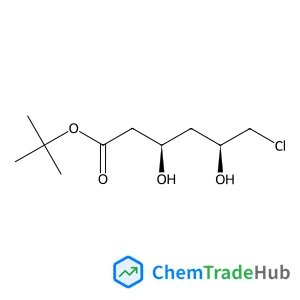
2-Methyl-2-propanyl (3R,5S)-6-chloro-3,5-dihydroxyhexanoate
CAS Number:
154026-93-4
Molecular Formula:
C10H19ClO4
![N-[(9H-Fluoren-9-ylmethoxy)carbonyl]-beta-phenyl-L-phenylalanine structure](https://static.chemtradehub.com/structs/201/201484-50-6-c2fc.webp "N-[(9H-Fluoren-9-ylmethoxy)carbonyl]-beta-phenyl-L-phenylalanine structure")
N-[(9H-Fluoren-9-ylmethoxy)carbonyl]-beta-phenyl-L-phenylalanine
CAS Number:
201484-50-6
Molecular Formula:
C30H25NO4
Recommended Suppliers





Disclaimer
This page provides academic journal information for reference and research purposes only. We are not affiliated with any journal publishers and do not handle publication submissions. For publication-related inquiries, please contact the respective journal publishers directly.
If you notice any inaccuracies in the information displayed, please contact us at support@chemtradehub.com. We will promptly review and address your concerns.