












Storage stability assessment of guava fruit (Psidium guajava L.) cv. ‘Gola’ in response to different packaging materials
Literature Information
Publication Date
2023-11-28
DOI
10.1039/D3FB00113J
Impact Factor
0
Authors
Ali Asad Yousaf, Kashif Sarfraz Abbasi, Muhammad Suhail Ibrahim, Asma Sohail, Mamoona Faiz, Mehwish Khadim
View Original
Abstract
Guava (Psidium guajava L.) is a nutritious fruit of sub-tropical regions that displays climacteric characteristics and short postharvest life. The quality of guava fruit deteriorates within two to three days at ambient temperatures; therefore, specific practices are needed to preserve the quality and increase the shelf life of guavas. In the present work, we aimed to assess how various packing materials affected the shelf life and quality of guava fruit (cv. Gola) stored at room temperature. Guava fruits were stored for a period of 20 days in different packing materials such as biodegradable packaging (BDP), corrugated fiber box (CFB), polypropylene (PP), high density polyethylene (HDPE), low density polyethylene (LDPE) and polystyrene (PS). During the storage period, transitions in multiple quality metrics were observed at predetermined intervals of four (4) days. According to the findings, each packing material significantly affected the fruit's quality in comparison to control samples. During the storage period, there was a natural decline in firmness (93.4%), ascorbic acid (55.6%), and TPC (48.6%); however, the packaged fruit samples showed a considerably slower rate of reduction (p < 0.05) than the unpackaged control samples. Moreover, respiratory gases were effectively suppressed under packaging viz. HDPE (ethylene; 8.76 μL kg−1 h−1, CO2; 19.76 mL kg−1 h−1) and BDP (ethylene; 10.16 μL kg−1 h−1, CO2; 21.37 μL kg−1 h−1), respectively. In terms of enzyme dynamics, un-packed fruit samples had relatively low CAT activity (69.45 U mg−1 protein), while guava fruits that were packed in BDP exhibited much increased CAT activity (82.28 U mg−1 protein). Likewise, PPO activity was significantly inhibited in packaged fruit samples. Among the different packaging employed, biodegradable packaging, PP, and HDPE exhibited better overall retention of quality attributes during 20 days of storage under ambient conditions. The study's outcome should open up new opportunities for the fruit and vegetable sectors while also offering a cost-effective approach to preserving fresh guavas and increasing their economic potential.
Related Literature
Fabrication of a stable inorganic–organic hybrid multilayer film with uniform and dense inorganic nanoparticle deposition
Xurong Xu, Joong Tark Han, Kilwon Cho
2003-03-18
Communication
DOI: 10.1039/B300581J
Modified micro-space using self-organized nanoparticles for reduction of methylene blue
Xianying Li, Hongzhi Wang, Kouzou Inoue, Masato Uehara, Hiroyuki Nakamura, Masaya Miyazaki, Eiichi Abe, Hideaki Maeda
2003-03-18
Communication
DOI: 10.1039/B300765K
Cyclopropyl fatty acids implicate a radical but not a cation as an intermediate in P450BM3-catalysed hydroxylations
Max J. Cryle, Julia M. U. Stuthe, Paul R. Ortiz de Montellano, James J. De Voss
2004-01-27
Communication
DOI: 10.1039/B315911F
Direction control in DNA binding of chiral d-lysine-based peptide nucleic acid (PNA) probed by electrospray mass spectrometry
Stefano Sforza, Tullia Tedeschi, Roberto Corradini, Arnaldo Dossena, Rosangela Marchelli
2003-04-02
Communication
DOI: 10.1039/B212718K
A highly efficient catalytic system for cross-coupling of aryl chlorides and bromides with malononitrile anion by palladium carbene complexes
Chengwei Gao, Xiaochun Tao, Yanlong Qian, Jiling Huang
2003-05-20
Communication
DOI: 10.1039/B302890A
A novel clean catalytic method for waste-free modification of polysaccharides by oxidation
Svetlana L. Kachkarova-Sorokina, Pierre Gallezot, Alexander B. Sorokin
2004-11-04
Communication
DOI: 10.1039/B411694A
Synthesis of meso-β doubly linked porphyrin tapes
Akihiko Tsuda, Yasuyuki Nakamura, Atsuhiro Osuka
2003-04-07
Communication
DOI: 10.1039/B302032K
Phase-transfer alkylation reactions using microreactors
Masaharu Ueno, Hideaki Hisamoto, Takehiko Kitamori, Shū Kobayashi
2003-03-27
Communication
DOI: 10.1039/B301638B
Electrical property and water repellency of a networked monolayer film prepared from Au nanoparticles
Hiroshi Shiigi, Yojiro Yamamoto, Hidetaka Yakabe, Shiho Tokonami, Tsutomu Nagaoka
2003-04-02
Communication
DOI: 10.1039/B212226J
Gold and silver nanoparticles functionalized with known numbers of oligonucleotides per particle for DNA detection
Yang Chen, Jenny Aveyard, Robert Wilson
2004-11-18
Communication
DOI: 10.1039/B411181H
You might also like
Compound Q&A
What industries use (1R,3S)-1,3-Cyclopentanediol (CAS: 16326-97-9)?
(1R,3S)-1,3-Cyclopentanediol finds applications in various industries. In the ph...
16326-97-9(1R,3S)-1,3-Cyclopen...
Compound Q&A
What precautions should be taken when handling N'-[4-(Dimethylamino)phenyl]-N,N-dimethyl-1,4-benzenediamine (CAS: 637-31-0)?
When handling N'-[4-(Dimethylamino)phenyl]-N,N-dimethyl-1,4-benzenediamine, it i...
637-31-0N'-[4-(Dimethylamino...
Compound Q&A
Are there alternatives to 5-(2,4-Difluorophenyl)-2-methoxypyrimidine (CAS: 1352318-16-1) in synthesis?
There are several alternatives to 5-(2,4-Difluorophenyl)-2-methoxypyrimidine in ...
1352318-16-15-(2,4-Difluoropheny...
Compound Q&A
What regulatory guidelines apply to 1-(3-Methoxyphenoxy)propan-2-ol (CAS: 382141-68-6)?
1-(3-Methoxyphenoxy)propan-2-ol (CAS: 382141-68-6) must comply with the Globally...
382141-68-61-(3-Methoxyphenoxy)...
Compound Q&A
Is Tetrodotoxin Citrate (CAS: 18660-81-6) safe?
Tetrodotoxin Citrate is extremely dangerous and should be handled with extreme c...
18660-81-6Tetrodotoxin Citrate
Compound Q&A
What are the main uses of 2-Methyl-2-propanyl [(1R,3S)-3-hydroxycyclopentyl]carbamate (CAS: 225641-84-9)?
2-Methyl-2-propanyl [(1R,3S)-3-hydroxycyclopentyl]carbamate (CAS: 225641-84-9) i...
225641-84-92-Methyl-2-propanyl ...
Compound Q&A
How should waste containing 4-(2-Hydroxyhexafluoroisopropyl)Benzoic Acid (CAS: 16261-80-6) be handled?
Waste containing 4-(2-Hydroxyhexafluoroisopropyl)Benzoic Acid (CAS: 16261-80-6) ...
16261-80-64-(2-Hydroxyhexafluo...
Compound Q&A
How is 2-Methyl-2-proanyl {(2S)-1-[(benzyloxy)amino]-3-hydroxy-3-methyl-1-oxo-2-butanyl}carbamate (CAS: 102507-19-7) typically synthesized?
2-Methyl-2-proanyl {(2S)-1-[(benzyloxy)amino]-3-hydroxy-3-methyl-1-oxo-2-butanyl...
102507-19-72-Methyl-2-propanyl ...
Compound Q&A
What is Benzeneethanamine, α-ethyl-, hydrochloride (1:1) (CAS: 20735-15-3)?
Benzeneethanamine, α-ethyl-, hydrochloride (1:1) is an organic compound with the...
20735-15-3Benzeneethanamine, α...
Compound Q&A
Are there alternatives to 3-{(E)-[4-(Dimethylamino)phenyl]diazenyl}benzoic acid (CAS: 20691-84-3) in synthesis?
In the synthesis of compounds similar to 3-{(E)-[4-(Dimethylamino)phenyl]diazeny...
20691-84-33-{(E)-[4-(Dimethyla...
Source Journal
Recommended Compounds
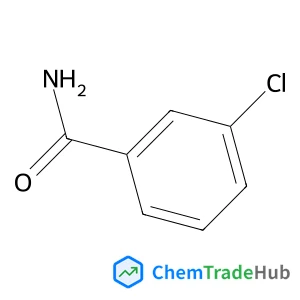
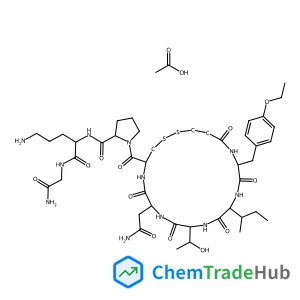
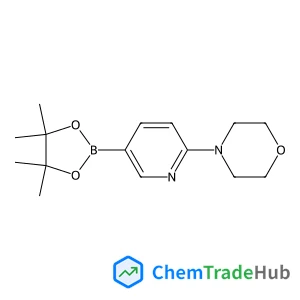
4-(5-(4,4,5,5-tetramethyl-1,3,2-dioxaborolan-2-yl)pyridin-2-yl)morpholine
CAS Number:
485799-04-0
Molecular Formula:
C15H23BN2O3
Recommended Suppliers




Disclaimer
This page provides academic journal information for reference and research purposes only. We are not affiliated with any journal publishers and do not handle publication submissions. For publication-related inquiries, please contact the respective journal publishers directly.
If you notice any inaccuracies in the information displayed, please contact us at support@chemtradehub.com. We will promptly review and address your concerns.