












A highly efficient catalytic system for cross-coupling of aryl chlorides and bromides with malononitrile anion by palladium carbene complexes
Literature Information
Publication Date
2003-05-20
DOI
10.1039/B302890A
Impact Factor
6.222
Authors
Chengwei Gao, Xiaochun Tao, Yanlong Qian, Jiling Huang
View Original
Abstract
Six imidazolium chlorides (1–6) as precursors of 1,3-diaryl substituted N-heterocyclic carbene ligands were synthesized and evaluated in palladium-catalyzed cross-coupling reactions of aryl chlorides and bromides with malononitrile in the presence of NaH. Among them, 1,3-bis(2,4,6-triethylphenyl)imidazolium chloride (5) and 1,3-bis(2,4,6-triisopropylphenyl)imidazolium chloride (6) are novel. The catalytic system combining Pd(0) with imidazolium salts 4, 5 and 6 with bulky aryl groups in pyridine is found to be superior over others and afforded α-arylmalononitriles in high yields when employing a wide variety of substrates.
Recommended Journals
Related Literature
Electronically-tuned triarylmethine scaffolds for fast and continuous monitoring of H2S levels in biological samples
Ramshad Kalluruttimmal, Divya Thekke Thattariyil, Archana Panthalattu Parambil, Ashis Kumar Sen, Lakshmi Chakkumkumarath, Muraleedharan Kannoth Manheri
2019-05-28
Paper
DOI: 10.1039/C9AN00522F
A simple architecture with self-assembled monolayers to build immunosensors for detecting the pancreatic cancer biomarker CA19-9
Juliana Coatrini Soares, Valquiria da Cruz Rodrigues, Iram Taj Awan, Matias Eliseo Melendez, Maria Helena Oliveira Piazzetta, Angelo Luiz Gobbi, José Humberto T. G. Fregnani, André Lopes Carvalho, Osvaldo N. Oliveira, Jr
2018-04-19
Paper
DOI: 10.1039/C8AN00430G
Exploring the hidden potential of a benzothiazole-based Schiff-base exhibiting AIE and ESIPT and its activity in pH sensing, intracellular imaging and ultrasensitive & selective detection of aluminium (Al3+)
Vishal Kachwal, I. S. Vamsi Krishna, Leena Fageria, Jagrity Chaudhary, Ram Kinkar Roy, Rajdeep Chowdhury, Inamur Rahaman Laskar
2018-06-11
Paper
DOI: 10.1039/C8AN00349A
Multi-code magnetic beads based on DNAzyme-mediated double-cycling amplification for a point-of-care assay of telomerase activity
Chunxue Liu, Susu Zhang, Wei Jiang
2019-05-31
Paper
DOI: 10.1039/C9AN00589G
Vertical flow assays based on core–shell SERS nanotags for multiplex prostate cancer biomarker detection
Chengxin Luan
2019-05-13
Paper
DOI: 10.1039/C9AN00733D
Plasmon-enhanced two-photon excitation fluorescence of rhodamine 6G and an Eu-diketonate complex by a picosecond diode laser
Janice B. Rabor, Koki Kawamura, Junichi Kurawaki, Yasuro Niidome
2019-05-16
Paper
DOI: 10.1039/C9AN00247B
A capillary flow-driven microfluidic system for microparticle-labeled immunoassays
Ali Khodayari Bavil, Jungkyu Kim
2018-06-01
Paper
DOI: 10.1039/C8AN00898A
A dual-mode fluorometric/colorimetric sensor for Cu2+ detection based on hybridized carbon dots and gold–silver core–shell nanoparticles
Yuqing Chen, Yawen Lian, Mengna Huang, Lin Wei, Lehui Xiao
2019-06-03
Paper
DOI: 10.1039/C9AN00850K
You might also like
Compound Q&A
What industries use (1R,3S)-1,3-Cyclopentanediol (CAS: 16326-97-9)?
(1R,3S)-1,3-Cyclopentanediol finds applications in various industries. In the ph...
16326-97-9(1R,3S)-1,3-Cyclopen...
Compound Q&A
What precautions should be taken when handling N'-[4-(Dimethylamino)phenyl]-N,N-dimethyl-1,4-benzenediamine (CAS: 637-31-0)?
When handling N'-[4-(Dimethylamino)phenyl]-N,N-dimethyl-1,4-benzenediamine, it i...
637-31-0N'-[4-(Dimethylamino...
Compound Q&A
Are there alternatives to 5-(2,4-Difluorophenyl)-2-methoxypyrimidine (CAS: 1352318-16-1) in synthesis?
There are several alternatives to 5-(2,4-Difluorophenyl)-2-methoxypyrimidine in ...
1352318-16-15-(2,4-Difluoropheny...
Compound Q&A
What regulatory guidelines apply to 1-(3-Methoxyphenoxy)propan-2-ol (CAS: 382141-68-6)?
1-(3-Methoxyphenoxy)propan-2-ol (CAS: 382141-68-6) must comply with the Globally...
382141-68-61-(3-Methoxyphenoxy)...
Compound Q&A
Is Tetrodotoxin Citrate (CAS: 18660-81-6) safe?
Tetrodotoxin Citrate is extremely dangerous and should be handled with extreme c...
18660-81-6Tetrodotoxin Citrate
Compound Q&A
What are the main uses of 2-Methyl-2-propanyl [(1R,3S)-3-hydroxycyclopentyl]carbamate (CAS: 225641-84-9)?
2-Methyl-2-propanyl [(1R,3S)-3-hydroxycyclopentyl]carbamate (CAS: 225641-84-9) i...
225641-84-92-Methyl-2-propanyl ...
Compound Q&A
How should waste containing 4-(2-Hydroxyhexafluoroisopropyl)Benzoic Acid (CAS: 16261-80-6) be handled?
Waste containing 4-(2-Hydroxyhexafluoroisopropyl)Benzoic Acid (CAS: 16261-80-6) ...
16261-80-64-(2-Hydroxyhexafluo...
Compound Q&A
How is 2-Methyl-2-proanyl {(2S)-1-[(benzyloxy)amino]-3-hydroxy-3-methyl-1-oxo-2-butanyl}carbamate (CAS: 102507-19-7) typically synthesized?
2-Methyl-2-proanyl {(2S)-1-[(benzyloxy)amino]-3-hydroxy-3-methyl-1-oxo-2-butanyl...
102507-19-72-Methyl-2-propanyl ...
Compound Q&A
What is Benzeneethanamine, α-ethyl-, hydrochloride (1:1) (CAS: 20735-15-3)?
Benzeneethanamine, α-ethyl-, hydrochloride (1:1) is an organic compound with the...
20735-15-3Benzeneethanamine, α...
Compound Q&A
Are there alternatives to 3-{(E)-[4-(Dimethylamino)phenyl]diazenyl}benzoic acid (CAS: 20691-84-3) in synthesis?
In the synthesis of compounds similar to 3-{(E)-[4-(Dimethylamino)phenyl]diazeny...
20691-84-33-{(E)-[4-(Dimethyla...
Source Journal
Chemical Communications

CiteScore:
8.6
Self-citation Rate:
4.7%
Articles per Year:
2458
ChemComm publishes urgent research which is of outstanding significance and interest to experts in the field, while also appealing to the journal’s broad chemistry readership. Our communication format is ideally suited to short, urgent studies that are of such importance that they require accelerated publication. Our scope covers all topics in chemistry, and research at the interface of chemistry and other disciplines (such as materials science, nanoscience, physics, engineering and biology) where there is a significant novelty in the chemistry aspects. Major topic areas covered include: Analytical Chemistry Catalysis Chemical Biology and medicinal chemistry Computational Chemistry and Machine Learning Energy and sustainable chemistry Environmental Chemistry Green Chemistry Inorganic Chemistry Materials Chemistry Nanoscience Organic Chemistry Physical Chemistry Polymer Chemistry Supramolecular Chemistry
Recommended Compounds
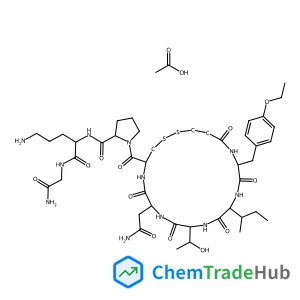
![N-[(9H-Fluoren-9-ylmethoxy)carbonyl]-beta-phenyl-L-phenylalanine structure](https://static.chemtradehub.com/structs/201/201484-50-6-c2fc.webp "N-[(9H-Fluoren-9-ylmethoxy)carbonyl]-beta-phenyl-L-phenylalanine structure")
N-[(9H-Fluoren-9-ylmethoxy)carbonyl]-beta-phenyl-L-phenylalanine
CAS Number:
201484-50-6
Molecular Formula:
C30H25NO4
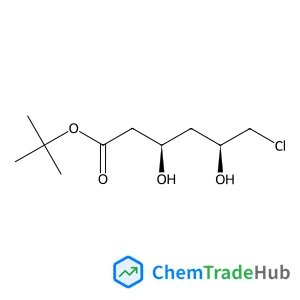
2-Methyl-2-propanyl (3R,5S)-6-chloro-3,5-dihydroxyhexanoate
CAS Number:
154026-93-4
Molecular Formula:
C10H19ClO4
Recommended Suppliers





Disclaimer
This page provides academic journal information for reference and research purposes only. We are not affiliated with any journal publishers and do not handle publication submissions. For publication-related inquiries, please contact the respective journal publishers directly.
If you notice any inaccuracies in the information displayed, please contact us at support@chemtradehub.com. We will promptly review and address your concerns.