













Recent progress in understanding the catalyst layer in anion exchange membrane electrolyzers – durability, utilization, and integration
Literature Information
Publication Date
2023-11-07
DOI
10.1039/D3EY00193H
Impact Factor
0
Authors
Emily K. Volk, Melissa E. Kreider, Stephanie Kwon, Shaun M. Alia
View Original
Abstract
Anion exchange membrane water electrolyzers (AEMWEs) are poised to play a key role in reducing capital cost and materials criticality concerns associated with traditional low-temperature electrolysis technologies. To accelerate the development and deployment of this technology, an in-depth understanding of cell materials integration is essential. Notably, the complex chemistries and interactions within the catalyst layer (consisting of the anode/cathode catalyst, anion exchange ionomer, and their interfaces with the transport layers and membrane) collectively influence overall cell performances, lifetimes, and costs. This review outlines recent advances in understanding the catalyst layer in AEMWEs. Specifically, electrode development strategies (including catalyst deposition techniques and configurations as well as transport layer design strategies) and our current understanding of catalyst–ionomer interactions are discussed. Effects of cell assembly and operational variables (including compression, temperature, pressure, and electrolyte conditions) on cell performance are also discussed. Lastly, we consider cutting-edge in situ and ex situ diagnostic techniques to study the complex chemistries within the catalyst layer as well as discuss degradation mechanisms that arise due to the integration of cell components. Simultaneously, comparisons are made to proton exchange membrane water electrolyzers (PEMWEs) and liquid alkaline water electrolyzers (LAWE) throughout the review to provide context to researchers transitioning into the AEMWE space. We also include recommendations for standard operating procedures, configurations, and metrics for comparing activity and stability.
Related Literature
Affinity of hydroxyapatite (001) and (010) surfaces to formic and alendronic acids: a quantum-mechanical and infrared study
Fabio Chiatti, Marta Corno, Yuriy Sakhno, Gianmario Martra, Piero Ugliengo
2010-11-12
Paper
DOI: 10.1039/C0CP01143F
Enhanced field emission property of a novel Al2O3nanoparticle-decorated tubular SiC emitter with low turn-on and threshold field
H. Cui, L. Gong, G. Z. Yang, Y. Sun, J. Chen, C. X. Wang
2010-11-09
Paper
DOI: 10.1039/C0CP01313G
Pressure-amorphized cubic structure II clathrate hydrate: crystallization in slow motion
Marion Bauer, Daniel M. Többens, Erwin Mayer, Thomas Loerting
2010-11-22
Paper
DOI: 10.1039/C0CP01351J
Effect of hydrophobic nanopatches within an ionic surface on the structure of liquids
Christopher Hardacre
2010-11-01
Paper
DOI: 10.1039/C0CP01838D
Self-assembly of trehalose molecules on a lysozyme surface: the broken glass hypothesis
Maxim V. Fedorov, Jonathan M. Goodman, Dmitry Nerukh, Stephan Schumm
2010-11-29
Paper
DOI: 10.1039/C0CP01705A
A natural missing link between activated and downhill protein folding scenarios
Feng Liu, Caroline Maynard, Gregory Scott, Artem Melnykov, Kathleen B. Hall
2010-02-11
Paper
DOI: 10.1039/B925033F
Towards understanding a mechanism for reversible hydrogenstorage: theoretical study of transition metal catalysed dehydrogenation of sodium alanate
Ivan Ljubić, David C. Clary
2010-03-04
Paper
DOI: 10.1039/B922617F
Reactivity of 2-ethyl-1-hexanol in the atmosphere
María Paz Gallego-Iniesta García, Alberto Moreno Sanroma, María Pilar Martín Porrero, Araceli Tapia Valle, Beatriz Cabañas Galán, María Sagrario Salgado Muñoz
2010-02-19
Paper
DOI: 10.1039/B923899A
Solvatochromic shifts of single-walled carbon nanotubes in nonpolar microenvironments
Carlos A. Silvera-Batista, Randy K. Wang, Philip Weinberg
2010-05-12
Paper
DOI: 10.1039/B927053A
You might also like
Compound Q&A
How should waste containing (6-Bromo-2-naphthyl)oxy](dimethyl)(2-methyl-2-propanyl)silane be handled?
Waste containing (6-Bromo-2-naphthyl)oxy](dimethyl)(2-methyl-2-propanyl)silane (...
100751-65-3[(6-Bromo-2-naphthyl...
Compound Q&A
How is 7-Fluoro-4-isoquinolinecarboxylic acid (CAS: 1841081-40-0) typically synthesized?
7-Fluoro-4-isoquinolinecarboxylic acid can be synthesized via a multi-step proce...
1841081-40-07-Fluoro-4-isoquinol...
Compound Q&A
What are the physical and chemical properties of 2,3,5,6-Tetrabromothieno[3,2-b]thiophene (CAS: 124638-53-5)?
2,3,5,6-Tetrabromothieno[3,2-b]thiophene is a crystalline compound with a high m...
124638-53-52,3,5,6-Tetrabromoth...
Compound Q&A
Is 1-[4-(Benzylamino)-7,8-dihydro-5H-pyrano[4,3-d]pyrimidin-2-yl]-2-methyl-1H-indole-4-carboxamide (CAS: 1542705-92-9) safe?
1-[4-(Benzylamino)-7,8-dihydro-5H-pyrano[4,3-d]pyrimidin-2-yl]-2-methyl-1H-indol...
1542705-92-91-[4-(Benzylamino)-7...
Compound Q&A
What is the market or research trend for imidazo[5,1-d]-1,2,3,5-tetrazine-8-carboxylic acid, 3,4-dihydro-3-methyl-4-oxo- (CAS: 113942-30-6)?
The market for imidazo[5,1-d]-1,2,3,5-tetrazine-8-carboxylic acid, 3,4-dihydro-3...
113942-30-6Imidazo[5,1-d]-1,2,3...
Compound Q&A
What is 3-(Triisopropylsilyl)propiolaldehyde (CAS: 163271-80-5)?
3-(Triisopropylsilyl)propiolaldehyde is a synthetic organic compound with the CA...
163271-80-53-(Triisopropylsilyl...
Compound Q&A
What regulatory guidelines apply to 6-Nitro-2H-1,4-benzoxazin-3(4H)-one (CAS: 81721-87-1)?
6-Nitro-2H-1,4-benzoxazin-3(4H)-one (CAS: 81721-87-1) is subject to various regu...
81721-87-16-Nitro-2H-1,4-benzo...
Compound Q&A
How should waste containing (3-Fluorophenyl)(4-{[(2-methyl-2-propanyl)oxy]carbonyl}-1-piperazinyl)acetic acid (CAS: 885272-91-3) be handled?
Waste containing (3-Fluorophenyl)(4-{[(2-methyl-2-propanyl)oxy]carbonyl}-1-piper...
885272-91-3(3-Fluorophenyl)(4-{...
Compound Q&A
What are the physical and chemical properties of N,N'-4,4'-Biphenyldiyldiisonicotinamide (CAS: 55119-40-9)?
N,N'-4,4'-Biphenyldiyldiisonicotinamide is a white crystalline solid with a mole...
55119-40-9N,N'-4,4'-Biphenyldi...
Compound Q&A
What industries use 6-Bromo-8-fluoro-2-quinazolinol (CAS: 1036756-15-6)?
6-Bromo-8-fluoro-2-quinazolinol is primarily used in the pharmaceutical industry...
1036756-15-66-Bromo-8-fluoro-2-q...
Source Journal
Recommended Compounds
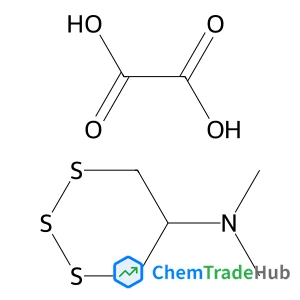
Oxalic acid compound with cyclohexylsulfamothioic O-acid (11)
CAS Number:
31895-22-4
Molecular Formula:
C7H13NO4S3
Recommended Suppliers






Disclaimer
This page provides academic journal information for reference and research purposes only. We are not affiliated with any journal publishers and do not handle publication submissions. For publication-related inquiries, please contact the respective journal publishers directly.
If you notice any inaccuracies in the information displayed, please contact us at support@chemtradehub.com. We will promptly review and address your concerns.