












Enhancing the electrical transport properties of two-dimensional semiconductors through interlayer interactions
Literature Information
Publication Date
2023-11-23
DOI
10.1039/D3EE03454B
Impact Factor
38.532
Authors
Shihao Han, Mingjia Yao, David J. Singh, Huijun Liu
View Original
Abstract
Thermoelectric materials attract great attention due to promising applications in refrigeration and waste heat recovery. Strategies based on band engineering have been proposed to identify new thermoelectric materials with high electrical transport performance. These approaches typically seek enhancement of the Seebeck coefficient via sharp changes in the electronic density of states near the Fermi level. Here, we emphasize a long-overlooked approach for enhancing the Seebeck coefficient through manipulation of the electronic group velocity. This can be realized through the interlayer interactions in two-dimensional materials. We construct numerous bilayers in a high-throughput manner. It is found that interlayer interactions universally introduce significant changes in the energy bands. Among the 129 isotropic systems, 34 of the bilayers exhibit higher power factors compared with the corresponding monolayers. Importantly, the improvement of the power factors and Seebeck coefficients in the As2I6, Sb2I6, and MoSe2 bilayers is due to increased electronic group velocity, contrary to the paradigm where sharper electronic densities of states favor thermoelectric performance. Our work not only illustrates the use of interlayer interactions for tuning the band structures of thermoelectric materials, but also highlights the vital importance of the group velocity for simultaneously enhancing the Seebeck coefficient and electrical conductivity.
Recommended Journals
Related Literature
Thiocyanates as attractive redox-active electrolytes for high-energy and environmentally-friendly electrochemical capacitors
Barbara Gorska, Paulina Bujewska, Krzysztof Fic
2017-02-16
Paper
DOI: 10.1039/C7CP00722A
Controlling adsorption and passivation properties of bovine serum albumin on silica surfaces by ionic strength modulation and cross-linking
2017-03-06
Paper
DOI: 10.1039/C7CP01310H
Spectroscopic evidence for the origin of odd–even effects in self-assembled monolayers and effects of substrate roughness
Jian Liu, Ian D. Tevis, Richard S. Andino, Christina M. Miller, Lawrence D. Ziegler, Xin Chen
2017-02-15
Paper
DOI: 10.1039/C6CP07580K
Dense ionization and subsequent non-homogeneous radical-mediated chemistry of femtosecond laser-induced low density plasma in aqueous solutions: synthesis of colloidal gold
Hakim Belmouaddine, Minghan Shi, Paul-Ludovic Karsenti, Ridthee Meesat, Léon Sanche, Daniel Houde
2017-02-15
Paper
DOI: 10.1039/C6CP08080D
Effect of an acetylene bond on hydrogen adsorption in diamond-like carbon allotropes: from first principles to atomic simulation
Lei Li, Tiange Fang, YeTong Wang, Weiquan Cai, Zhonghua Xiang
2017-03-06
Paper
DOI: 10.1039/C7CP01230F
Interfacial defects induced electronic property transformation at perovskite SrVO3/SrTiO3 and LaCrO3/SrTiO3 heterointerfaces
Junjie Li, Deqiang Yin, Qiang Li, Rong Sun, Sumei Huang, Fanzhi Meng
2017-02-01
Communication
DOI: 10.1039/C6CP07691B
Theoretically derived mechanisms of HPALD photolysis in isoprene oxidation
Zhen Liu, Vinh Son Nguyen, Jeremy Harvey, Jean-François Müller, Jozef Peeters
2017-03-03
Paper
DOI: 10.1039/C7CP00288B
Poly(vinyl alcohol) as a water protecting agent for silver nanoparticles: the role of polymer size and structure
Dmitry A. Pasko, Oleg N. Kalugin
2017-02-07
Paper
DOI: 10.1039/C6CP05562A
Capturing the multiscale dynamics of membrane protein complexes with all-atom, mixed-resolution, and coarse-grained models
Chenyi Liao, Xiaochuan Zhao, Jiyuan Liu, Severin T. Schneebeli, John C. Shelley, Jianing Li
2017-03-06
Paper
DOI: 10.1039/C7CP00200A
Spectroscopic and microscopic investigations of tautomerization in porphycenes: condensed phases, supersonic jets, and single molecule studies
P. Fita, L. Grill, A. Listkowski, H. Piwoński, S. Gawinkowski, M. Pszona, J. Sepioł, E. Mengesha, T. Kumagai
2017-01-16
Perspective
DOI: 10.1039/C6CP07955E
You might also like
Compound Q&A
What are the main uses of 1H-Indazole-6-carbonitrile (CAS: 141290-59-7)?
1H-Indazole-6-carbonitrile finds applications in pharmaceuticals, where it serve...
141290-59-71H-Indazole-6-carbon...
Compound Q&A
How should waste containing Dioctyl (2E)-2-butenedioate (CAS: 2997-85-5) be handled?
Waste containing Dioctyl (2E)-2-butenedioate (CAS: 2997-85-5) should be collecte...
2997-85-5Dioctyl (2E)-2-buten...
Compound Q&A
What industries use Sodium [(1,2-benzoxazol-3-ylmethyl)sulfonyl]azanide (CAS: 68291-98-5)?
Sodium [(1,2-benzoxazol-3-ylmethyl)sulfonyl]azanide is primarily used in pharmac...
68291-98-5Sodium [(1,2-benzoxa...
Compound Q&A
Are there alternatives to Dimethyl 4-(4,4,5,5-tetramethyl-1,3,2-dioxaborolan-2-yl)-2,6-pyridinedicarboxylate (CAS: 741709-66-0) in synthesis?
Dimethyl 4-(4,4,5,5-tetramethyl-1,3,2-dioxaborolan-2-yl)-2,6-pyridinedicarboxyla...
741709-66-0Dimethyl 4-(4,4,5,5-...
Compound Q&A
How should waste containing 2-Fluoro-6-hydrazinopyridine (CAS: 80714-39-2) be handled?
Waste containing 2-Fluoro-6-hydrazinopyridine (CAS: 80714-39-2) should be manage...
80714-39-22-Fluoro-6-hydrazino...
Compound Q&A
What is 6-Formyl-2-pyridinecarboxylic acid (CAS: 499214-11-8)?
6-Formyl-2-pyridinecarboxylic acid is an organic compound with the molecular for...
499214-11-86-Formyl-2-pyridinec...
Compound Q&A
What is the market or research trend for 3-(3,4-dimethoxyphenyl)-2,5-dimethyl-N-(2-morpholin-4-ylethyl)pyrazolo[1,5-a]pyrimidin-7-amine (CAS: 900874-91-1)?
Research trends for this compound indicate a focus on its potential applications...
900874-91-13-(3,4-dimethoxyphen...
Compound Q&A
How is 9H-Tribenzo[b,d,f]azepine (CAS: 29875-73-8) typically synthesized?
9H-Tribenzo[b,d,f]azepine is typically synthesized via a multi-step process invo...
29875-73-89H-Tribenzo[b,d,f]az...
Compound Q&A
How is 1-Cyclopropyl-7-ethoxy-6-fluoro-8-methoxy-4-oxo-1,4-dihydro-3-quinolinecarboxylic acid (CAS: 1797982-51-4) typically synthesized?
1-Cyclopropyl-7-ethoxy-6-fluoro-8-methoxy-4-oxo-1,4-dihydro-3-quinolinecarboxyli...
1797982-51-41-Cyclopropyl-7-etho...
Compound Q&A
How should waste containing Methyl 3-oxo-1,2,3,4-tetrahydro-6-quinoxalinecarboxylate (CAS: 671820-52-3) be handled?
Waste containing Methyl 3-oxo-1,2,3,4-tetrahydro-6-quinoxalinecarboxylate (CAS: ...
671820-52-3Methyl 3-oxo-1,2,3,4...
Source Journal
Energy & Environmental Science
CiteScore:
32.34
Self-citation Rate:
3.4%
Articles per Year:
481
Energy & Environmental Science is an international journal dedicated to publishing exceptionally important and high quality, agenda-setting research tackling the key global and societal challenges of ensuring the provision of energy and protecting our environment for the future. The scope is intentionally broad and the journal recognises the complexity of issues and challenges relating to energy conversion and storage, alternative fuel technologies and environmental science. For work to be published it must be linked to the energy-environment nexus and be of significant general interest to our community-spanning readership. All scales of studies and analysis, from impactful fundamental advances, to interdisciplinary research across the (bio)chemical, (bio/geo)physical sciences and chemical engineering disciplines are welcomed. Topics include, but are not limited to, the following: Solar energy conversion and photovoltaics Solar fuels and artificial photosynthesis Fuel cells Hydrogen storage and (bio) hydrogen production Materials for energy systems Capture, storage and fate of CO2, including chemicals and fuels from CO2 Catalysis for a variety of feedstocks (for example, oil, gas, coal, biomass and synthesis gas) Biofuels and biorefineries Materials in extreme environments Environmental impacts of energy technologies Global atmospheric chemistry and climate change as related to energy systems Water-energy nexus Energy systems and networks Globally applicable principles of energy policy and techno-economics
Recommended Compounds

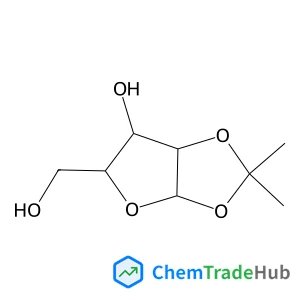
![(1S)-1,5-Anhydro-1-[3-(1-benzothiophen-2-ylmethyl)-4-fluorophenyl]-D-glucitol structure](https://static.chemtradehub.com/structs/761/761423-87-4-dbeb.webp "(1S)-1,5-Anhydro-1-[3-(1-benzothiophen-2-ylmethyl)-4-fluorophenyl]-D-glucitol structure")
(1S)-1,5-Anhydro-1-[3-(1-benzothiophen-2-ylmethyl)-4-fluorophenyl]-D-glucitol
CAS Number:
761423-87-4
Molecular Formula:
C21H21FO5S
Recommended Suppliers






Disclaimer
This page provides academic journal information for reference and research purposes only. We are not affiliated with any journal publishers and do not handle publication submissions. For publication-related inquiries, please contact the respective journal publishers directly.
If you notice any inaccuracies in the information displayed, please contact us at support@chemtradehub.com. We will promptly review and address your concerns.