


Spectroscopic evidence for the origin of odd–even effects in self-assembled monolayers and effects of substrate roughness
Literature Information
Publication Date
2017-02-15
DOI
10.1039/C6CP07580K
Impact Factor
3.676
Authors
Jian Liu, Ian D. Tevis, Richard S. Andino, Christina M. Miller, Lawrence D. Ziegler, Xin Chen
View Original
Abstract
This paper reports the effects of substrate roughness on the odd–even effect in n-alkanethiolate self-assembled monolayers (SAMs) probed by vibrational sum frequency generation (SFG) spectroscopy. By fabricating SAMs on surfaces across the so-called odd–even limit, we demonstrate that differentiation of the vibrational frequencies of CH3 from SAMs derived from alkyl thiols with either odd (SAMO) or even (SAME) numbers of carbons depends on the roughness of the substrate on which they are formed. Odd–even oscillation in SFG susceptibility amplitudes was observed for spectra derived from SAME and SAMO fabricated on flat surfaces (RMS roughness = 0.4 nm) but not on rougher surfaces (RMS roughness = 2.38 nm). In addition, we discovered that local chemical environments for the terminal CH3 group have a chain-length dependence. There seems to be a transition at around C13, beyond which SAMs become “solid-like”.
Recommended Journals

Bioorganic & Medicinal Chemistry

Colloid Journal

Topics in Catalysis

Herald of the Russian Academy of Sciences

Bioorganic & Medicinal Chemistry Letters

Journal of Asian Natural Products Research

Cellulose

Critical Reviews in Solid State and Materials Sciences

Biocatalysis and Biotransformation

Heteroatom Chemistry
Related Literature
Anion-templated assembly of interpenetrated and interlocked structures
Paul D. Beer, Mark R. Sambrook, David Curiel
2006-03-08
Feature Article
DOI: 10.1039/B516435B
Phosphoester-transfer mechanism of an RNA-cleaving acidic deoxyribozyme revealed by radioactivity tracking and enzymatic digestion
Srinivas A. Kandadai, William Chiuman, Yingfu Li
2006-05-09
Communication
DOI: 10.1039/B604682G
Supramolecular cruciforms
Warren W. Gerhardt, Anthony J. Zucchero, James N. Wilson, Clinton R. South, Uwe H. F. Bunz, Marcus Weck
2006-03-21
Communication
DOI: 10.1039/B602087A
Fabrication of bismuth subcarbonate nanotube arrays from bismuth citrate
Rong Chen, Man Ho So, Jun Yang, Feng Deng, Chi-Ming Che, Hongzhe Sun
2006-04-25
Communication
DOI: 10.1039/B601764A
A catenane consisting of a large ring threaded through both cyclic units of a handcuff-like compound
Julien Frey, Tomáš Kraus, Valérie Heitz, Jean-Pierre Sauvage
2005-09-23
Communication
DOI: 10.1039/B509745B
Efficient dynamic kinetic resolution of secondary amines with Pd on alkaline earth salts and a lipase
Andrei Parvulescu, Dirk De Vos, Pierre Jacobs
2005-09-23
Communication
DOI: 10.1039/B509747A
Evidence for C–C bond cleavage by H2O2 in a mesoporous CMK-5 type carbon at room temperature
An-Hui Lu, Wen-Cui Li, Nelli Muratova, Bernd Spliethoff, Ferdi Schüth
2005-09-20
Communication
DOI: 10.1039/B509300G
Sensory hybrid host materials for the selective chromo-fluorogenic detection of biogenic amines
Beatriz García-Acosta, María Comes, Julia L. Bricks, Margarita A. Kudinova, Vladimir V. Kurdyukov, Alexei I. Tolmachev, M. Dolores Marcos, Ramón Martínez-Máñez, Ana Moreno, Félix Sancenón, Juan Soto, Luis A. Villaescusa, Knut Rurack, José M. Barat, Isabel Escriche, Pedro Amorós
2006-05-02
Communication
DOI: 10.1039/B602497A
Unusual variations in the incidence of Z′ > 1 in oxo-anion structures
Kirsty M. Anderson, Andres E. Goeta, Kirsty S. B. Hancock, Jonathan W. Steed
2006-04-04
Communication
DOI: 10.1039/B602492K
Rapid stereocontrolled assembly of the fully substituted C-aryl glycoside of kendomycin with a Prins cyclization: a formal synthesis
Kevin B. Bahnck, Scott D. Rychnovsky
2006-05-02
Communication
DOI: 10.1039/B602937J
You might also like
Compound Q&A
What are the main uses of 1H-Indazole-6-carbonitrile (CAS: 141290-59-7)?
1H-Indazole-6-carbonitrile finds applications in pharmaceuticals, where it serve...
141290-59-71H-Indazole-6-carbon...
Compound Q&A
How should waste containing Dioctyl (2E)-2-butenedioate (CAS: 2997-85-5) be handled?
Waste containing Dioctyl (2E)-2-butenedioate (CAS: 2997-85-5) should be collecte...
2997-85-5Dioctyl (2E)-2-buten...
Compound Q&A
What industries use Sodium [(1,2-benzoxazol-3-ylmethyl)sulfonyl]azanide (CAS: 68291-98-5)?
Sodium [(1,2-benzoxazol-3-ylmethyl)sulfonyl]azanide is primarily used in pharmac...
68291-98-5Sodium [(1,2-benzoxa...
Compound Q&A
Are there alternatives to Dimethyl 4-(4,4,5,5-tetramethyl-1,3,2-dioxaborolan-2-yl)-2,6-pyridinedicarboxylate (CAS: 741709-66-0) in synthesis?
Dimethyl 4-(4,4,5,5-tetramethyl-1,3,2-dioxaborolan-2-yl)-2,6-pyridinedicarboxyla...
741709-66-0Dimethyl 4-(4,4,5,5-...
Compound Q&A
How should waste containing 2-Fluoro-6-hydrazinopyridine (CAS: 80714-39-2) be handled?
Waste containing 2-Fluoro-6-hydrazinopyridine (CAS: 80714-39-2) should be manage...
80714-39-22-Fluoro-6-hydrazino...
Compound Q&A
What is 6-Formyl-2-pyridinecarboxylic acid (CAS: 499214-11-8)?
6-Formyl-2-pyridinecarboxylic acid is an organic compound with the molecular for...
499214-11-86-Formyl-2-pyridinec...
Compound Q&A
What is the market or research trend for 3-(3,4-dimethoxyphenyl)-2,5-dimethyl-N-(2-morpholin-4-ylethyl)pyrazolo[1,5-a]pyrimidin-7-amine (CAS: 900874-91-1)?
Research trends for this compound indicate a focus on its potential applications...
900874-91-13-(3,4-dimethoxyphen...
Compound Q&A
How is 9H-Tribenzo[b,d,f]azepine (CAS: 29875-73-8) typically synthesized?
9H-Tribenzo[b,d,f]azepine is typically synthesized via a multi-step process invo...
29875-73-89H-Tribenzo[b,d,f]az...
Compound Q&A
How is 1-Cyclopropyl-7-ethoxy-6-fluoro-8-methoxy-4-oxo-1,4-dihydro-3-quinolinecarboxylic acid (CAS: 1797982-51-4) typically synthesized?
1-Cyclopropyl-7-ethoxy-6-fluoro-8-methoxy-4-oxo-1,4-dihydro-3-quinolinecarboxyli...
1797982-51-41-Cyclopropyl-7-etho...
Compound Q&A
How should waste containing Methyl 3-oxo-1,2,3,4-tetrahydro-6-quinoxalinecarboxylate (CAS: 671820-52-3) be handled?
Waste containing Methyl 3-oxo-1,2,3,4-tetrahydro-6-quinoxalinecarboxylate (CAS: ...
671820-52-3Methyl 3-oxo-1,2,3,4...
Source Journal
Physical Chemistry Chemical Physics

CiteScore:
5.5
Self-citation Rate:
10.3%
Articles per Year:
3036
Physical Chemistry Chemical Physics (PCCP) is an international journal co-owned by 19 physical chemistry and physics societies from around the world. This journal publishes original, cutting-edge research in physical chemistry, chemical physics and biophysical chemistry. To be suitable for publication in PCCP, articles must include significant innovation and/or insight into physical chemistry; this is the most important criterion that reviewers and Editors will judge against when evaluating submissions. The journal has a broad scope and welcomes contributions spanning experiment, theory, computation and data science. Topical coverage includes spectroscopy, dynamics, kinetics, statistical mechanics, thermodynamics, electrochemistry, catalysis, surface science, quantum mechanics, quantum computing and machine learning. Interdisciplinary research areas such as polymers and soft matter, materials, nanoscience, energy, surfaces/interfaces, and biophysical chemistry are welcomed if they demonstrate significant innovation and/or insight into physical chemistry. Joined experimental/theoretical studies are particularly appreciated when complementary and based on up-to-date approaches.
Recommended Compounds
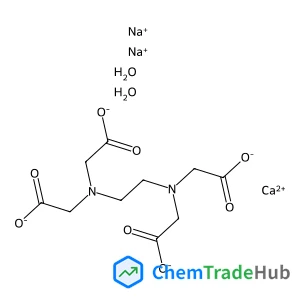
EthylenediaminetetraaceticacidcalciumDisodiumsalthydrate
CAS Number:
23411-34-9
Molecular Formula:
C10H16CaN2Na2O10
![Sodium (2Z)-7-{[(2R)-2-amino-2-carboxyethyl]sulfanyl}-2-({[(1S)-2,2-dimethylcyclopropyl]carbonyl}amino)-2-heptenoate structure](https://static.chemtradehub.com/structs/811/81129-83-1-441c.webp "Sodium (2Z)-7-{[(2R)-2-amino-2-carboxyethyl]sulfanyl}-2-({[(1S)-2,2-dimethylcyclopropyl]carbonyl}amino)-2-heptenoate structure")
Sodium (2Z)-7-{[(2R)-2-amino-2-carboxyethyl]sulfanyl}-2-({[(1S)-2,2-dimethylcyclopropyl]carbonyl}amino)-2-heptenoate
CAS Number:
81129-83-1
Molecular Formula:
C16H25N2NaO5S
Recommended Suppliers





Disclaimer
This page provides academic journal information for reference and research purposes only. We are not affiliated with any journal publishers and do not handle publication submissions. For publication-related inquiries, please contact the respective journal publishers directly.
If you notice any inaccuracies in the information displayed, please contact us at support@chemtradehub.com. We will promptly review and address your concerns.